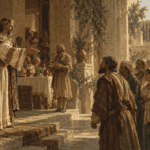
Faith and Reason
Scholasticism affirmed that truth is unified. Reason, while limited, is a genuine path to knowledge of God, and revelation elevates and perfects human understanding.
Natural Theology
Through philosophical reasoning, Scholastics demonstrated truths about God’s existence and attributes—most famously in Aquinas’s “Five Ways.”
Metaphysics and Being
Drawing on Aristotle, Scholastics explored the nature of existence, essence, causality, and the relationship between Creator and creation.
Moral Theology and Ethics
Scholastic thinkers developed a rich understanding of virtue, law, and human flourishing, shaping Catholic moral teaching for centuries.
Systematic Theology
By organizing doctrine into coherent systems, Scholasticism provided a framework that continues to influence theological education today.
 cholasticism stands as one of the most refined intellectual traditions in the history of the Catholic Church—a disciplined method of inquiry that sought not merely to defend the truths of faith, but to understand them with clarity, rigor, and philosophical precision. Emerging in the medieval universities of Europe between the 11th and 14th centuries, it represented a profound confidence: that truth is unified, and that reason, rightly ordered, can illuminate the mysteries of divine revelation.