

Description
There are crosses made for display…And there are crosses made to be kissed.
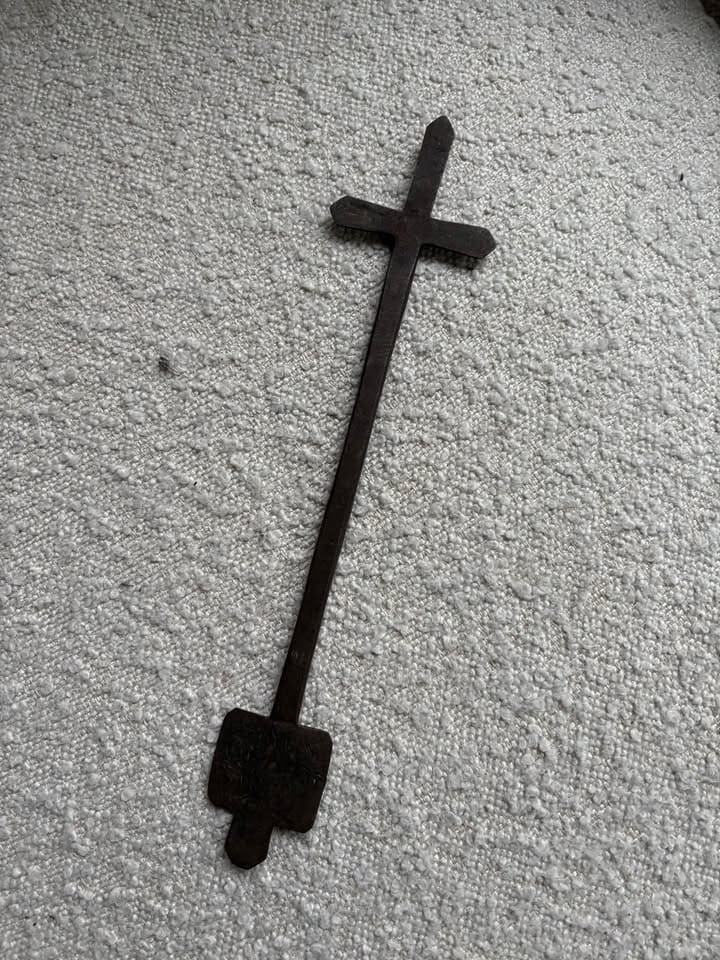
This antique Ethiopian Coptic hand cross was not fashioned for a curio shelf or a traveler’s trunk. It was forged for the hand of a priest — lifted in blessing, carried in procession, pressed gently to the foreheads of the faithful. Most likely dating to the 18th–19th century, this iron blessing cross belongs to the ancient tradition of the Ethiopian Orthodox Tewahedo Church — one of the oldest Christian communities in the world, formally established in the 4th century under King Ezana of Aksum. For over 1,600 years, crosses like this have stood at the center of Ethiopian liturgical life.
Austerity in Iron
The form is strikingly restrained. A simple bar cross. Squared ends. Flat body. No ornament for ornament’s sake. This austere geometry is typical of rural or monastic ironwork — practical, devotional, and deeply symbolic. The broad lower stem suggests it was meant to be held securely during long liturgical processions. One imagines the steady rhythm of chanting… the scent of incense… the cross raised against highland skies.
The iron itself tells a story. Hand-forged, with irregular hammering still visible. Dark oxidation layered by time and exposure. Unlike royal crosses cast in brass or silver, iron was the metal of endurance — humble, incorruptible, resistant to vanity. Monks and village clergy often favored it for precisely that reason.
The Inscription of Blessing
At the base, a hand-cut inscription appears in Geʽez (ግዕዝ) — the ancient liturgical language of Ethiopia and Eritrea. Though worn, the characters resemble traditional benedictions such as:
-
“በስም አብ ወወልድ ወመንፈስ ቅዱስ”
“In the name of the Father, and of the Son, and of the Holy Spirit.”
or
-
“መስቀል ኢየሱስ ክርስቶስ”
“The Cross of Jesus Christ.”
The engraving is rough — likely the work of a local blacksmith or monastic artisan rather than a court engraver. Which makes it all the more compelling. This was a working cross. A living cross.
More Than Symbol
In Ethiopian Christianity, the cross is not merely emblematic. It is considered a bearer of divine protection — a tangible sign of Christ’s victory over death and the unity of heaven and earth. Every priest carries one. The faithful approach to kiss it. Pilgrims carry iron crosses as signs of humility and spiritual endurance. This example appears to be a genuine liturgical piece — not a later tourist reproduction — confirmed by its material, inscription style, and devotional wear.
Details
-
Origin: Ethiopia
-
Tradition: Ethiopian Orthodox Tewahedo Church
-
Estimated Date: 18th–19th century
-
Material: Hand-forged iron or wrought steel
-
Inscription: Geʽez blessing or invocation
-
Condition: Used – Good (age-appropriate oxidation and surface wear)
A cross that has blessed generations.
And perhaps, quietly, still does.


Reviews
There are no reviews yet.