Description
Vintage Catholic Sick Call Crucifix Set – Max F. Rutecki Funeral Director, Buffalo, NY – Complete c. 1945–1960
There was a time when a crucifix hanging upon the wall of a Catholic home could be more than a familiar sign of faith. In an hour of sickness, when a priest was summoned and a family gathered quietly around a bedside, the cross itself could be taken down and opened. Within it waited the simple things necessary to prepare for the priest’s arrival: candles, holy water, a communion cloth, and instructions for a ritual of care that generations of Catholic families understood.
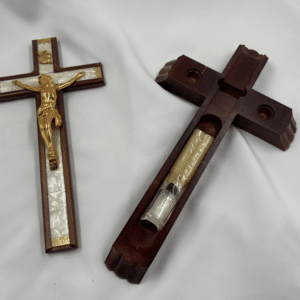
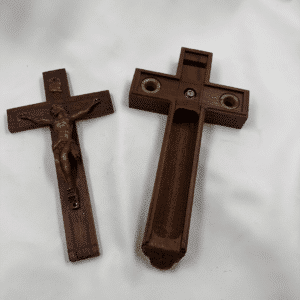
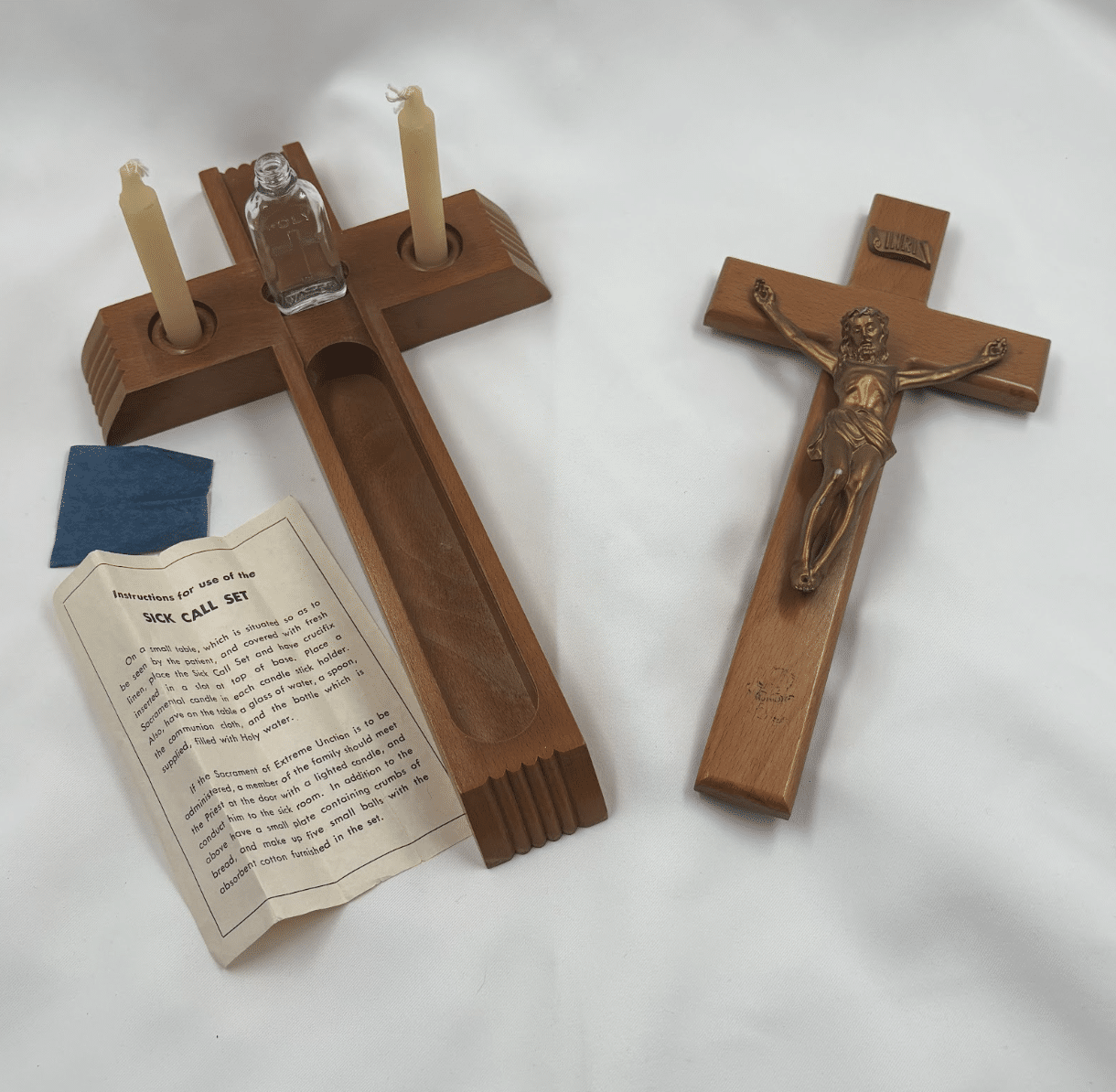
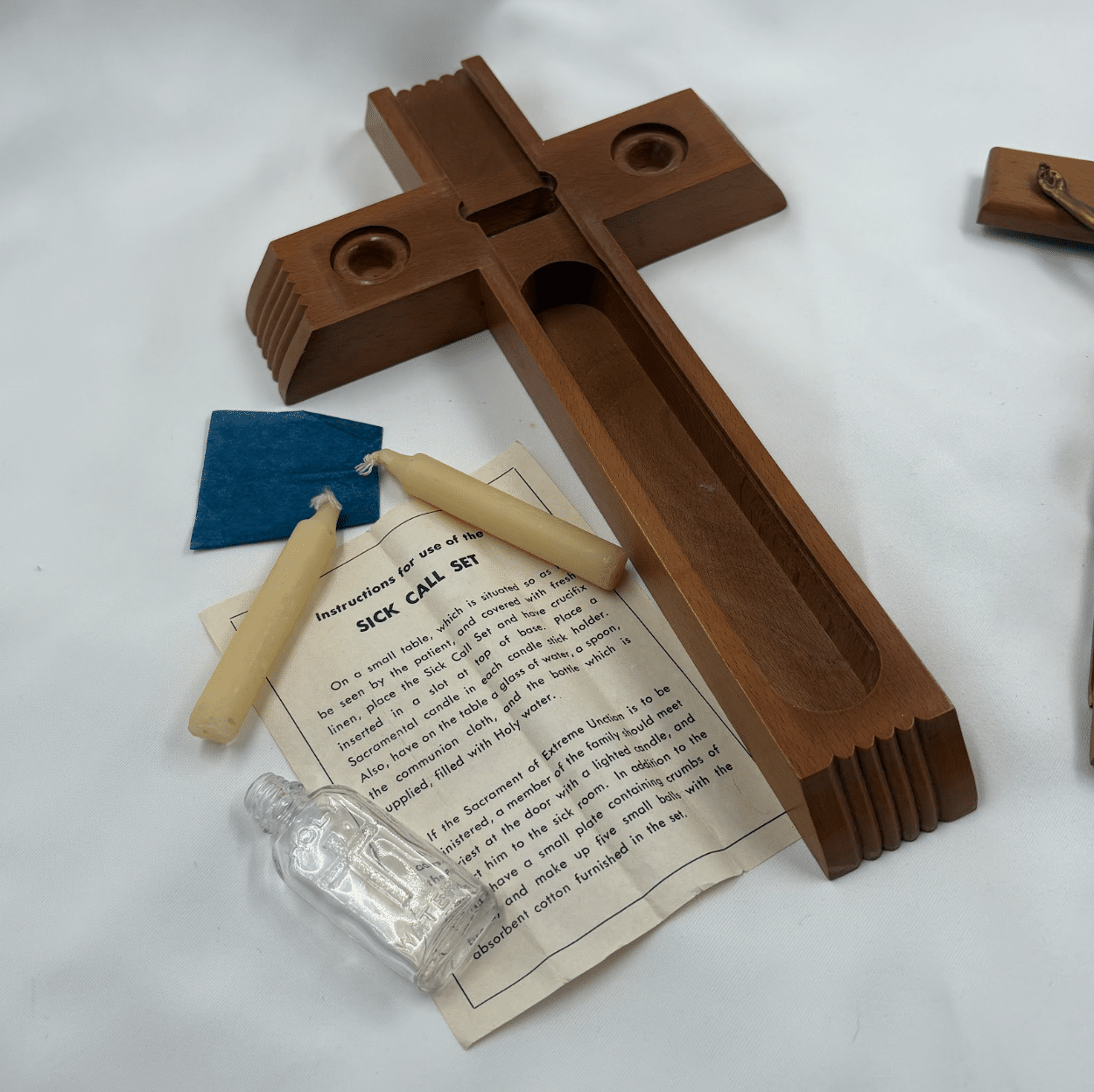
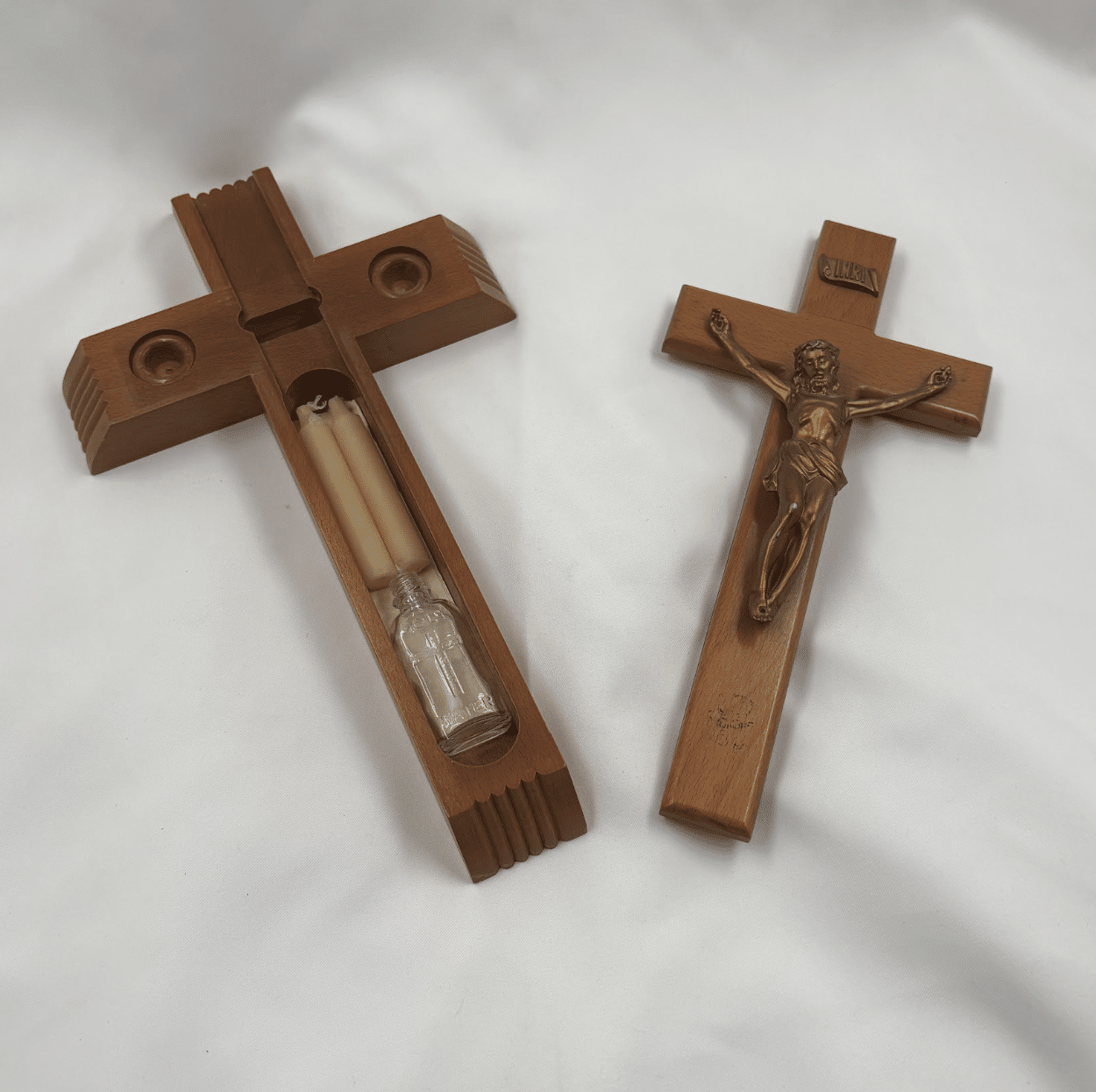
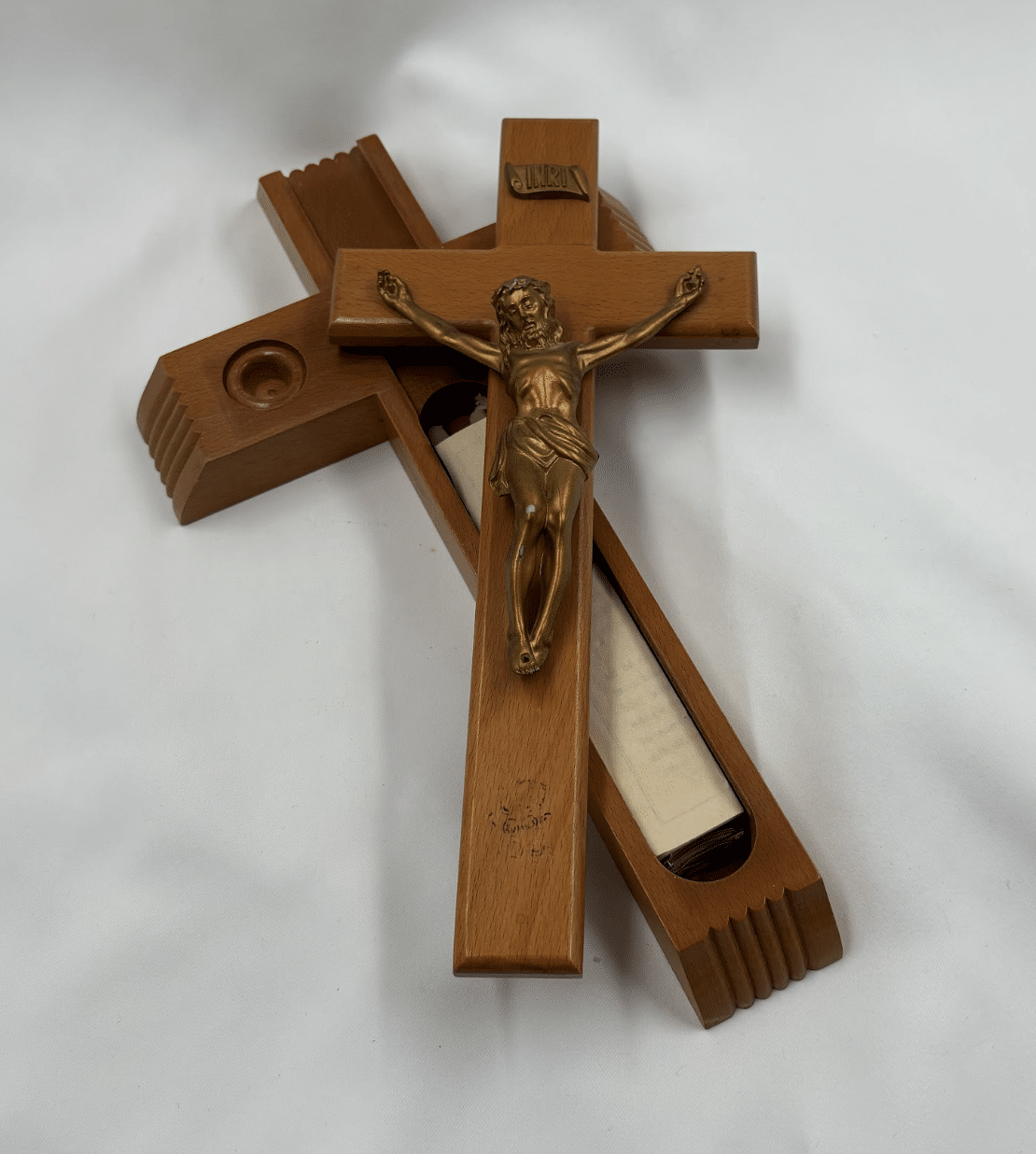
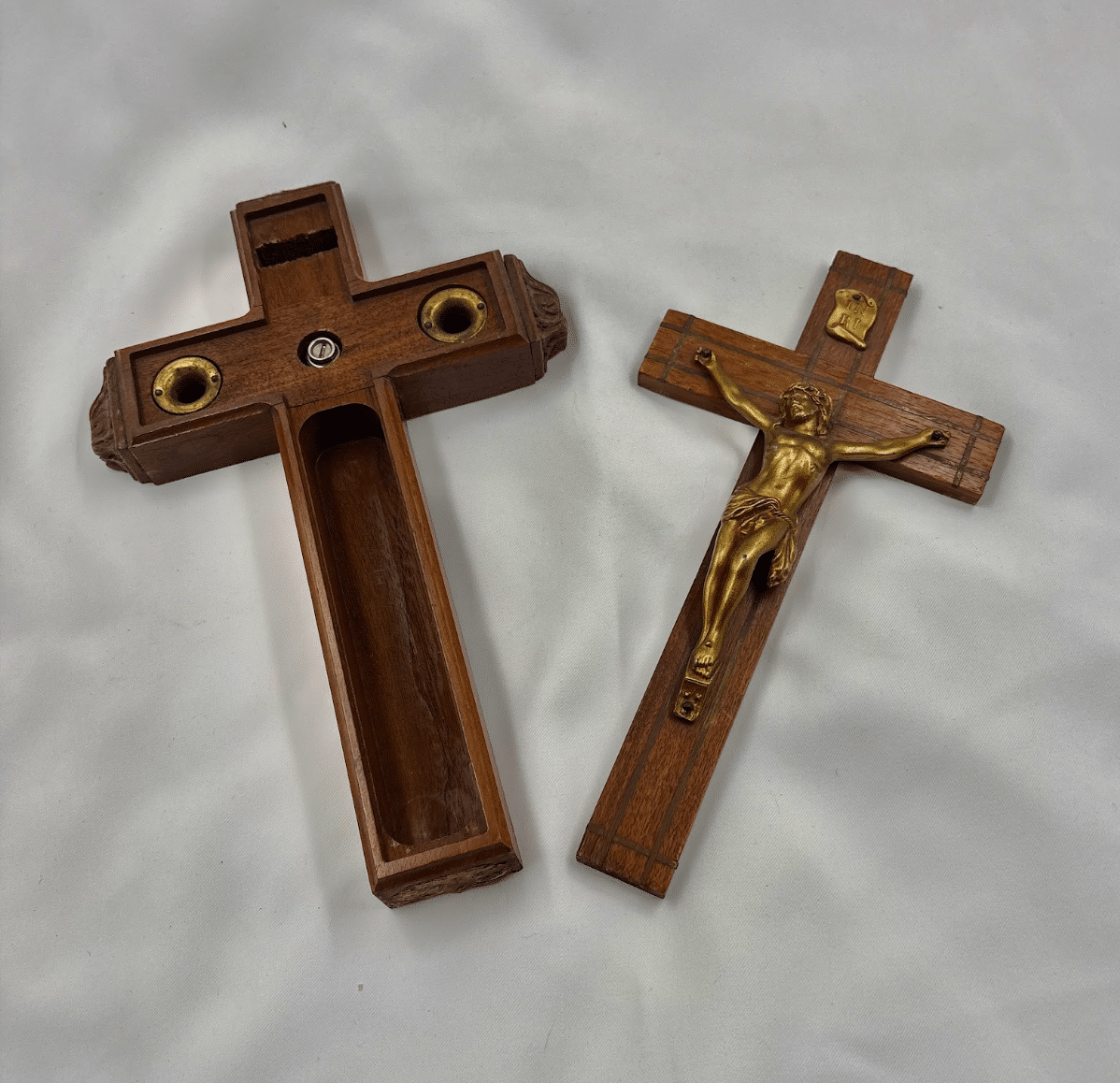
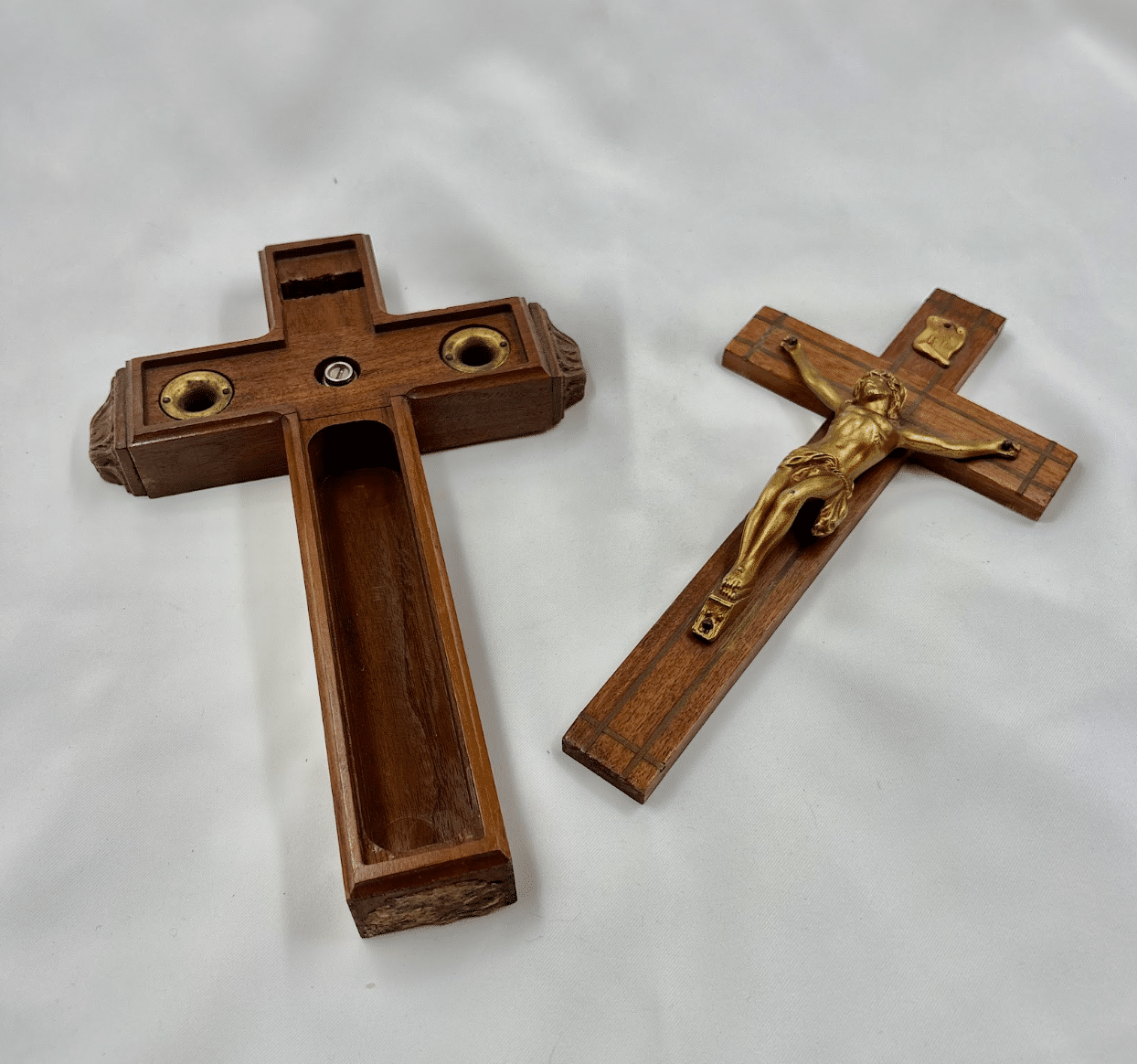
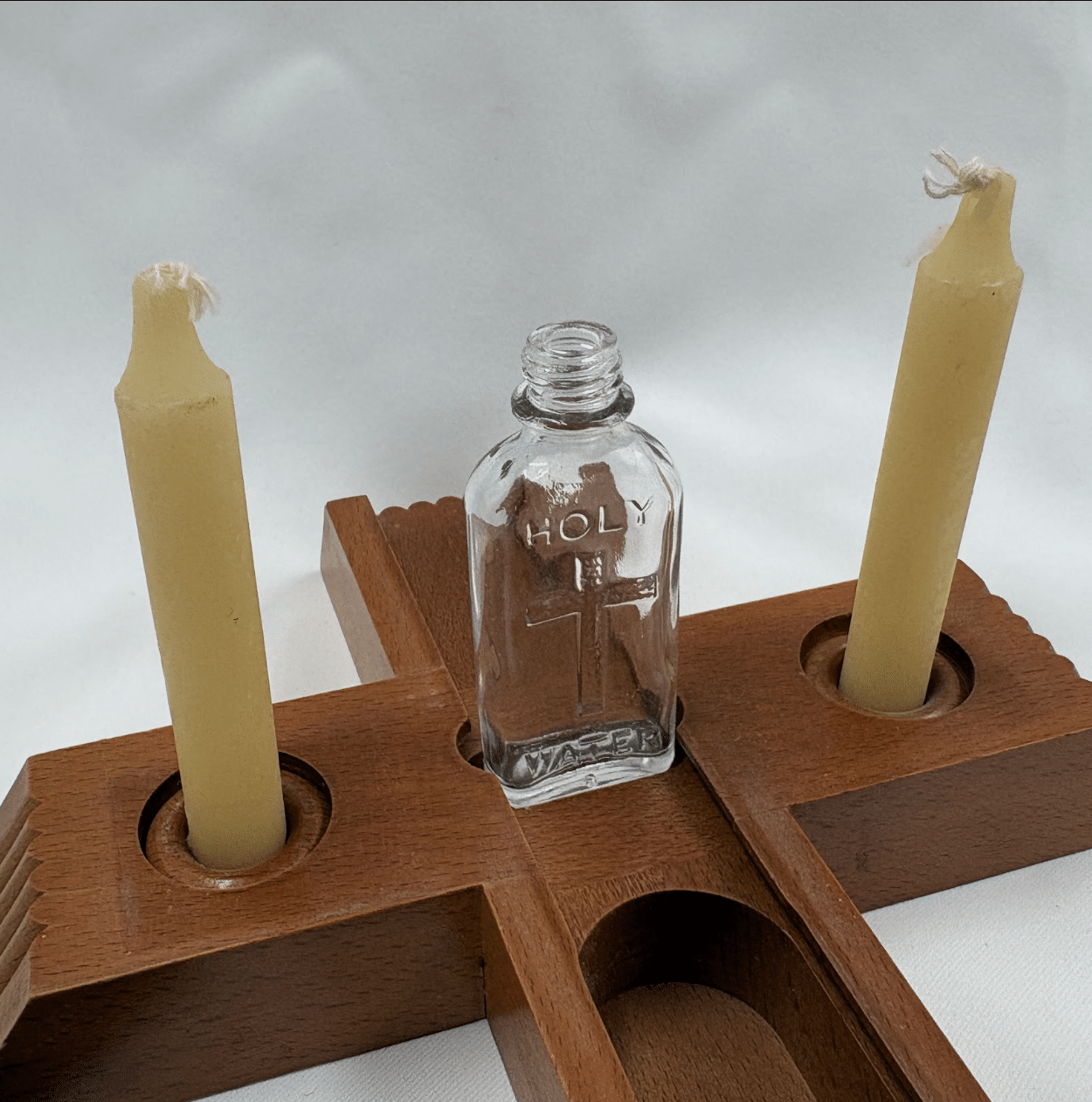
This vintage Catholic Sick Call Set, also known as a Sick Call Crucifix or Last Rites Crucifix, is an unusually complete surviving example of that tradition. Dating approximately to c. 1945–1960, the hardwood crucifix conceals an interior compartment containing its holy water bottle, two candles, communion cloth, and original printed instruction sheet. The survival of these components is particularly significant, as bottles, candles, linens, and paper instructions were easily separated from such sets during decades of household use and storage.
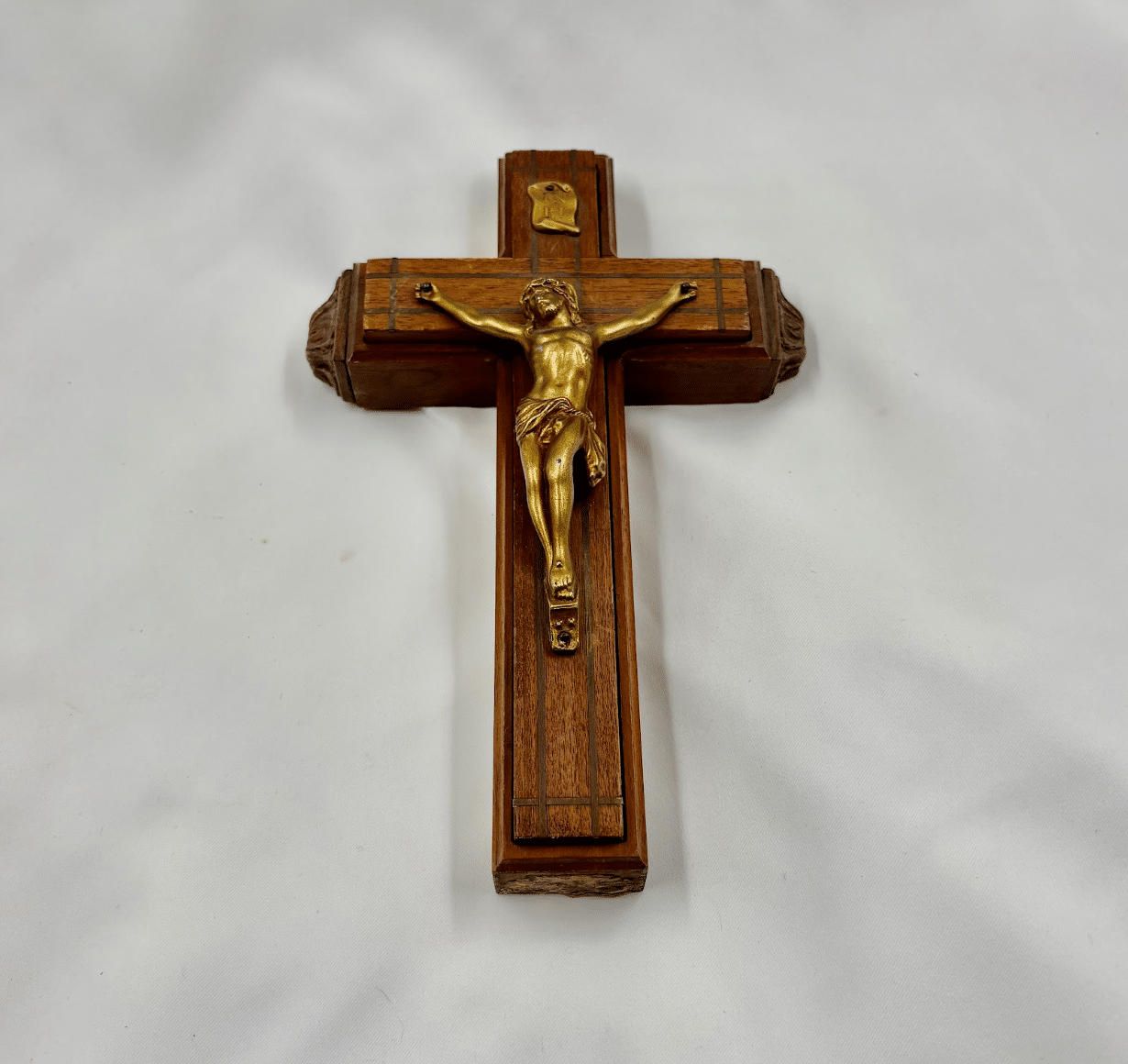
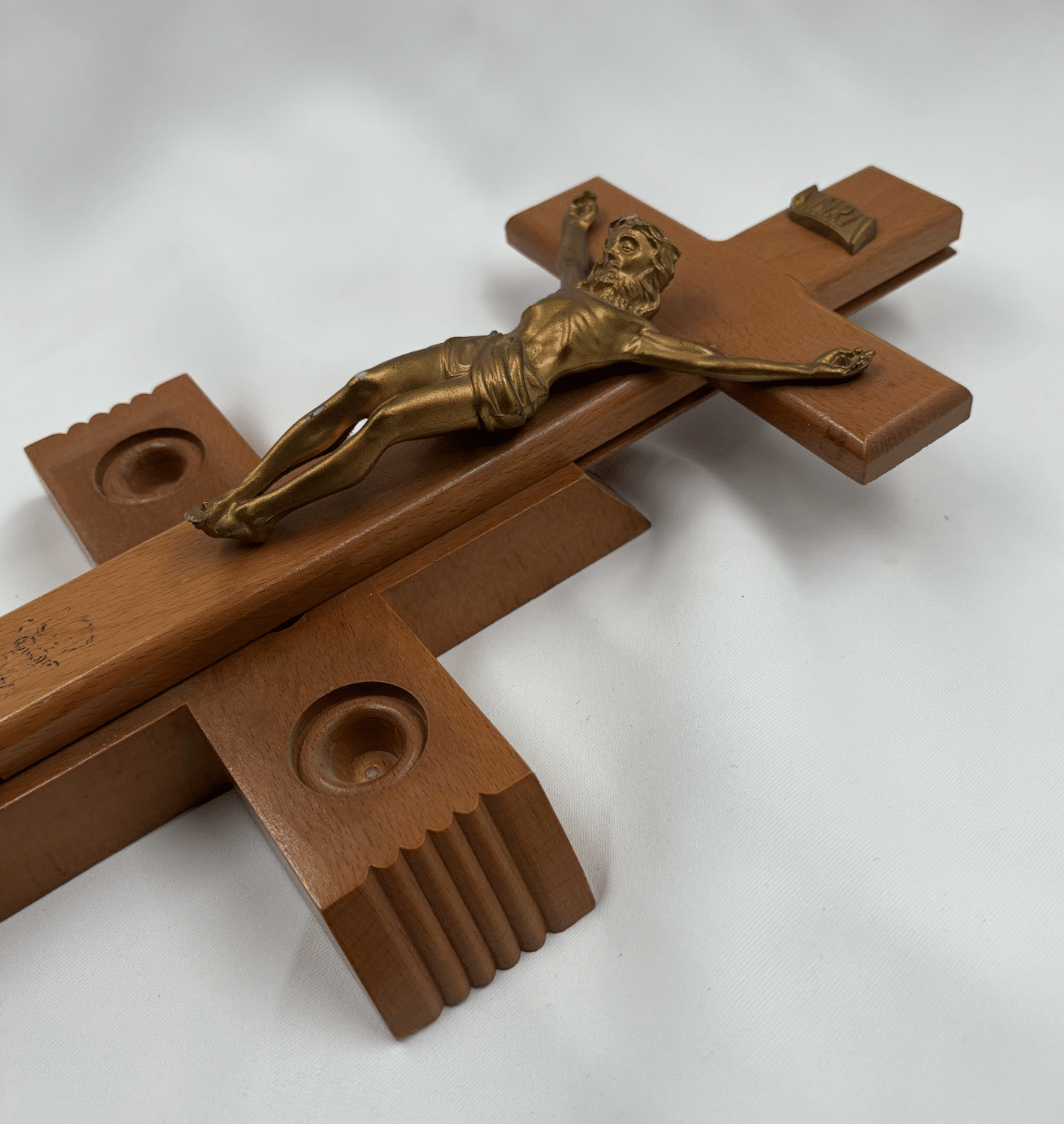
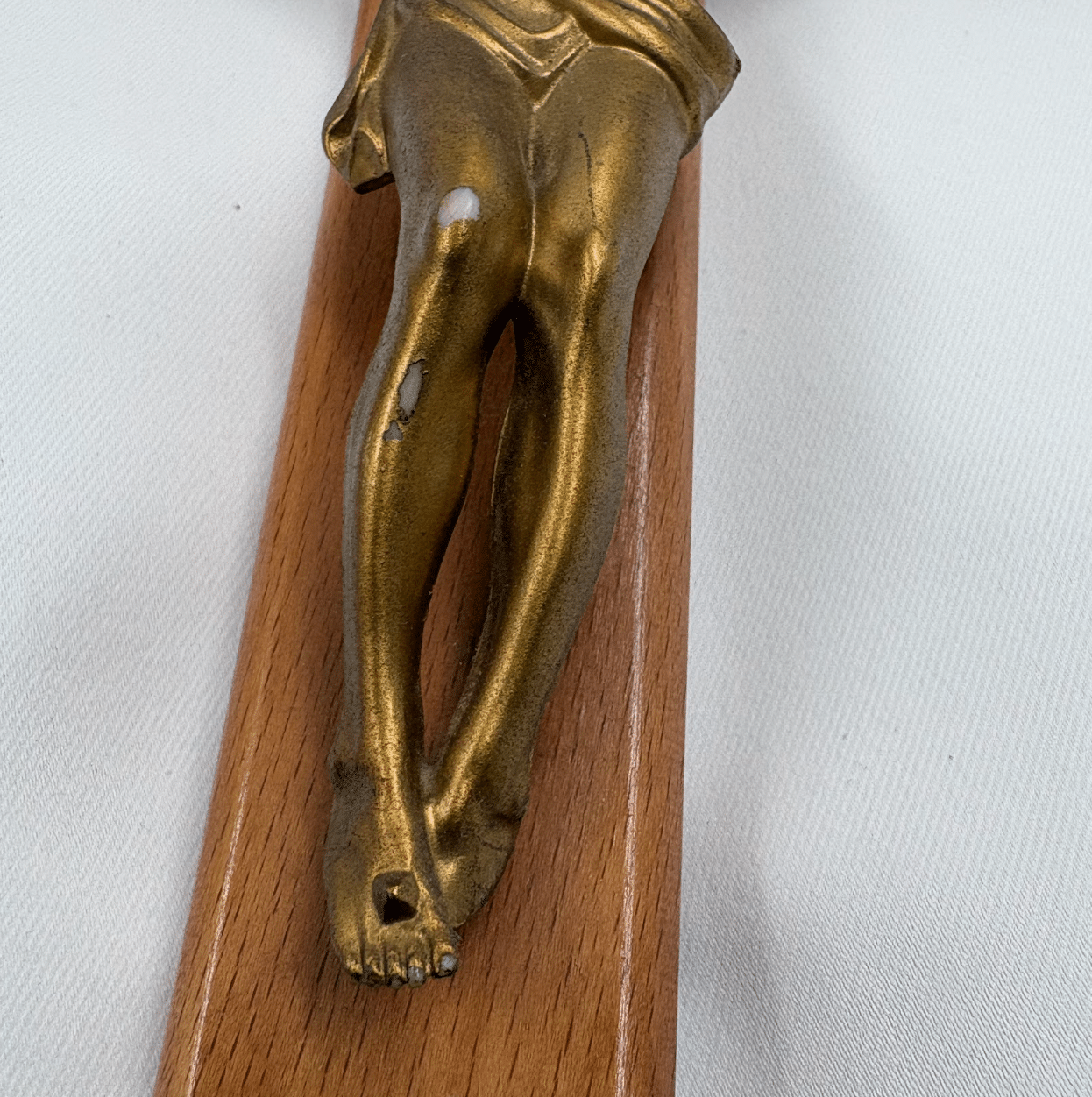
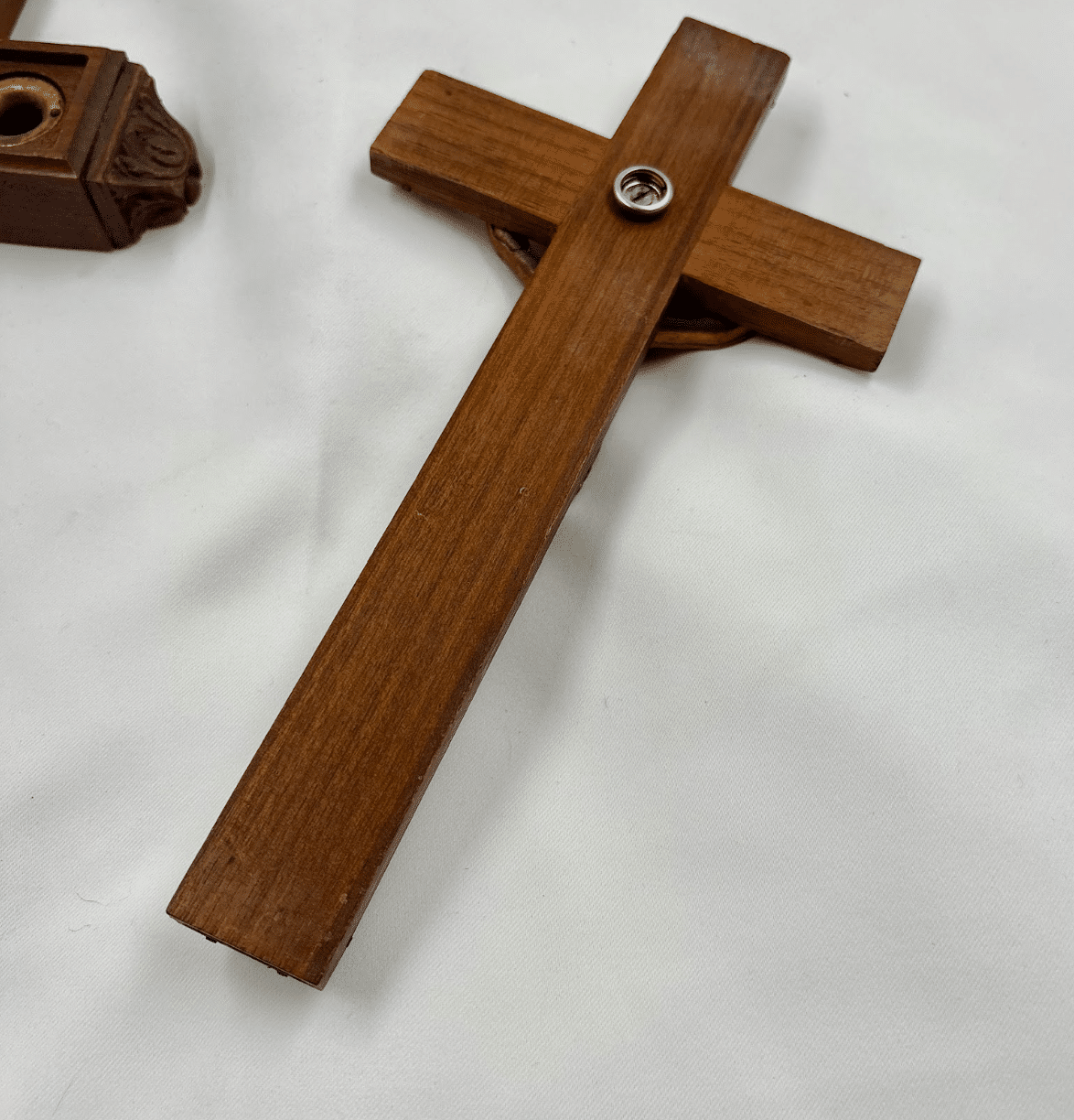
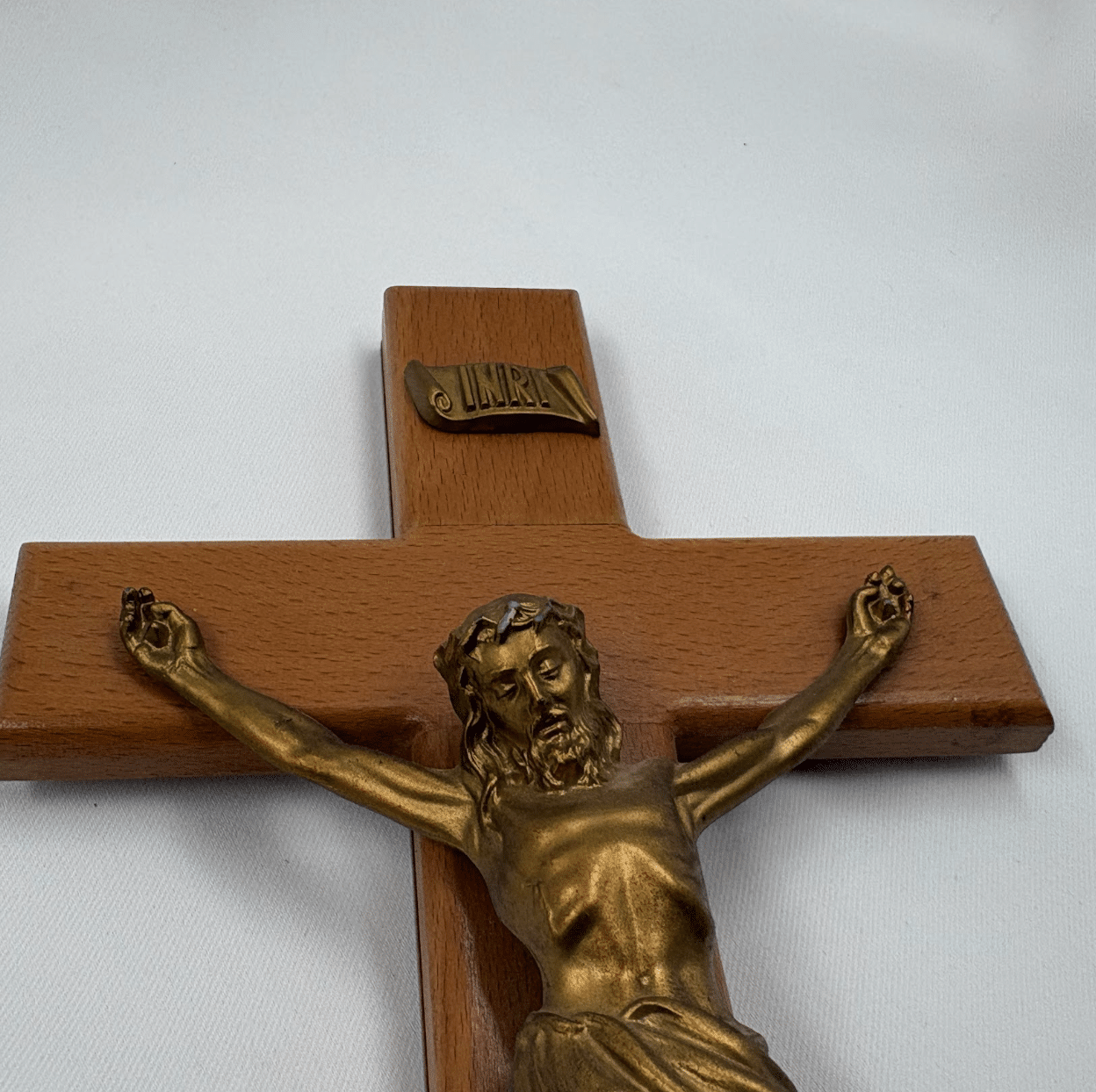
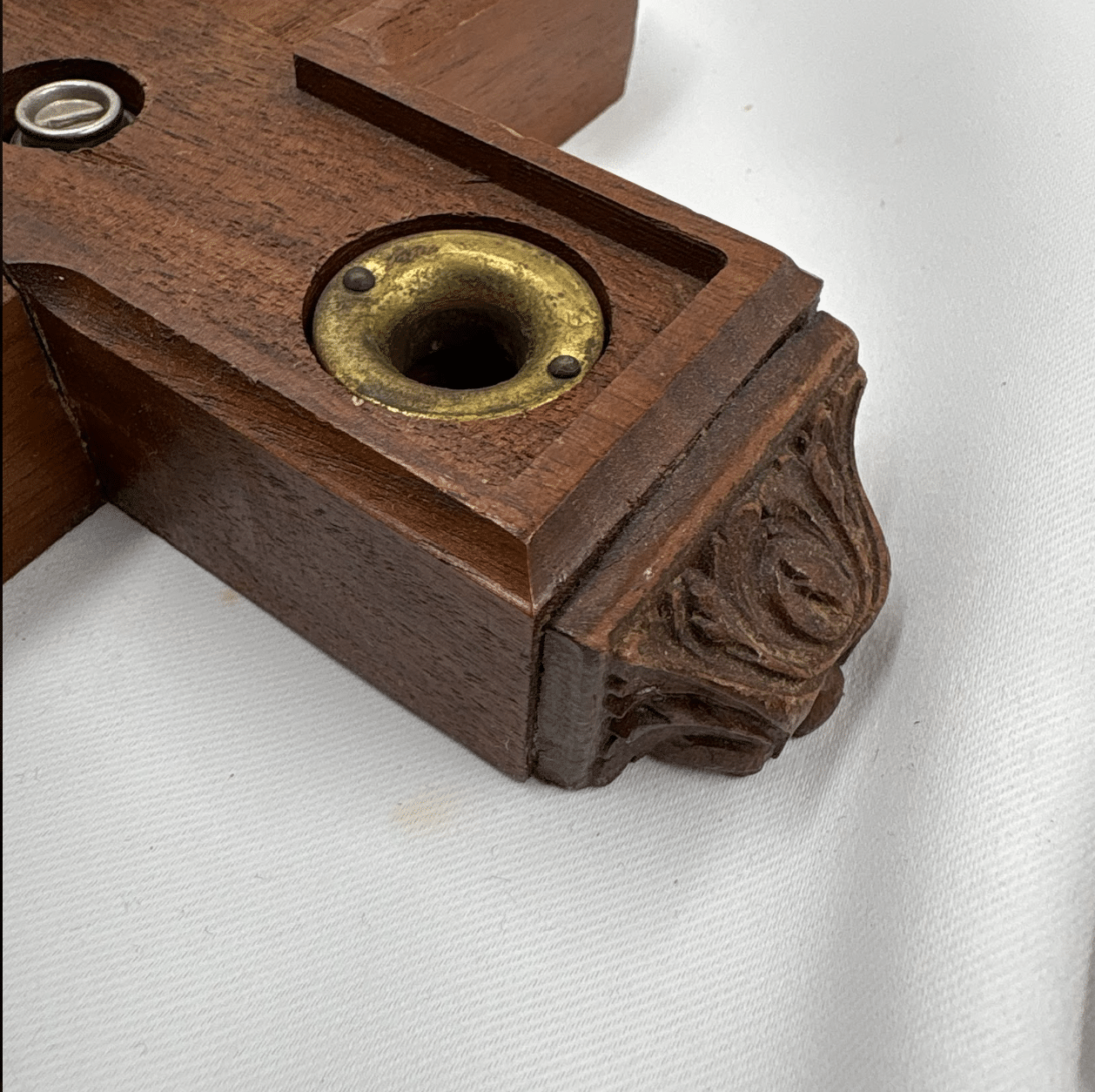
At the center of the cross is a traditional brass corpus of Christ beneath an INRI plaque, its surface mellowed by the natural patina of age. The hardwood cross retains the substantial character and carved detailing associated with mid-20th-century Catholic devotional furnishings. When closed, it presents as a traditional wall crucifix. When opened, its hidden purpose is revealed—a compact household preparation set intended for one of the most solemn moments in Catholic family life.
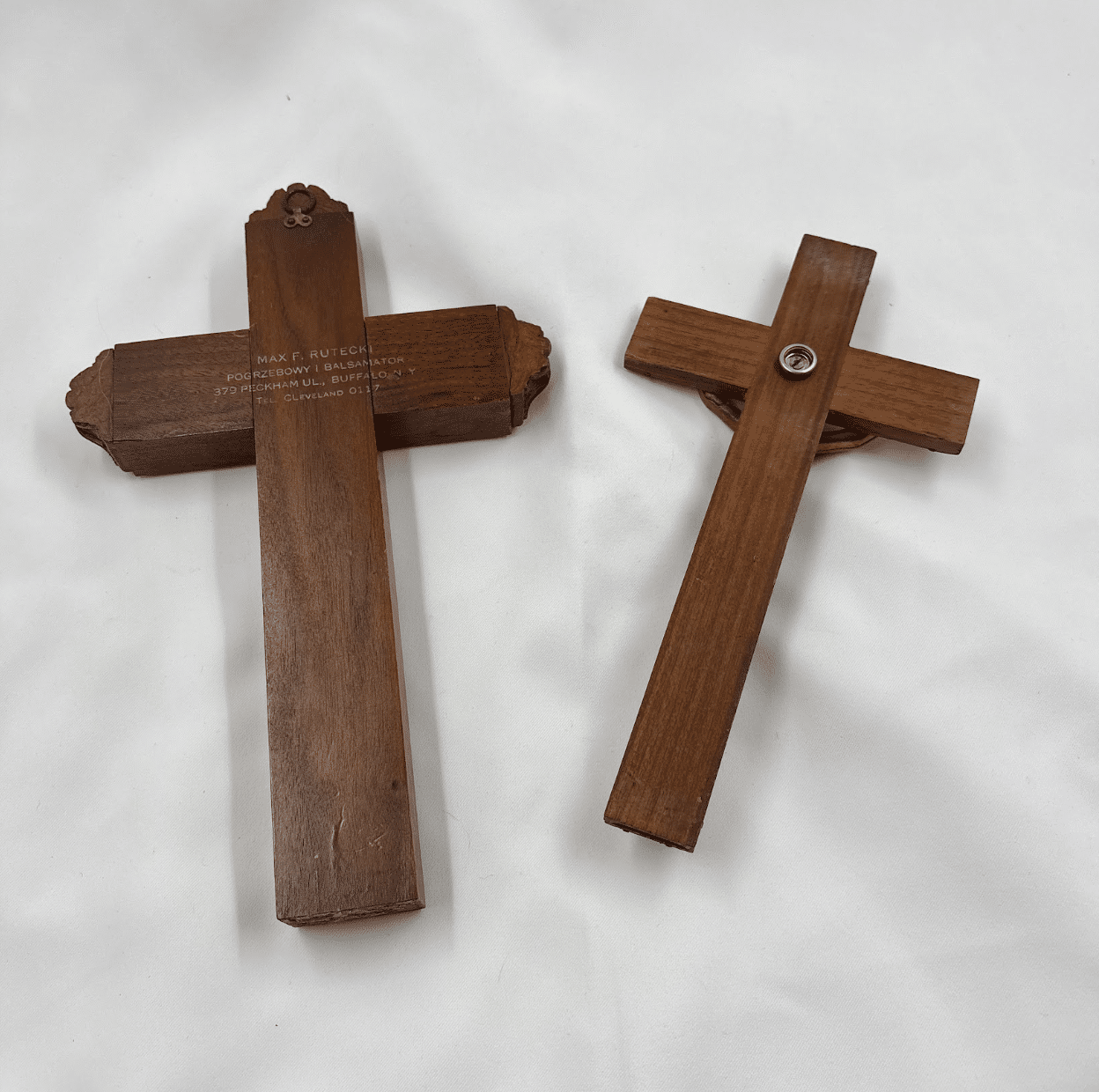
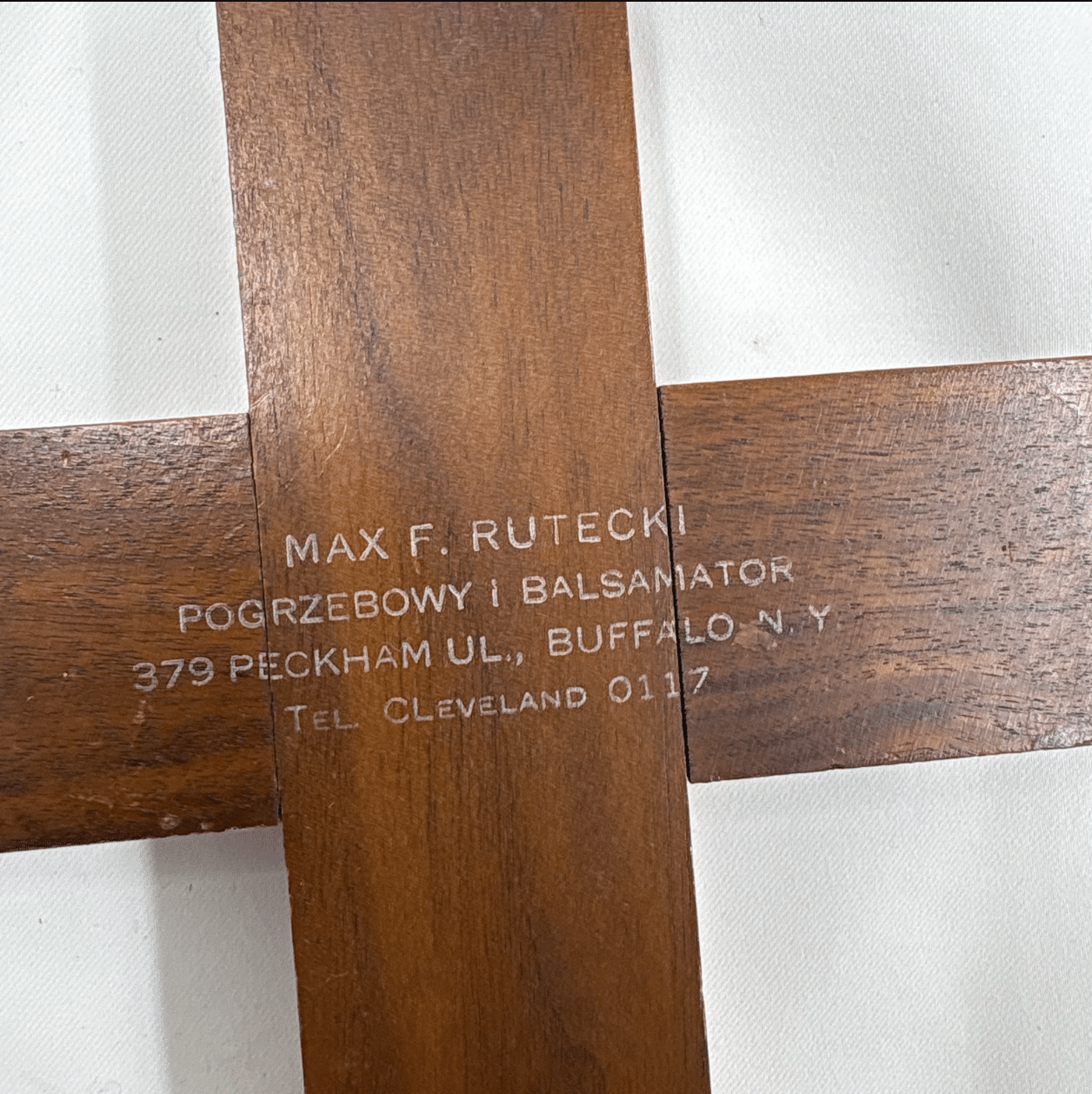
Its history becomes still more compelling through the inscription preserved upon the piece:
MAX F. RUTECKI
POGRZEBOWY I BALSAMATOR
379 Peckham St., Buffalo, N.Y.
The Polish wording “Pogrzebowy i Balsamator” identifies Rutecki with funeral and embalming work, traditionally rendered in this context as “Funeral Director and Embalmer.” The inscription associates the crucifix with Max F. Rutecki of Buffalo, New York, and places the object within the world of Buffalo’s Polish-American Catholic community. Rather than being an anonymous devotional article, this example preserves the name, occupation, and address connected with the person or establishment for whom it was personalized or through whom it was distributed.
That provenance gives the set a character extending beyond ordinary Catholic devotional collecting. It belongs equally to the material history of Polish-American Catholic life, Buffalo neighborhood history, funeral-service memorabilia, and mid-century American religious practice. In such communities, the parish church, family home, neighborhood funeral director, and Catholic rites surrounding sickness and death were closely connected. This crucifix survives from that world.
The purpose for which it was made was profoundly practical. When serious illness brought a priest to the home, the crucifix could be removed from the wall and its contents arranged in preparation for the rites associated with care of the sick and the reception of Holy Communion when appropriate. What normally appeared to be a household crucifix thus became part of the family’s preparation for the Church’s ministry at the bedside. Historically these objects are often called Last Rites Crucifixes, although the Catholic Sacrament of the Anointing of the Sick, formerly commonly called Extreme Unction, is not reserved only for the final moments of life.
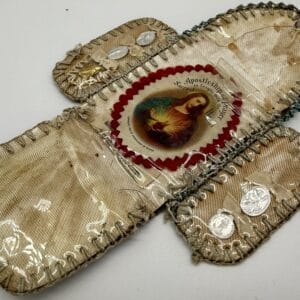
Especially noteworthy is the survival of the original instruction sheet. Its expected folds and signs of age remain visible, but its presence helps preserve the practical context of the entire set. The original-style candles and embossed “HOLY WATER” bottle likewise remain within the compartment, making this a substantially complete ensemble rather than merely an empty vintage crucifix.
The hardwood shows light wear consistent with age, while the brass corpus has developed an attractive natural patina. The paper instructions exhibit expected folding and age-related handling. The holy water bottle remains notably well preserved, and the set as a whole presents in Very Good+ vintage condition.
This is not simply an old crucifix. It is an artifact of Catholic domestic life—made for the hour when ordinary household routines gave way to prayer, sacrament, and the arrival of a priest. The name of a Buffalo funeral director upon it gives that history a particular place and community, while its unusually complete contents preserve the manner in which such a crucifix was once meant to serve.
For the collector of vintage Catholic devotional objects, Sick Call Sets, Polish-American Catholic history, Buffalo memorabilia, funeral-industry history, or religious antiques, it offers something increasingly difficult to find: a devotional object whose purpose, contents, and historical association remain together after more than half a century.
Product Details
Item: Vintage Catholic Sick Call Set / Sick Call Crucifix / Last Rites Crucifix
Associated Name: Max F. Rutecki
Inscription: “MAX F. RUTECKI / POGRZEBOWY I BALSAMATOR / 379 Peckham St., Buffalo, N.Y.”
Inscription Translation: Funeral Director and Embalmer
Location: Buffalo, New York
Period: c. 1945–1960
Material: Hardwood with brass corpus and fittings
Religious Tradition: Roman Catholic
Classification: Catholic Antiques & Vintage Devotional Objects → Sick Call Sets & Crucifixes
Authenticity: Vintage/original components as represented
Collector Appeal: High due to completeness and personalized historical association
Included Components: Hardwood storage crucifix with sliding/removable crucifix section, brass corpus and INRI plaque, embossed “HOLY WATER” bottle, two period candles, communion cloth, original printed instruction sheet, and interior storage compartment.
Condition & ACG Evaluation
Overall Condition: Very Good+ vintage condition
The hardwood exhibits light surface wear consistent with age and previous use. The brass corpus retains an attractive aged patina. The surviving instruction sheet displays expected folds and handling wear, while the holy water bottle is particularly well preserved. Candles appear period/original to the set. The interior remains substantially complete and presents exceptionally well for a household Sick Call Set of this age.