Description
Mother-of-Pearl Style Inlay with Original Candle and Holy Water Bottle – c. 1955–1975
For generations, the crucifix hanging upon the wall of a Catholic home was more than decoration. It marked the household as a place where Christ was remembered in the ordinary hours of family life. Some crucifixes, however, were made for an hour that was anything but ordinary. Behind the cross they concealed the simple preparations a family might need when illness came and a priest was summoned to the bedside.
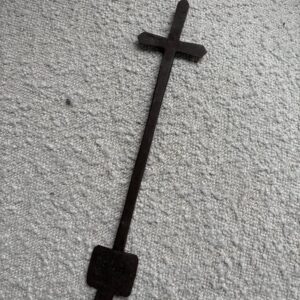
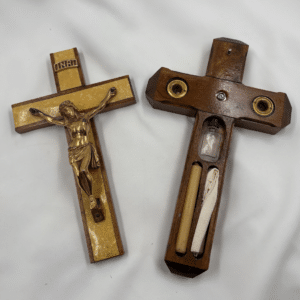
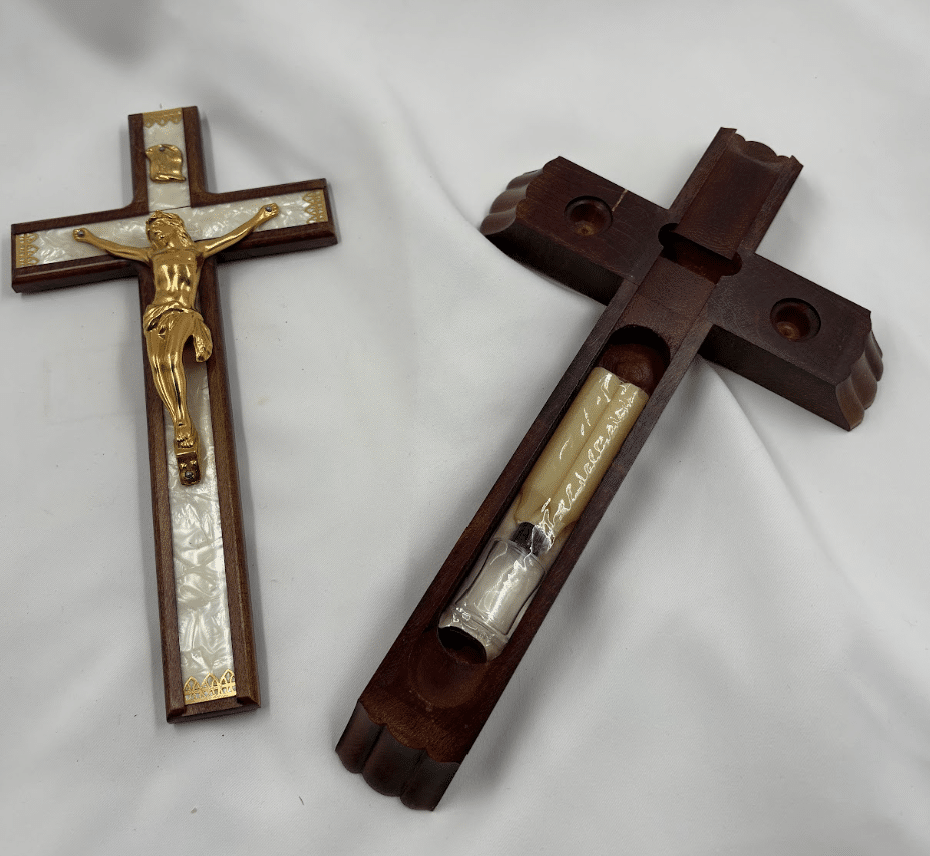
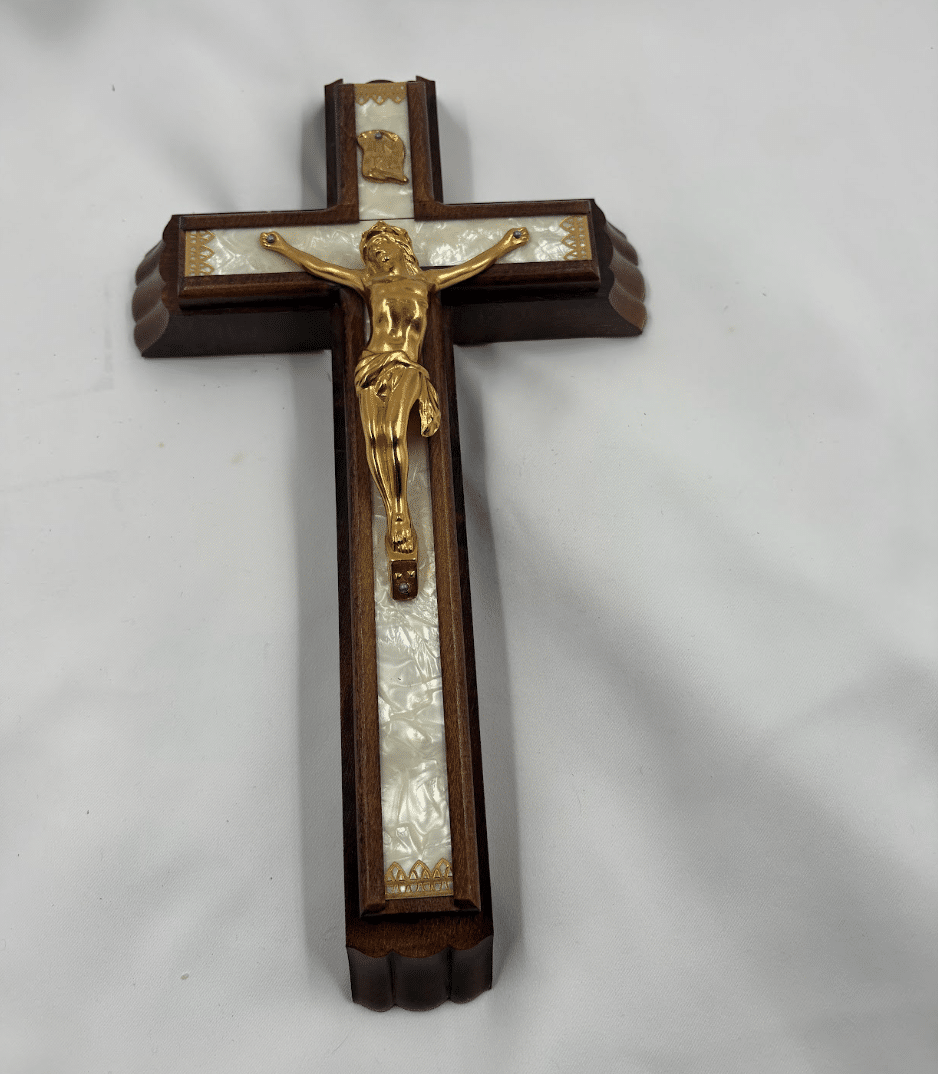
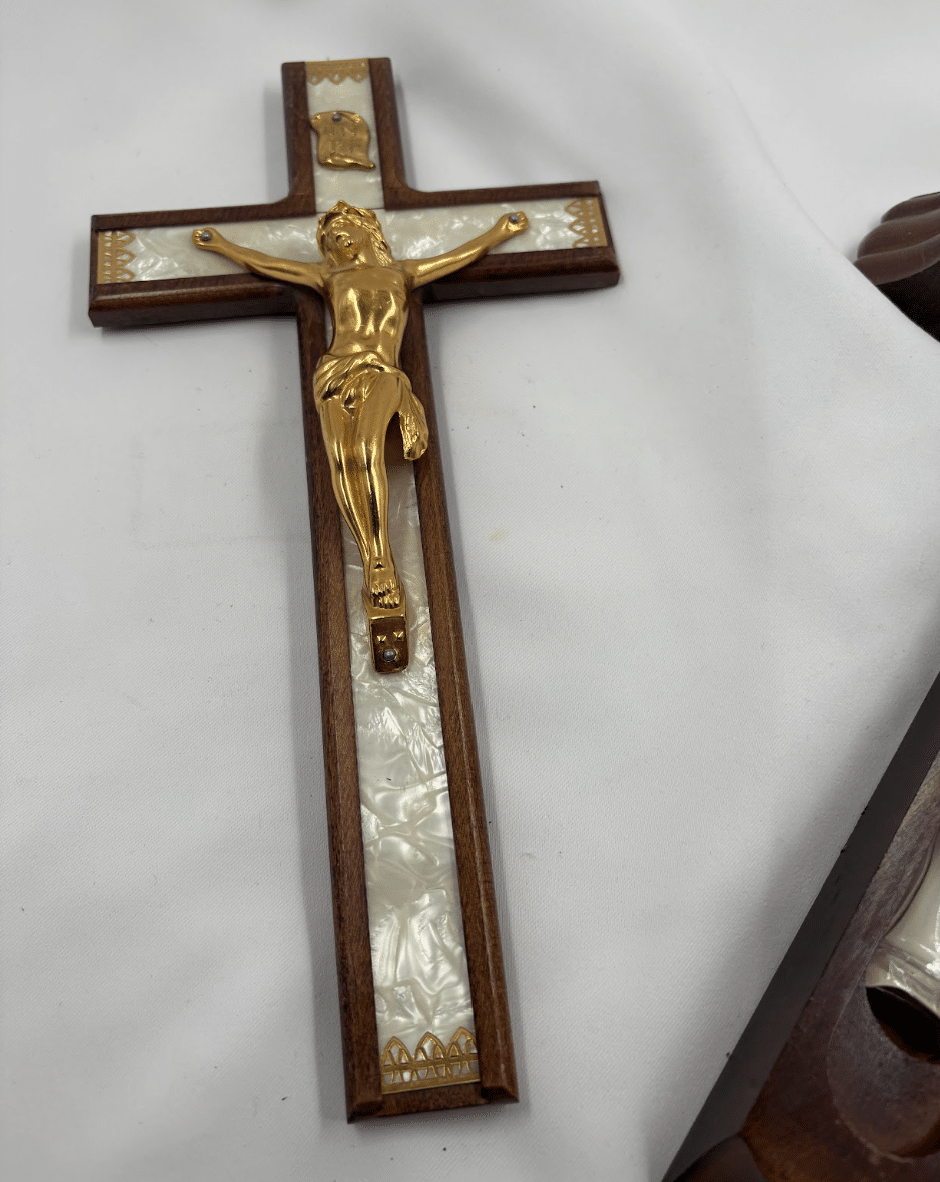
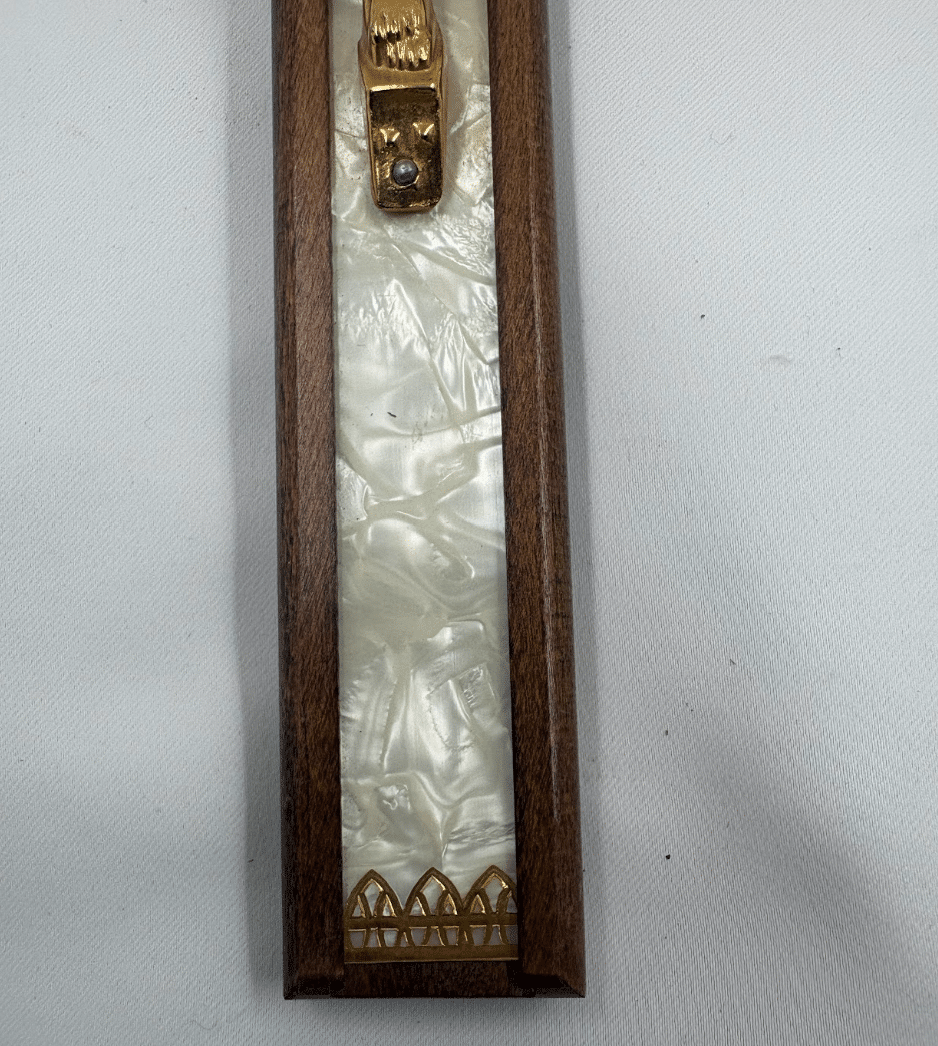
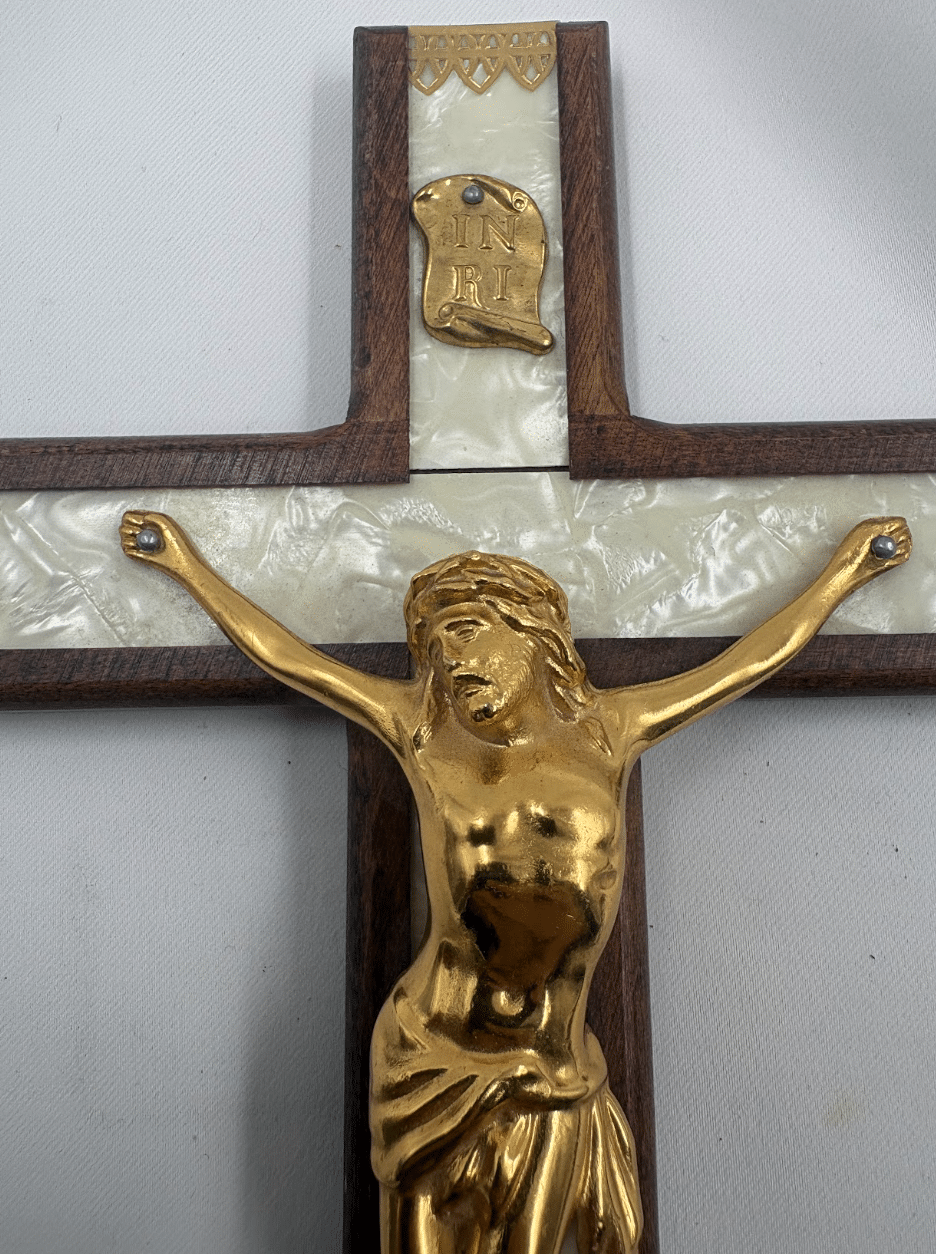
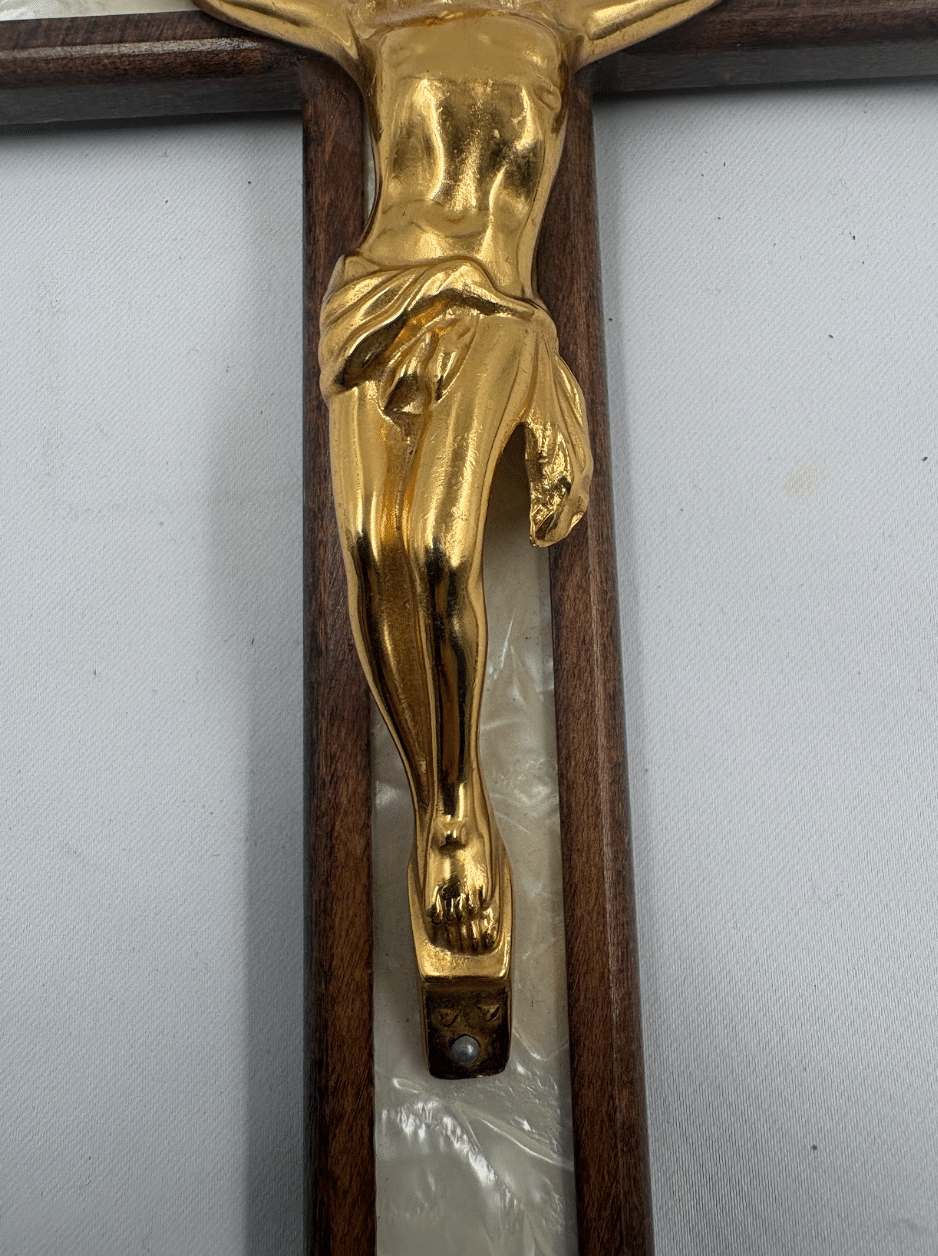
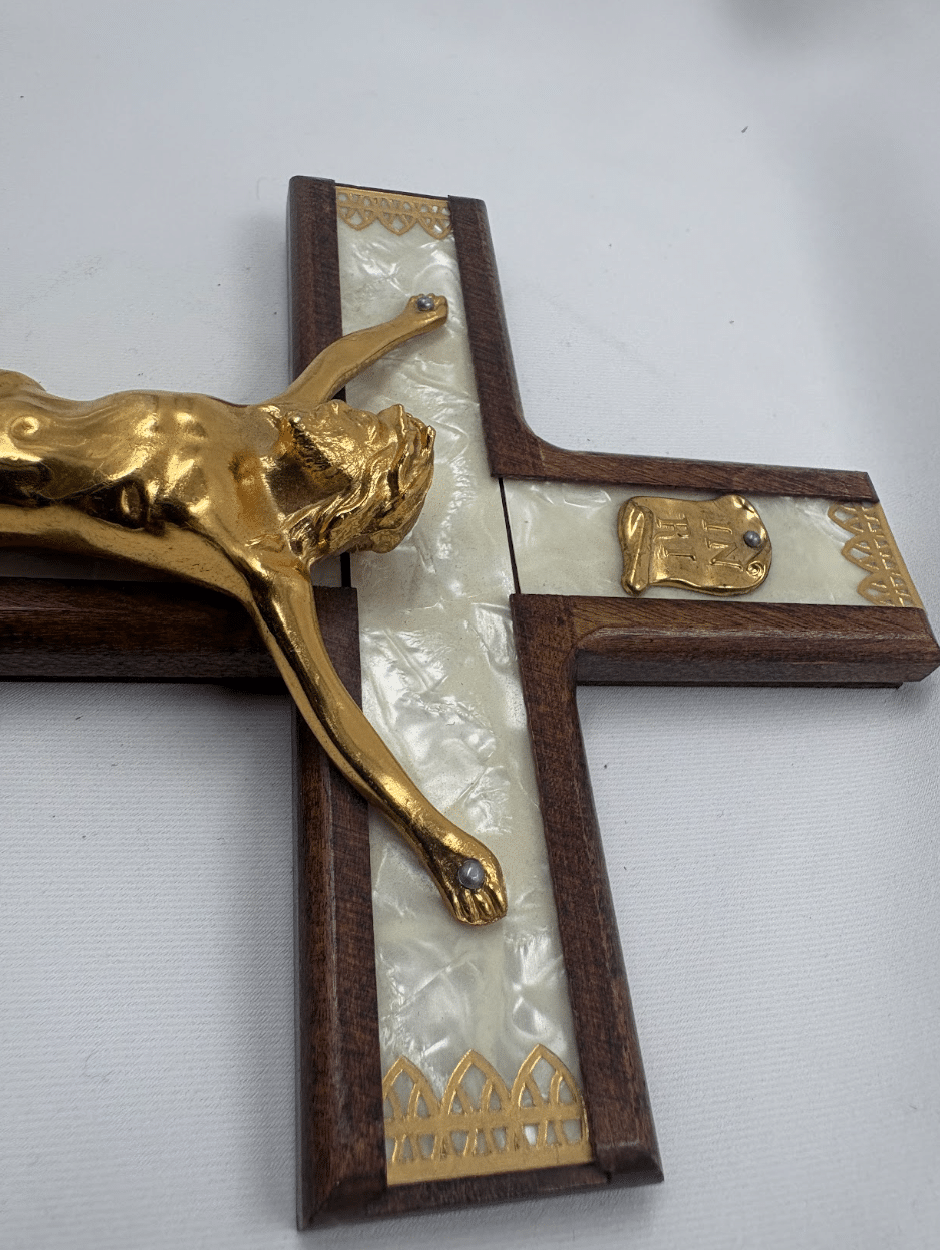
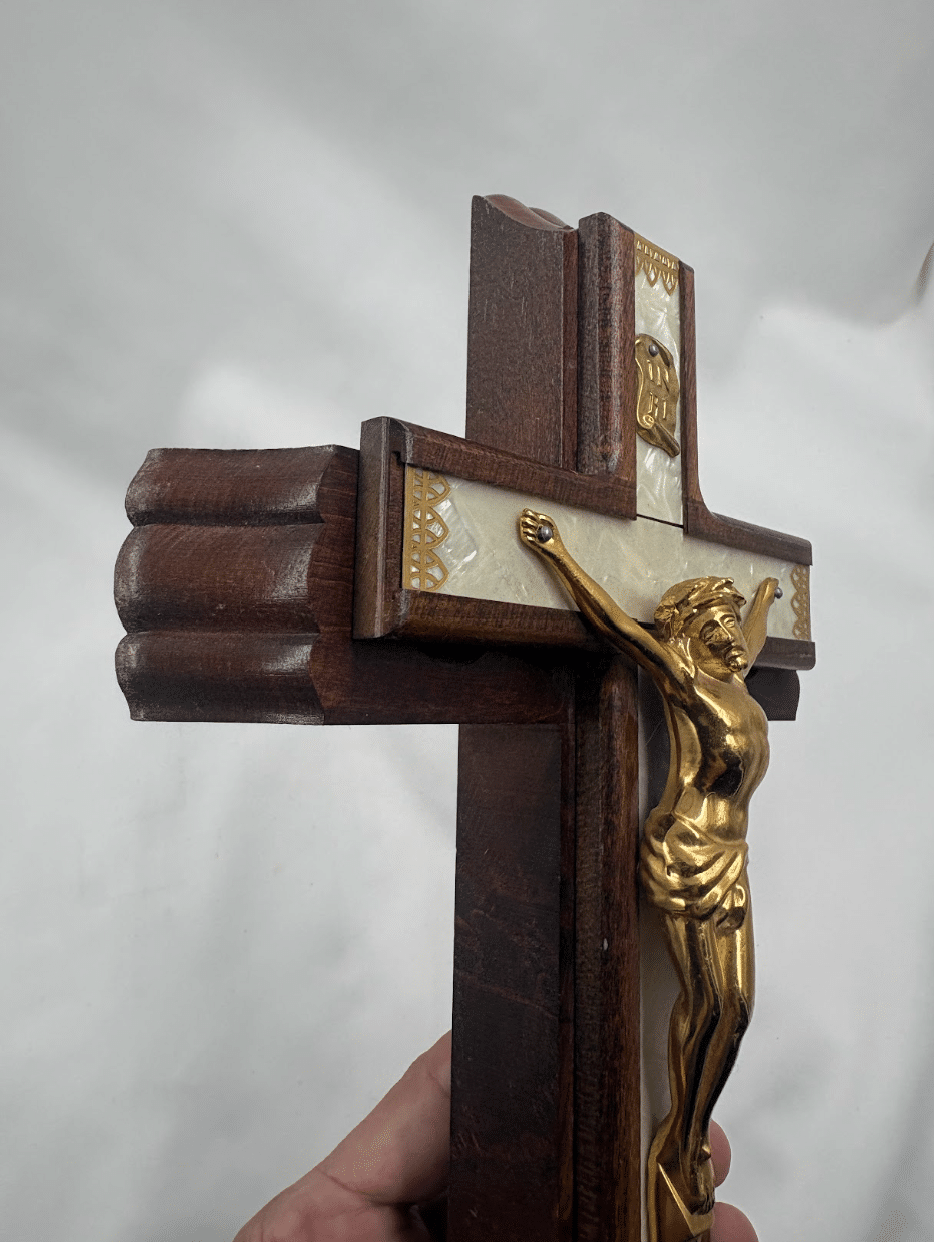
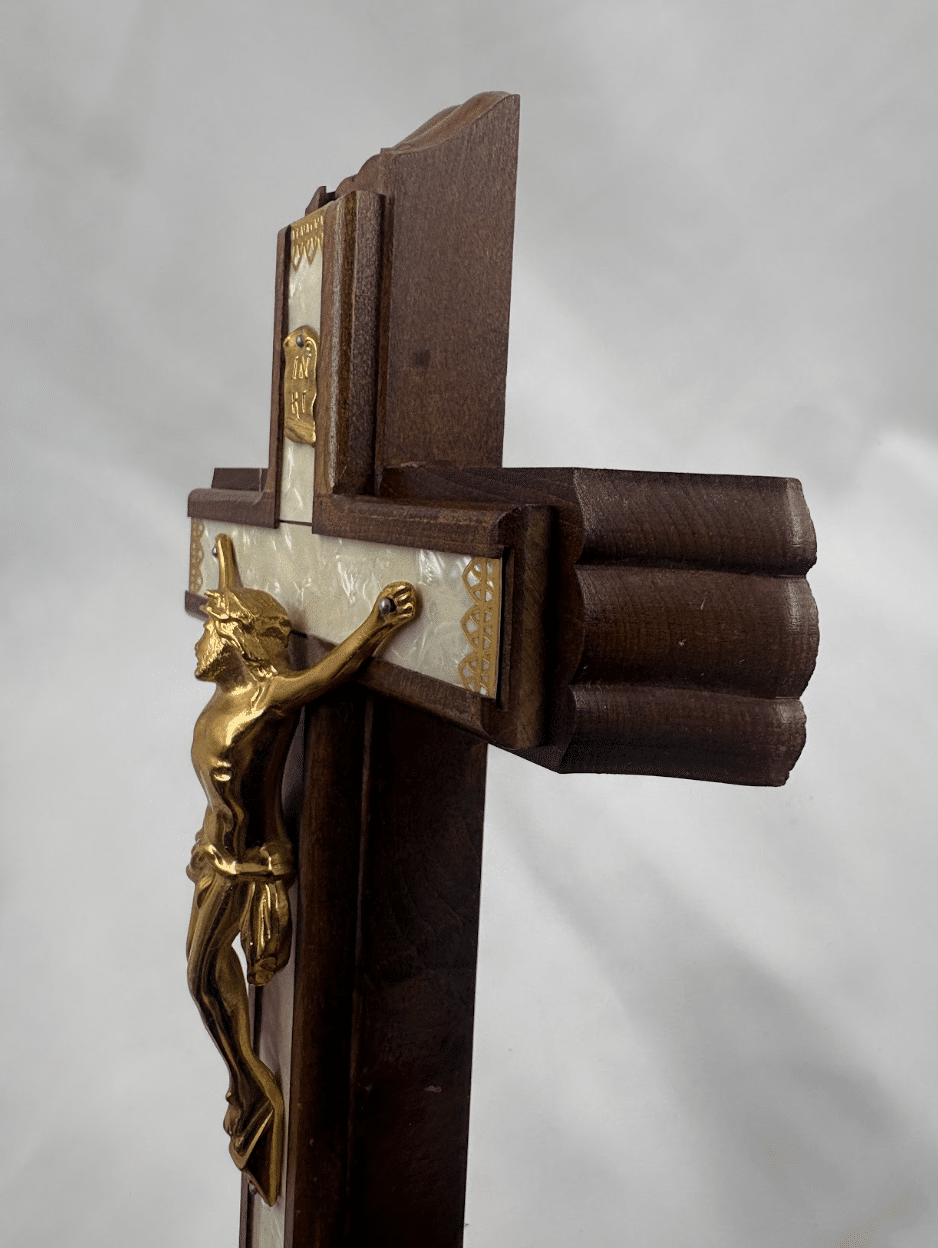
This handsome vintage Catholic Sick Call Crucifix, dating approximately to c. 1955–1975, is a particularly well-preserved example of that once-familiar Catholic household tradition. Crafted from dark-finished hardwood and embellished with luminous faux mother-of-pearl decorative inserts, the crucifix combines the restrained warmth of wood with the brighter devotional ornament characteristic of mid-20th-century Catholic religious goods.
Mounted upon the cross is a gold-tone cast metal corpus of Christ, accompanied by a matching INRI plaque. The gold finish remains remarkably bright, with minimal evidence of wear or corrosion, while the decorative inlays remain intact, firmly seated, and unusually vivid for their age. Together, the materials give the crucifix a dignified appearance suitable for a traditional Catholic home, chapel, prayer room, or collection of vintage devotional objects.
Yet its most important feature is hidden from view.
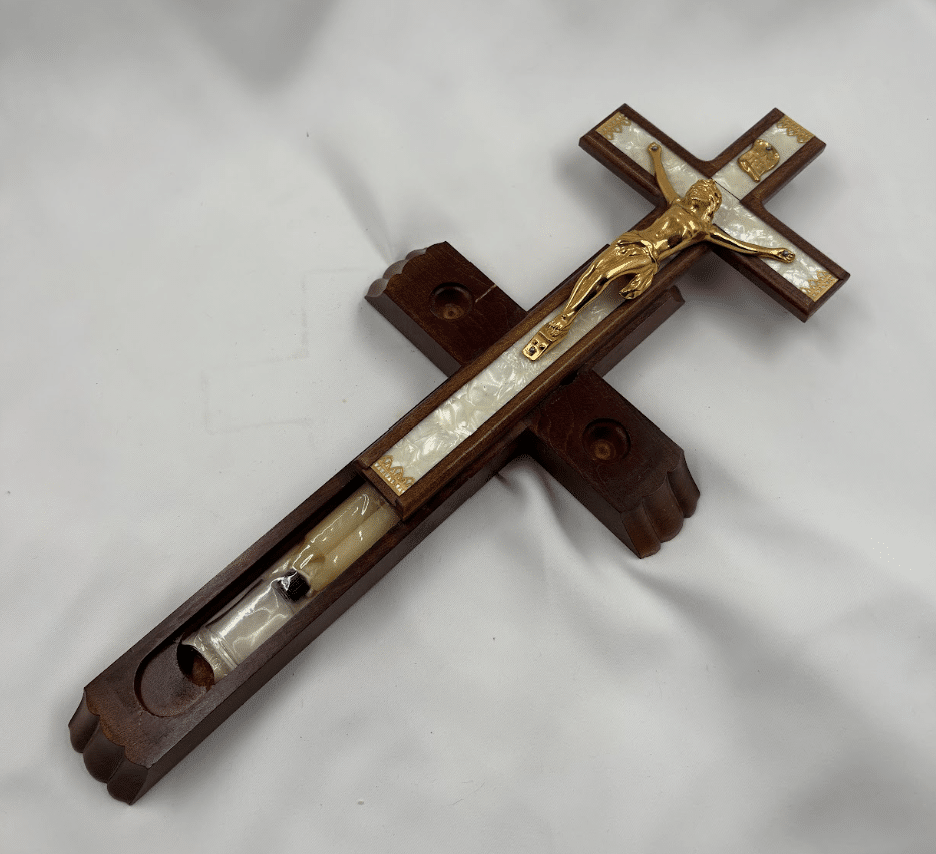
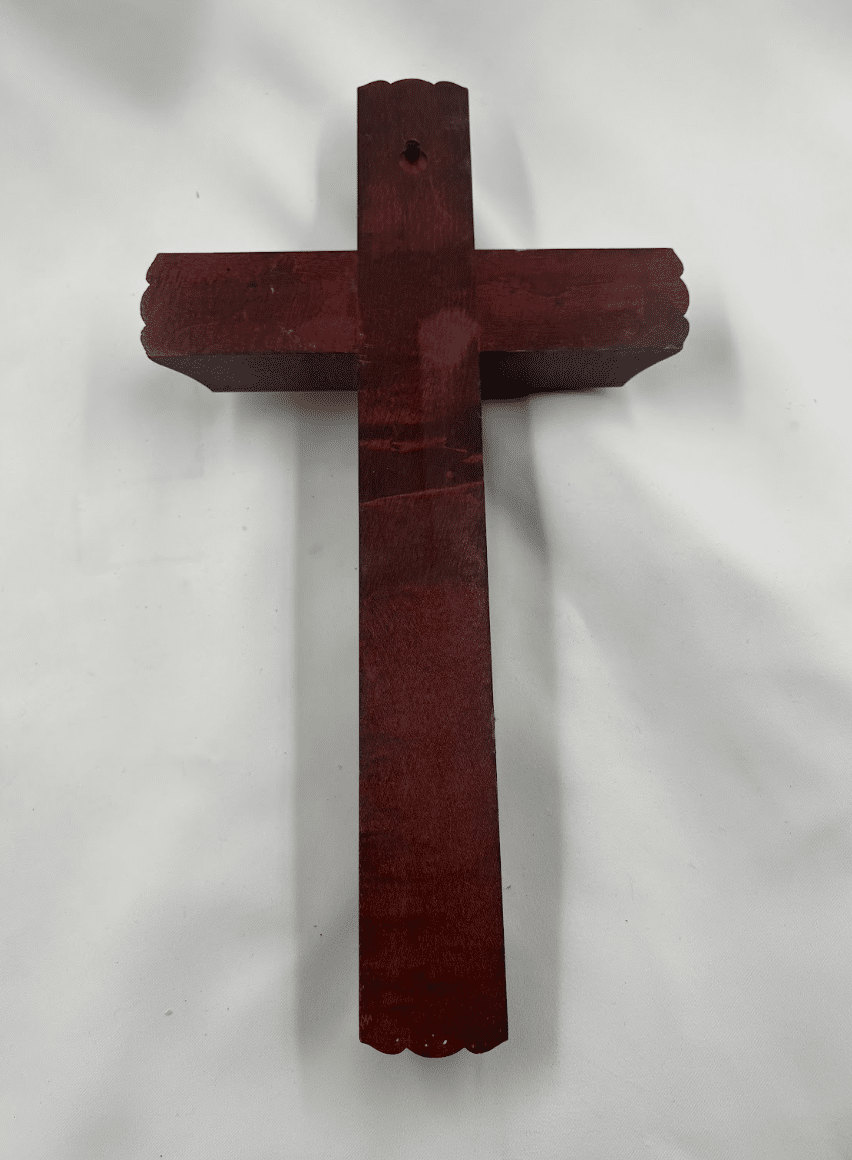
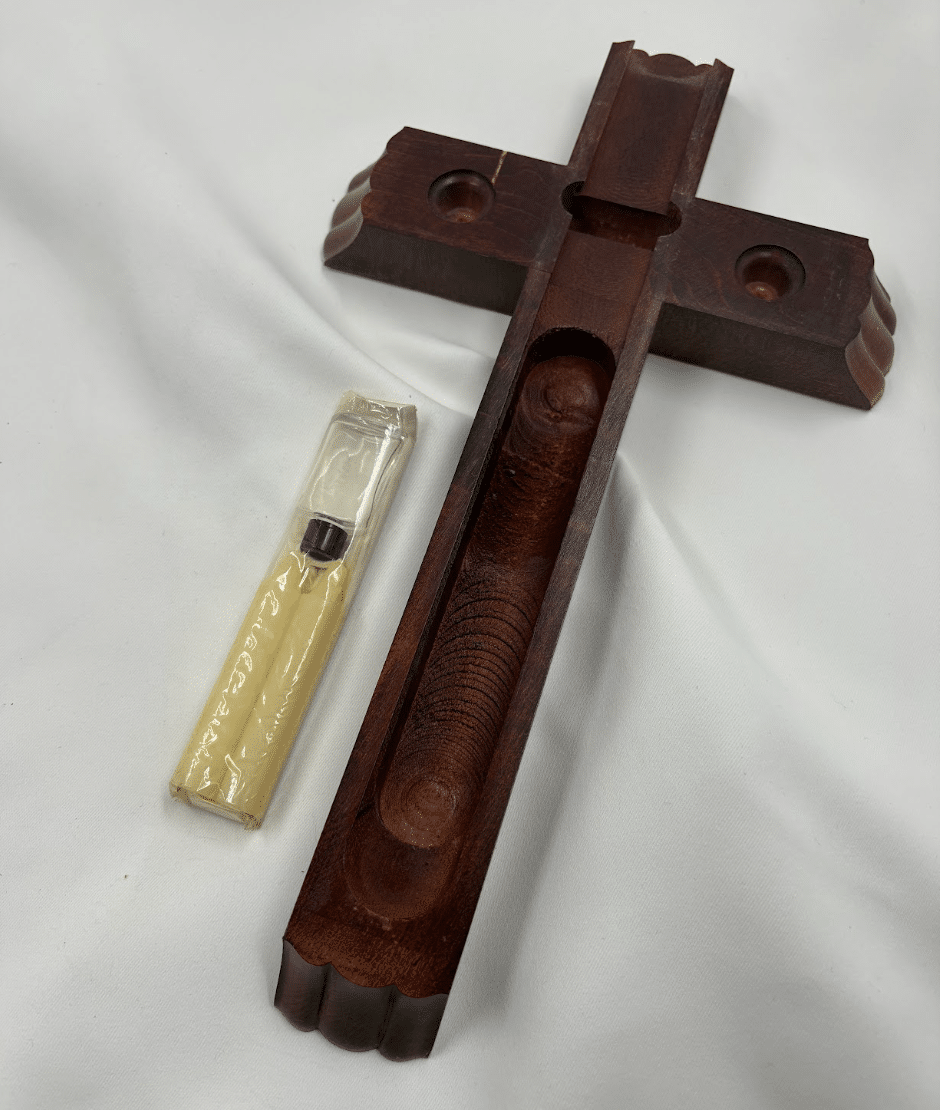
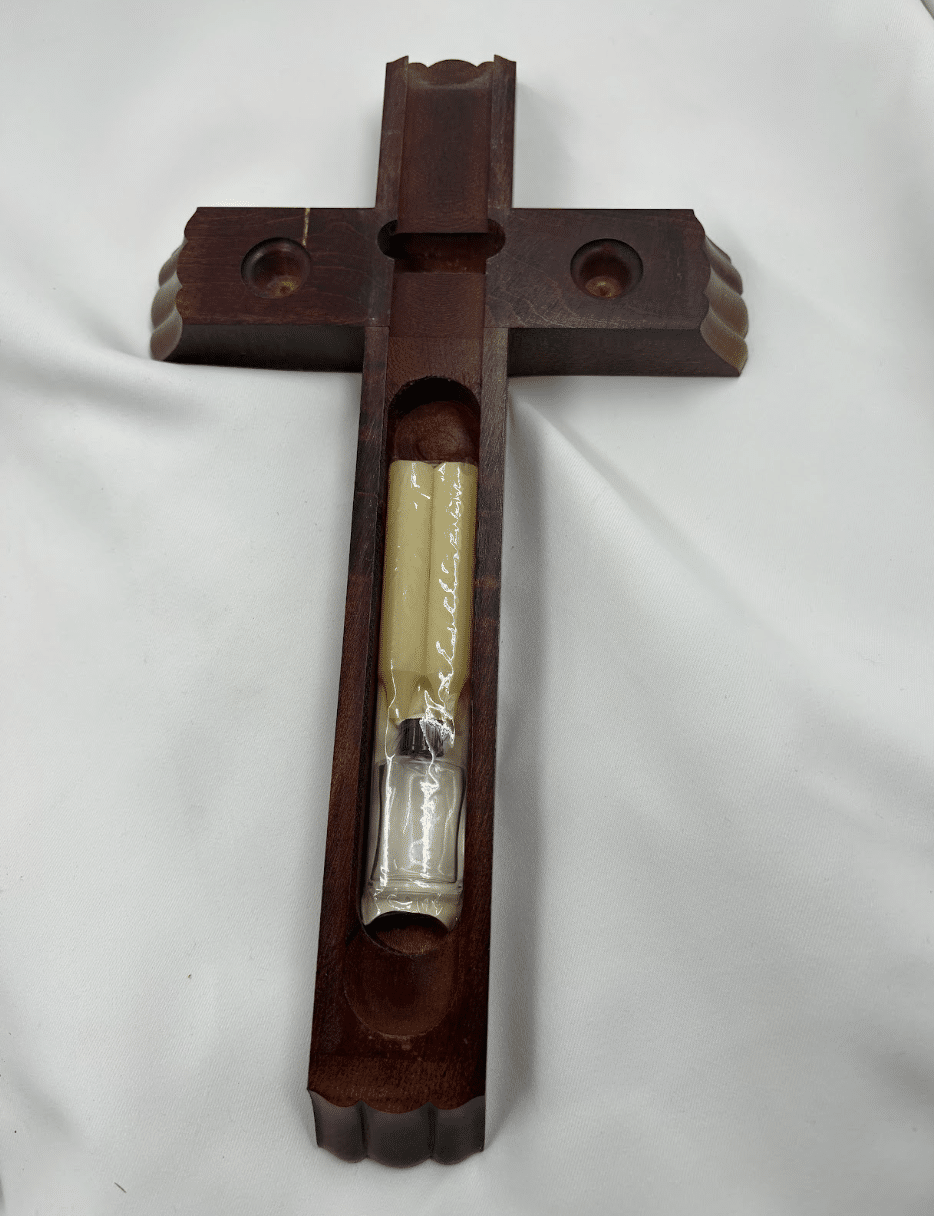
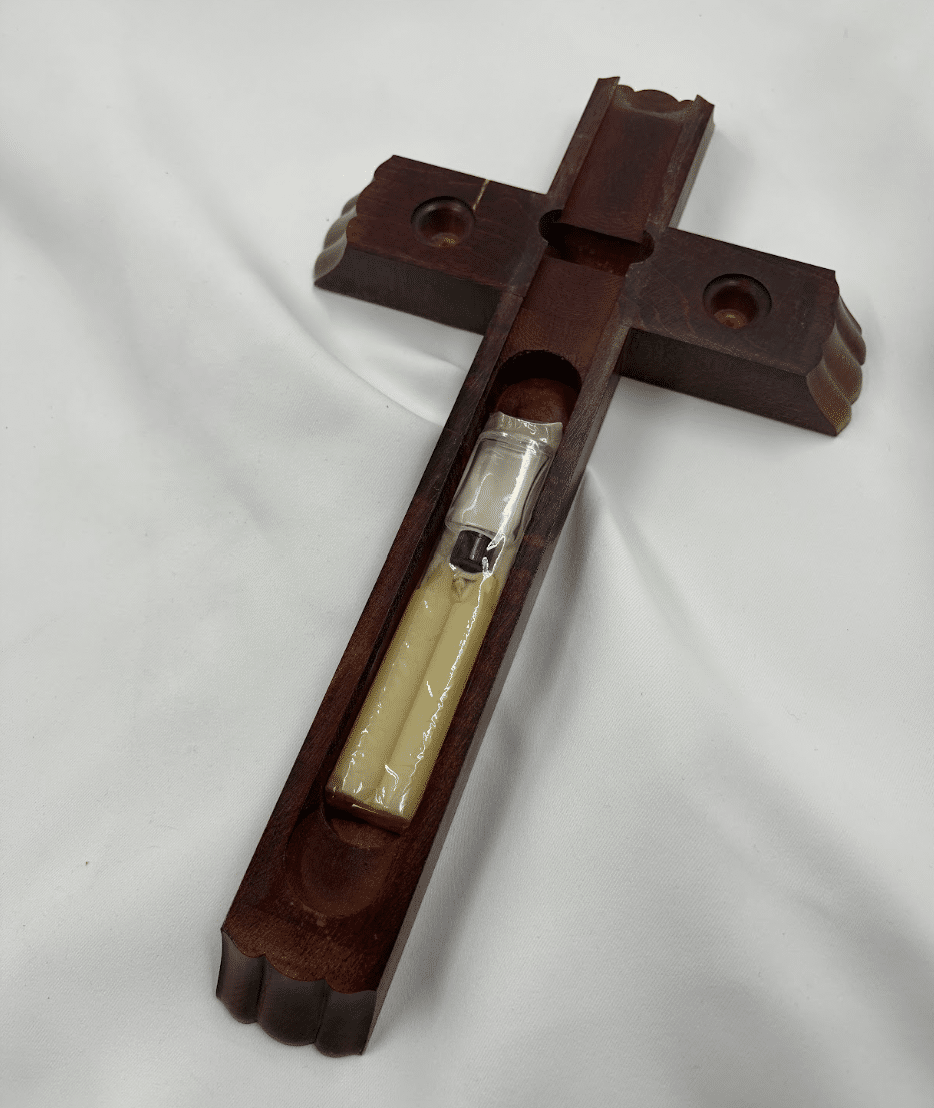
The rear of the crucifix opens to reveal the concealed compartment that identifies it as a Catholic Sick Call Crucifix, sometimes called a Sick Call Set or Last Rites Crucifix. Such crucifixes were traditionally kept in Catholic homes so that necessary devotional articles could be quickly prepared when a priest came to minister to someone who was seriously ill.
The priest might come to administer the Sacrament of the Anointing of the Sick, bring Viaticum—Holy Communion given to a Catholic approaching the end of earthly life—or offer the Church’s prayers for the sick and dying. What ordinarily hung quietly upon the wall could then become part of the family’s preparation for one of the most solemn moments of Catholic life.
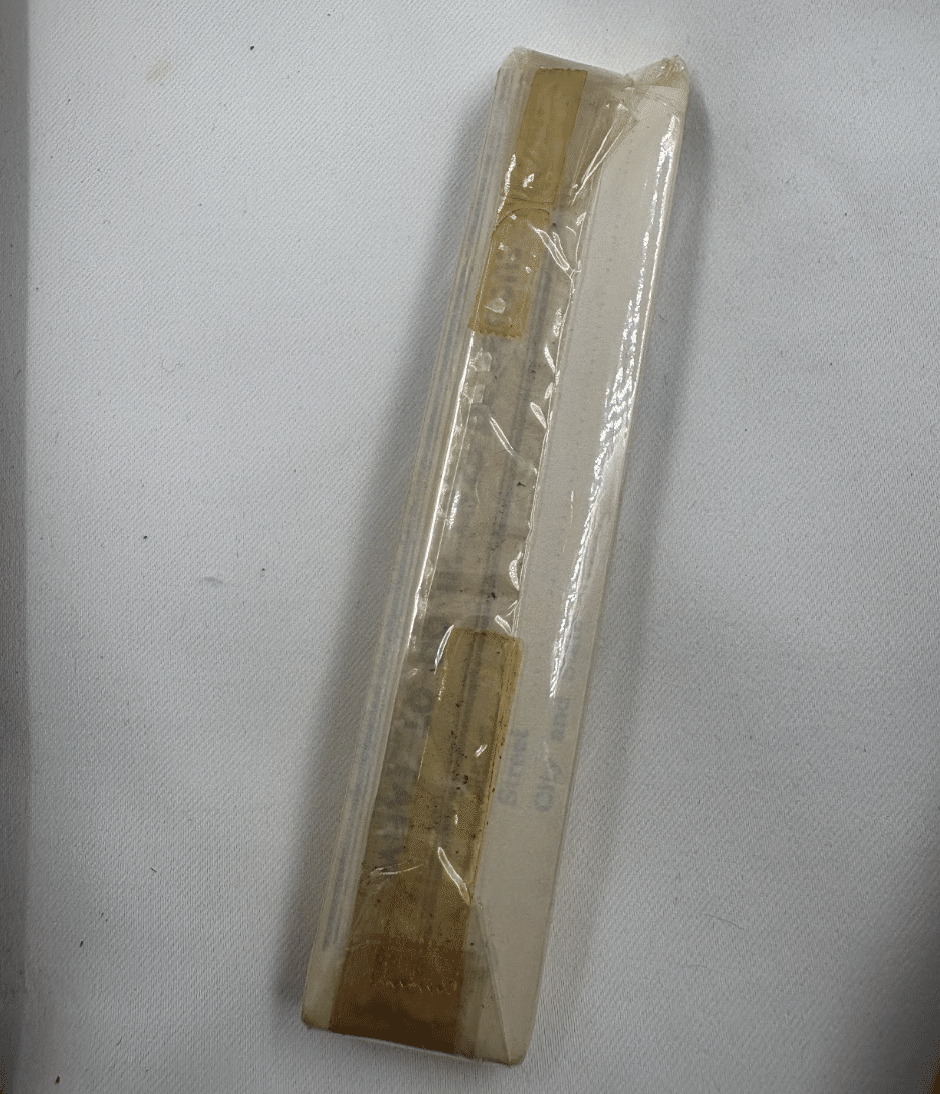
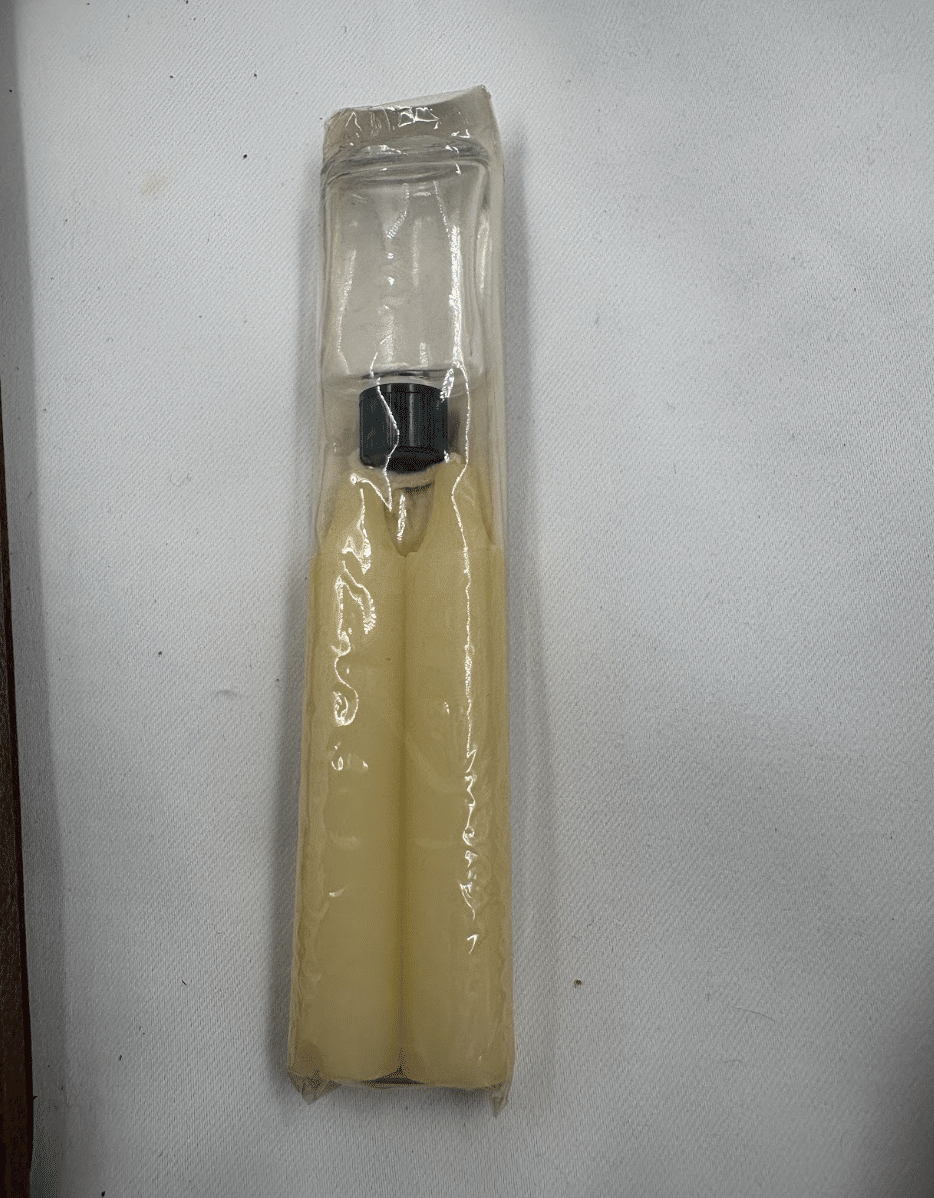
Especially desirable in this example are the surviving original accessories. The hidden compartment retains its candle and holy water bottle, together with their sealed packaging. These small and easily separated components are frequently absent from surviving Sick Call Crucifixes. Their presence gives this example greater historical integrity and collector interest, allowing the crucifix to be understood not merely as a decorative religious object but as the practical household sacramental it was intended to be.
The condition is exceptional for an object dating from the middle decades of the 20th century. The hardwood retains its rich finish with only minor evidence of age and no significant cracking observed. The corpus remains bright and well preserved. The faux mother-of-pearl panels are intact and show none of the lifting or substantial deterioration sometimes encountered on comparable examples. Most importantly, the interior accessories have remained with the crucifix.
Its precise country of manufacture has not been established. Comparable Catholic devotional goods were produced domestically in the United States as well as imported from established religious-goods manufacturers in Italy and Spain, then sold through Catholic bookstores, parish suppliers, and religious-goods companies throughout the mid-20th century.
Today, the crucifix survives as something increasingly uncommon: a nearly complete piece of Catholic domestic devotional history.
It recalls an era when preparations for the sacraments were woven directly into the physical life of the Catholic household. The crucifix waited upon the wall through years of ordinary days, yet behind it remained the candle and holy water reserved for an extraordinary one.
A cross made to be seen every day—and opened when faith was needed most.
Product Details
Item: Vintage Catholic Sick Call Crucifix / Sick Call Set
Classification: Catholic Antiques & Vintage Devotional Objects → Sick Call Sets & Crucifixes
Estimated Date: c. 1955–1975
Possible Origin: United States, Italy, or Spain
Material: Hardwood, likely walnut or mahogany-stained hardwood
Corpus: Gold-tone cast metal, likely finished zamak or similar alloy
Decorative Elements: Faux mother-of-pearl celluloid/plastic-style inlays
INRI: Matching gold-tone plaque
Construction: Wall crucifix with concealed rear storage compartment
Approximate Height: 12–14 inches
Approximate Width: 7–8 inches
Surviving Accessories: Original-style candle, holy water bottle, and sealed interior package as represented.