Shop Catholic Gifts
Shop by Sacrament
Shop by Devotion
Shop by Season
Shop Church Supplies
Modern Challenges
A Living Faith in a Rapidly Changing World
Introduction: Faith at the Crossroads of Modernity
 he Catholic Church, rooted in over two millennia of tradition, now stands within a world marked by unprecedented transformation. Scientific advancement, cultural shifts, political upheaval, and digital interconnectedness have reshaped how humanity understands truth, identity, and community. The modern age presents not a single challenge, but a constellation of pressures—intellectual, moral, social, and spiritual—that test the Church’s ability to remain both faithful to its deposit of faith and responsive to the needs of the present moment.
Yet, throughout history, the Church has endured similar periods of upheaval. What distinguishes the present era is not merely the pace of change, but its global reach and its profound influence on every dimension of human life. The challenges of today are therefore not obstacles alone—they are invitations to renewal, discernment, and deeper witness.
Secularization and the Decline of Religious Affiliation
|
One of the most visible developments in modern society is the steady rise of secularization. In many regions—particularly in Europe and parts of North America—religious belief and practice have declined significantly. Churches that once formed the heart of community life now stand quiet, their influence diminished in public discourse. |
|
Secularization is not merely the absence of religion; it reflects a broader cultural shift in which faith is increasingly regarded as a private preference rather than a shared foundation of truth. Scientific rationalism, material prosperity, and individual autonomy have contributed to a worldview in which transcendence is often eclipsed by immediacy.
For the Church, this presents a profound pastoral challenge: how to proclaim eternal truths in a culture that often questions the very existence of objective truth. The response has not been withdrawal, but renewed evangelization—seeking to reintroduce the Gospel in ways that speak meaningfully to contemporary hearts.
Moral and Ethical Debates in a Changing World
Modernity has ushered in complex ethical questions that previous generations could scarcely have imagined. Advances in medicine, biotechnology, and artificial intelligence have expanded human capability, but they have also raised urgent moral concerns.
Issues surrounding the sanctity of life, human dignity, marriage, and the nature of the human person are at the forefront of contemporary debate. Topics such as abortion, euthanasia, genetic engineering, and gender identity challenge the Church to articulate its teachings with clarity, compassion, and intellectual rigor.
The Church’s moral tradition, grounded in natural law and divine revelation, offers a coherent framework for navigating these questions. Yet communicating this vision in a pluralistic society requires not only doctrinal precision but also pastoral sensitivity—engaging individuals where they are, while inviting them toward truth.
The Digital Revolution and the Transformation of Community
The digital age has transformed how people communicate, learn, and form relationships. Social media, instant connectivity, and the vast expanse of online information have reshaped human interaction in ways both beneficial and disruptive.
For the Church, the digital revolution presents both an opportunity and a challenge. On one hand, it allows the Gospel to reach across continents instantly, bringing sacred teaching, liturgy, and community into homes around the world. On the other, it fosters distraction, fragmentation, and a culture of superficial engagement that can hinder deeper spiritual life.
The question is no longer whether the Church should engage the digital world, but how. Authentic presence in digital spaces requires not only technological adaptation but a renewed emphasis on truth, beauty, and meaningful encounter in an environment often dominated by noise.
Featured Catholic Blog Post
 The Invitation: God’s Call to the Wedding Feast - The Invitation: God's Call to the Wedding Feast A Catholic Reflection on Matthew 22:1–14 Imagine receiving an invitation to a royal wedding. The king himself has prepared the feast, his servants have set the tables, and the finest food awaits the guests. The celebration promises an abundance that few could ever imagine, and your name appears among those invited. Nothing remains for you to do but come. Yet despite the honor of the invitation, you decline. Perhaps your work demands…
 Scandal, Trust, and Institutional Renewal
Few challenges have wounded the Church more deeply in recent decades than the crisis of abuse and the failures of leadership that allowed it to persist. These events have shaken the trust of the faithful and the broader world, casting a shadow over the Church’s moral authority.
The path forward requires more than acknowledgment—it demands genuine reform, accountability, and transparency. Across the global Church, efforts have been made to strengthen safeguarding measures, support victims, and ensure that such failures are never repeated.
At the same time, the crisis has prompted a deeper reflection on holiness, responsibility, and the nature of ecclesial leadership. It has become a moment of purification—painful, yet necessary—calling the Church back to the integrity at the heart of its mission.
Globalization and Cultural Diversity
The Catholic Church is uniquely global, present in nearly every nation and culture. In the modern era, globalization has intensified this diversity, bringing new vitality while also presenting challenges of unity and identity.
As Christianity grows in regions such as Africa and Asia, the cultural center of the Church is shifting. Different communities bring distinct traditions, expressions, and pastoral needs. Balancing this diversity with the unity of doctrine and practice is an ongoing task.
The Church’s universality—its ability to embrace all peoples while maintaining a common faith—remains one of its defining strengths. In a fragmented world, it offers a vision of unity that transcends borders, languages, and cultures.
Related products
-

Saint Benedcit Bracelet White/turq – Medals & Jewelry
$21.00 -
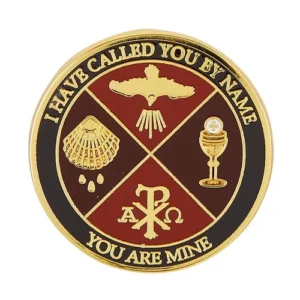
OCIA Lapel Pin – Medals & Jewelry
$60.00 -

Saint Benedict Key Chain – Medals & Jewelry
$24.00 -

Our Lady of Guadalupe Dangle Fabric Bracelet – Medals & Jewelry
$24.00 -
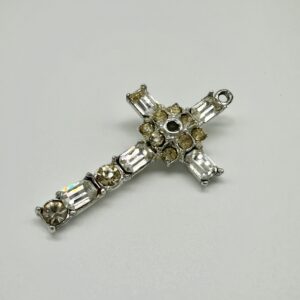
Radiance of Redemption Cross Pendant – Devotional Gift
$49.00ANT -
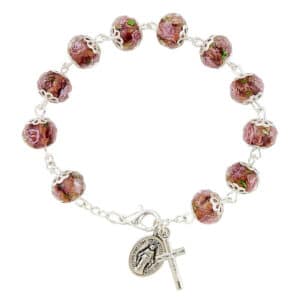
Murano Amethyst Bracelet
$34.00
The Call to New Evangelization
In response to modern challenges, the Church has embraced what is often called the “New Evangelization”—a renewed effort to proclaim the Gospel with fresh ardor, methods, and expression. This mission is not limited to distant lands; it is directed especially toward those who have grown distant from the faith.
The New Evangelization emphasizes personal encounter, authentic witness, and the integration of faith into daily life. It calls upon clergy, religious, and laity alike to become active participants in the Church’s mission, transforming not only individuals but entire cultures.
Rather than retreating from the modern world, the Church seeks to engage it—offering not merely answers, but a vision of life rooted in truth, beauty, and love.
Conclusion: A Church Renewed Through Challenge
The modern era presents undeniable difficulties, yet it also reveals the enduring vitality of the Catholic Church. Challenges that might seem to threaten its future instead become catalysts for renewal, prompting deeper reflection and more authentic witness.
Across centuries, the Church has navigated empires and revolutions, persecutions and renaissances. Today is no different. In the face of secularization, moral complexity, technological change, and institutional trials, the Church continues its mission—proclaiming the Gospel, serving humanity, and bearing witness to a truth that transcends every age.
Modern challenges do not define the Church’s decline; they illuminate its resilience. And in that resilience lies the promise of its future.