Shop Catholic Gifts
Shop by Sacrament
Shop by Devotion
Shop by Season
Shop Catholic Supplies
The Modern Papacy
The Shepherd of a Global Church in an Age of Transformation
Introduction
 he modern papacy stands at the intersection of antiquity and immediacy—an institution rooted in the apostolic authority of Saint Peter, yet operating within a rapidly evolving global civilization. From the aftermath of the Enlightenment to the digital age, the Bishop of Rome has navigated revolutions, wars, ideological upheavals, and unprecedented technological change. In this era, the papacy has not diminished in significance; rather, it has assumed a renewed role as a moral voice, a diplomatic presence, and a unifying shepherd for more than a billion Catholics across continents. The modern pope is at once a guardian of doctrine, a visible sign of unity, and a witness to the enduring relevance of the Gospel in contemporary life.
Defining the Modern Papacy
|
The term “modern papacy” typically refers to the period from the 19th century to the present—an era marked by profound political, cultural, and ecclesial transformation. It begins in the shadow of the French Revolution and unfolds through the collapse of monarchies, the rise of secular nation-states, and the globalization of the Church. |
|
Core Characteristics of the Modern Papacy:
- Loss of Temporal Power – The papacy transitioned from ruling the Papal States to a purely spiritual authority after 1870
- Doctrinal Clarification – Increased emphasis on defining teachings in response to modern philosophical challenges
- Global Expansion – The Church became increasingly international in structure and leadership
- Pastoral Engagement – Popes emerged as visible, pastoral figures engaging directly with the faithful
- Media Presence – The papacy adapted to print, radio, television, and digital communication
This transformation did not alter the essence of the papacy but refined its mission—shifting from territorial governance to universal spiritual leadership.
The Crisis and Renewal of the 19th Century
The 19th century was a crucible in which the modern papacy was forged. The revolutionary movements that swept Europe challenged both monarchy and Church authority, culminating in the loss of the Papal States in 1870.
Key Developments:
- Pontificate of Pope Pius IX (1846–1878)
One of the longest papal reigns in history, marked by dramatic upheaval and theological clarity
- First Vatican Council (1869–1870)
Defined the doctrine of papal infallibility, affirming the pope’s authority in matters of faith and morals
- End of Temporal Rule
The papacy relinquished political sovereignty, focusing entirely on spiritual leadership
Paradoxically, the loss of earthly territory strengthened the papacy’s moral authority. Freed from political entanglement, the pope emerged as a universal spiritual father rather than a regional ruler.
The Papacy in a World at War
The 20th century confronted the papacy with global conflict on an unprecedented scale. Two world wars tested the Church’s role as a voice for peace and human dignity.
Major Figures:
- Pope Benedict XV (1914–1922)
Advocated tirelessly for peace during World War I, often ignored by political powers - Pope Pius XII (1939–1958)
Led the Church during World War II, navigating complex moral and diplomatic challenges
Papal Response:
- Calls for peace and reconciliation
- Humanitarian assistance and protection of refugees
- Defense of human dignity against totalitarian ideologies
In these moments of crisis, the papacy functioned as a conscience for the world—often unheard, yet unwavering.
Vatican II and the Renewal of the Church
The Second Vatican Council (1962–1965) marked a defining moment in the modern papacy and the life of the Church.
Vision of Renewal:
- Engagement with the modern world
- Renewal of liturgy and pastoral practice
- Emphasis on the universal call to holiness
- Promotion of ecumenism and interreligious dialogue
Key Popes:
- Pope John XXIII – Convened the council with a vision of renewal and openness
- Pope Paul VI – Guided its completion and implementation
Vatican II did not alter doctrine but expressed it in a way that could speak more clearly to the modern world. The papacy became increasingly pastoral, dialogical, and globally engaged.
Featured Catholic Blog Post
 The Invitation: God’s Call to the Wedding Feast - The Invitation: God's Call to the Wedding Feast A Catholic Reflection on Matthew 22:1–14 Imagine receiving an invitation to a royal wedding. The king himself has prepared the feast, his servants have set the tables, and the finest food awaits the guests. The celebration promises an abundance that few could ever imagine, and your name appears among those invited. Nothing remains for you to do but come. Yet despite the honor of the invitation, you decline. Perhaps your work demands…
 The Global Papacy of John Paul II
The pontificate of Pope John Paul II (1978–2005) transformed the papacy into a truly global presence.
Hallmarks of His Papacy:
- Extensive international travel, reaching millions directly
- Role in the spiritual resistance to communism, especially in Eastern Europe
- Promotion of human dignity, religious freedom, and the sanctity of life
- Establishment of World Youth Day, energizing a new generation of Catholics
John Paul II embodied a papacy that was not distant, but profoundly present—walking among the people of the world as both teacher and witness.
Faith and Reason in the Modern World
Pope Benedict XVI (2005–2013) emphasized the harmony of faith and reason in a world increasingly shaped by secularism.
Key Contributions:
- Defense of Christian intellectual tradition
- Clarification of doctrinal continuity
- Addressing moral relativism and cultural fragmentation
His papacy reaffirmed that the Church’s teachings are not opposed to reason, but illuminate it.
The Papacy in the Contemporary Era
Pope Francis (2013–present) has brought renewed emphasis to pastoral care, mercy, and the Church’s mission in the modern world.
Central Themes:
- Care for the poor and marginalized
- Stewardship of creation
- Emphasis on mercy and reconciliation
- Outreach to those on the peripheries of society
His papacy highlights the Church as a field hospital—present in the wounds of humanity.
Related products
-
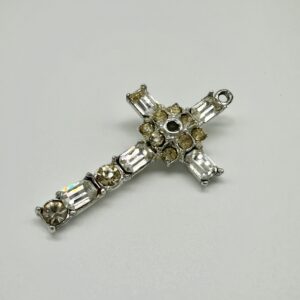
Radiance of Redemption Cross Pendant – Devotional Gift
$49.00ANT -
Clip on Miraculous Medal Set of 4
$49.00BULK -
Murano Aqua Bracelet – Rosaries & Chaplets
$34.00 -

Saint Benedcit Bracelet White/turq – Medals & Jewelry
$21.00 -
Marian Pin – Medals & Jewelry
$60.00 -

Saint Benedict Ring – Medals & Jewelry
$215.00
The Role of the Modern Pope
Today, the pope fulfills multiple roles that reflect the complexity of the modern world:
Spiritual Leader
The successor of Saint Peter, entrusted with safeguarding doctrine and guiding the faithful
Universal Pastor
A visible sign of unity for Catholics across cultures, languages, and nations
Moral Voice
A global advocate for human dignity, justice, and peace
Diplomatic Presence
The Holy See maintains relations with nations worldwide, promoting dialogue and cooperation
Cultural Witness
Engaging modern questions of science, ethics, and human identity
The Papacy and the Digital Age
The modern papacy now speaks not only from the balcony of Saint Peter’s Basilica, but across digital networks that span the globe instantly.
From papal encyclicals to social media messages, the voice of the pope reaches believers and non-believers alike—continuing the ancient mission of proclaiming truth in every age.
Conclusion
The modern papacy is not a departure from the past, but its continuation under new conditions. Rooted in apostolic tradition, it has adapted to a world transformed by revolution, technology, and globalization.
Through war and peace, crisis and renewal, the pope remains a steadfast figure—calling humanity toward truth, unity, and holiness.
In an age often marked by fragmentation and uncertainty, the modern papacy stands as a sign of continuity: a living link between the Church of the apostles and the Church of today.