Shop Catholic Gifts
Shop by Sacrament
Shop by Devotion
Shop by Season
Shop Church Supplies
Catholic Counter Reformation
Renewal, Reform, and the Reassertion of Catholic Identity (c. 1545–1700)
Introduction: A Church Renewed Through Trial
 he Catholic Counter-Reformation—more precisely called the Catholic Reformation—was one of the most decisive and transformative periods in the history of the Church. Emerging in response to the upheaval of the Protestant Reformation, it was not merely a reaction, but a profound internal renewal. Through doctrinal clarification, moral reform, artistic flourishing, and missionary expansion, the Church rearticulated its identity with renewed clarity and spiritual vigor.
This era witnessed the convergence of saints, scholars, artists, and reformers who together reshaped Catholic life. The result was not only the reaffirmation of Catholic doctrine, but the revitalization of its global mission and cultural influence.
Historical Context: Crisis and Opportunity
|
The Protestant Challenge The early 16th century saw widespread calls for reform within the Church. These culminated dramatically in 1517, when Martin Luther challenged Church teachings and practices. His actions ignited a movement that rapidly spread across Europe, fracturing Christian unity. |
||
|
Key issues raised included:
|
|
|
| The rapid expansion of Protestant movements in Germany, Switzerland, England, and beyond forced the Church to confront both internal weaknesses and external opposition. | ||
The Council of Trent (1545–1563): Defining Doctrine and Reform
At the heart of the Counter-Reformation stood the monumental Council of Trent. Convened intermittently over nearly two decades, it provided the Church with a definitive response to Protestant theology while addressing long-standing internal abuses.
Doctrinal Clarifications
The Council reaffirmed core Catholic teachings:
- Scripture and Tradition as co-equal sources of divine revelation
- Justification as a process involving faith and works
- The Seven Sacraments as instituted by Christ
- The Real Presence of Christ in the Eucharist
- The authority of the Magisterium
Reform Measures
Equally significant were the Council’s reforms:
- Establishment of seminaries for proper priestly formation
- Enforcement of clerical discipline and residency requirements
- Regulation of indulgences to prevent abuse
- Standardization of the Roman Missal and Catechism
The Council of Trent became the doctrinal and structural foundation of Catholic life for centuries to follow.
The Rise of New Religious Orders
The Counter-Reformation was energized by dynamic new religious orders dedicated to education, missionary work, and spiritual renewal.
The Society of Jesus (Jesuits)
Founded by Ignatius of Loyola in 1540, the Jesuits became the intellectual and missionary vanguard of the Church.
Their contributions included:
- Founding schools and universities across Europe
- Engaging Protestant thinkers in theological debate
- Leading global missions in Asia, Africa, and the Americas
Other Reforming Orders
- The Capuchins revitalized preaching and service to the poor
- The Ursulines, founded by Angela Merici, focused on the education of girls
- The Discalced Carmelites, reformed by Teresa of Ávila and John of the Cross, emphasized contemplative renewal
These movements rekindled spiritual fervor and restored credibility to religious life.
The Role of Art and the Baroque Vision
The Counter-Reformation harnessed the power of art to inspire devotion and communicate theological truths. This gave rise to the Baroque style, characterized by emotional intensity, grandeur, and dramatic realism.
Artistic Objectives
- To make the faith visually compelling and accessible
- To evoke awe, reverence, and spiritual immediacy
- To reinforce Catholic teachings through imagery
Artists such as Caravaggio and Gian Lorenzo Bernini created masterpieces that brought biblical and saintly narratives vividly to life.
Church architecture and decoration became immersive experiences—intended not merely to adorn, but to transform the soul.
Related products
-
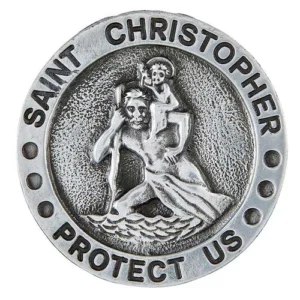
Saint Christopher Visor Clip – Catholic Home & Living
$14.00 -

Murano Amethyst Bracelet
$34.00 -

Our Lady of Guadalupe Dangle Fabric Bracelet – Medals & Jewelry
$24.00 -
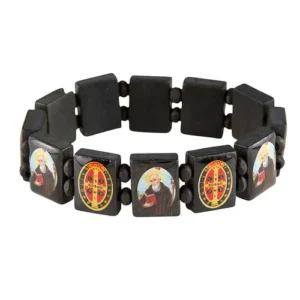
Black Wood Saint Benedict Bracelet with Image – Set of 12
$48.00BULK -

Jesus Reason Xmas Buttons 36pk – Medals & Jewelry
$49.00 -
Marian Pin – Medals & Jewelry
$60.00
The Roman Inquisition and the Index of Forbidden Books
In its effort to preserve doctrinal integrity, the Church also established mechanisms to combat heresy.
The Roman Inquisition
Established in 1542, the Inquisition sought to:
- Investigate and correct heretical beliefs
- Maintain theological unity
- Protect the faithful from doctrinal error
The Index Librorum Prohibitorum
This list of prohibited books aimed to:
- Prevent the spread of harmful ideas
- Safeguard orthodoxy in an age of rapidly expanding print culture
While controversial in later historical evaluation, these institutions reflected the Church’s determination to defend its teachings during a period of profound upheaval.
Global Expansion: A Missionary Church
The Counter-Reformation coincided with—and helped propel—the global expansion of Christianity.
Key Figures in Missionary Work
- Francis Xavier carried the Gospel to India, Japan, and Southeast Asia
- Matteo Ricci engaged Chinese culture with intellectual and scientific dialogue
- Missionaries in the Americas established churches, schools, and communities
This period marked the transformation of Catholicism into a truly global faith.
Spiritual Renewal and the Saints
The Counter-Reformation produced a remarkable generation of saints whose lives embodied reform.
- Charles Borromeo implemented Tridentine reforms in Milan
- Francis de Sales emphasized gentleness and pastoral care
- Philip Neri fostered joyful spirituality in Rome
Their example restored moral credibility and inspired renewed devotion among the faithful.
Explore the Catholic Library
Lasting Legacy of the Counter-Reformation
The impact of the Counter-Reformation was enduring and far-reaching:
Doctrinal Stability
The clarifications of Trent defined Catholic theology for centuries and continue to shape Church teaching today.
Institutional Strength
Reforms in clergy education and discipline created a more effective and unified Church structure.
Cultural Flourishing
Baroque art and architecture left a lasting imprint on global culture and sacred expression.
Global Catholicism
Missionary expansion established Catholicism on every inhabited continent.
Conclusion: Renewal Through Reform
The Catholic Counter-Reformation stands as a testament to the Church’s capacity for renewal in times of crisis. It was an era not only of defense, but of transformation—marked by clarity of doctrine, depth of spirituality, and expansion of mission.
In responding to division, the Church rediscovered its foundations and rearticulated its vision for the world. The legacy of this period endures in Catholic theology, liturgy, art, and global presence—an enduring witness to faith refined through trial and renewed in truth.
Featured Catholic Blog Post
 The Invitation: God’s Call to the Wedding Feast - The Invitation: God's Call to the Wedding Feast A Catholic Reflection on Matthew 22:1–14 Imagine receiving an invitation to a royal wedding. The king himself has prepared the feast, his servants have set the tables, and the finest food awaits the guests. The celebration promises an abundance that few could…