A Catholic Reflection on Matthew 22:1–14
Imagine receiving an invitation to a royal wedding. The king himself has prepared the feast, his servants have set the tables, and the finest food awaits the guests. The celebration promises an abundance that few could ever imagine, and your name appears among those invited. Nothing remains for you to do but come. Yet despite the honor of the invitation, you decline. Perhaps your work demands attention, your responsibilities seem more urgent, or you simply believe another opportunity will come along someday.
In the Gospel of Matthew, Jesus tells a parable about a king who prepares a wedding feast for his son. What begins as a joyful invitation soon reveals something troubling about the human heart. The invited guests refuse to come, even though the king has prepared everything for them. Their refusal exposes a spiritual danger that reaches well beyond the world of ancient kings and wedding banquets. Christ speaks to every generation about the invitation God extends to the human soul, the distractions that draw us away from Him, and the transformation that must follow when we answer His call.
A Feast Prepared for the Son
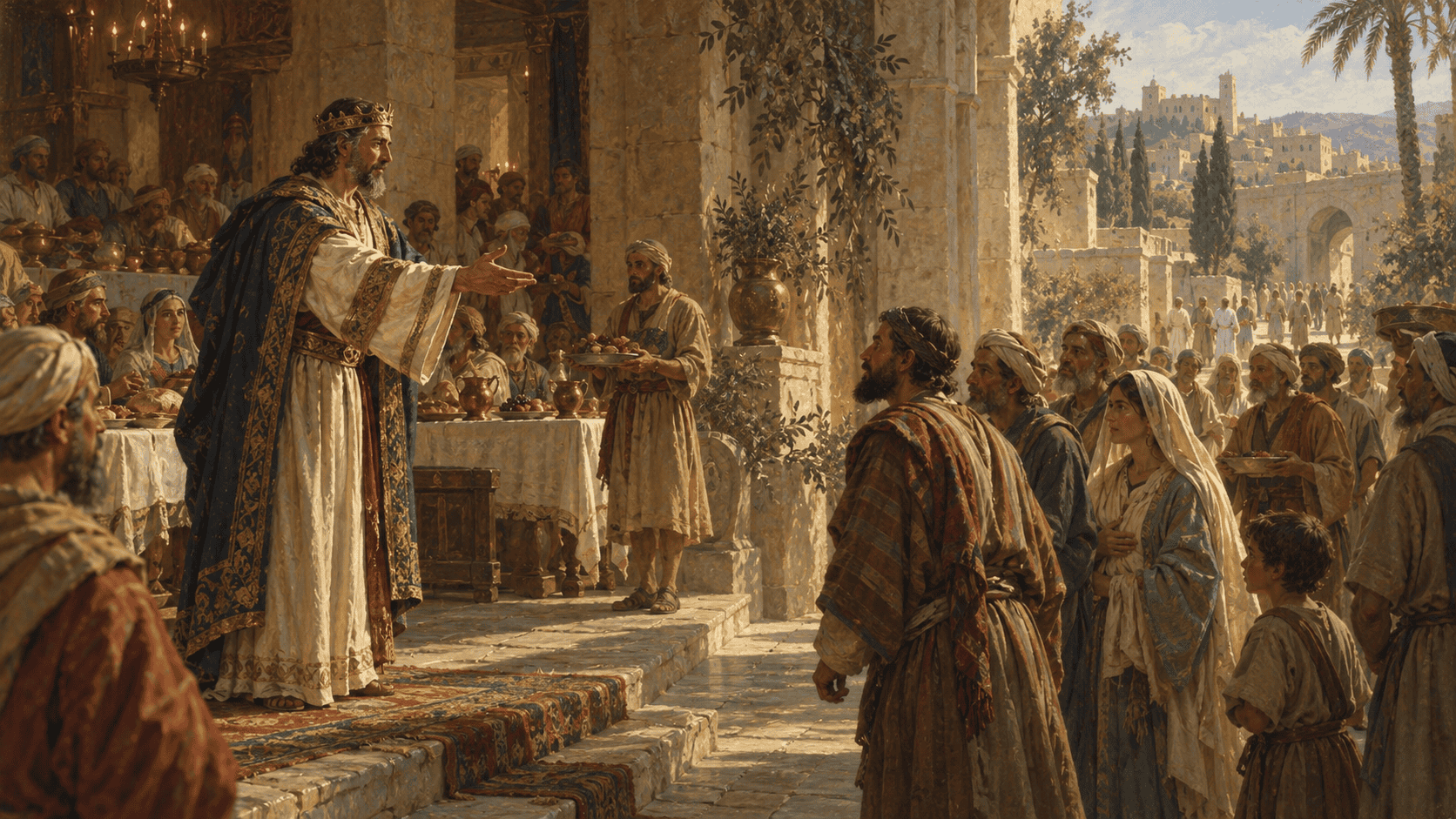
In Matthew 22:1–14, Jesus describes a king who arranges a wedding banquet for his son. When the celebration approaches, the king sends his servants to summon the invited guests, but they refuse to attend. Undeterred, he sends additional servants with an even more generous message. The meal stands ready, the oxen and fattened cattle have been prepared, and everything awaits their arrival. Still, the guests will not come. Some return to their farms and businesses, while others respond with hostility, mistreating and killing the king’s messengers.
The king answers this rebellion with judgment before sending his servants into the streets to invite others. They gather everyone they encounter, both good and bad, until the wedding hall fills with guests. Jesus places this parable within a series of teachings that challenge those who resist God’s kingdom. The wedding feast represents the joy of that kingdom, while the king’s invitation reveals God’s initiative in calling His people into communion with Him.
The guests do not create the feast, nor do they earn their invitation through personal achievement. The king prepares the celebration and offers them a place at his table. In much the same way, the Christian life begins not with our efforts to reach God but with God’s gracious movement toward us. Before we recognize our need for Him, He has already extended His invitation. Before we learn to pray, He has already called us into a relationship with Him. Grace begins with God’s generosity, and our lives unfold within the freedom to accept or reject His call.
When Ordinary Things Become Obstacles
One of the most striking details in the parable concerns the guests who simply walk away. They do not all reject the king through open hostility. Some return to ordinary responsibilities: a farm, a business, the familiar demands of daily life. These activities carry no inherent evil. Work, family obligations, and the care of earthly affairs belong to a well-ordered human life. Yet even good things can become obstacles when we allow them to occupy the place that belongs to God.
This danger rarely announces itself through a dramatic decision to abandon the faith. More often, it enters quietly through the habits of everyday life. We postpone prayer because another task seems more pressing. We delay Confession because our schedules feel crowded. We miss an opportunity for spiritual renewal because we believe we can attend to such matters when life becomes less demanding. Gradually, the things that should serve our vocation begin to compete with the One who gave us that vocation.
Jesus does not condemn honest work or necessary responsibilities. Rather, He warns against allowing temporary concerns to obscure the eternal good for which God created us. The farmer and the merchant in the parable may have considered their activities entirely reasonable, yet their priorities prevented them from recognizing the extraordinary gift placed before them. Their mistake invites us to examine our own lives with humility. We may profess our love for God while repeatedly offering Him whatever time remains after everything else has claimed our attention.
The wedding feast awaits, but the invitation calls for a response. We cannot indefinitely postpone the spiritual life while assuming that tomorrow will provide a more convenient moment. Christ calls us to follow Him amid the circumstances we face today, not merely within the quieter circumstances we hope to enjoy someday.
The Invitation Reaches the Streets
When the first guests refuse, the king sends his servants beyond the original invitation list. He directs them into the main roads, where they gather everyone they find until the banquet hall fills. The servants bring in both good and bad, revealing the remarkable breadth of the king’s invitation. Those who never expected a place at the royal table now receive an opportunity to enter the celebration.
Here the parable reveals the extraordinary generosity of God’s mercy. His invitation does not belong exclusively to those who possess wealth, influence, education, or social standing. The kingdom reaches beyond the boundaries that human beings so often construct, and the Gospel calls people from every nation and condition of life into communion with Christ. The Church carries this universal invitation through her mission to proclaim the Good News to the ends of the earth.
Throughout His earthly ministry, Jesus demonstrated this mercy in encounters that challenged the expectations of His contemporaries. He welcomed tax collectors, spoke with those whom others avoided, healed the sick, and called sinners to repentance. His compassion never suggested that sin did not matter. Rather, His love opened a path toward conversion, offering those who had wandered far from God the possibility of a renewed life.
The king’s servants gather both good and bad, but the invitation does not imply that goodness and evil become interchangeable. Those who enter the wedding hall encounter a celebration worthy of the king’s son, and their presence carries responsibilities that the parable will soon make clear. God’s mercy welcomes us in our need, but His grace calls us beyond the condition in which He finds us. The invitation opens the door to a new life, not merely a comfortable continuation of the old one.
The Guest Without a Wedding Garment
The parable takes an unexpected turn after the wedding hall fills. The king enters to meet the guests and notices a man who has come without a wedding garment. He questions the guest about his appearance, but the man offers no answer. The king then orders him removed from the celebration, and Jesus concludes with the solemn warning that many receive the invitation, but few are chosen.
At first, this detail may seem difficult to reconcile with the generosity of the earlier invitation. If the servants welcomed people from the streets, why would the king object to one guest’s clothing? The answer emerges when we recognize that the wedding garment represents something deeper than outward appearance. The image directs our attention toward the spiritual transformation required of those who accept God’s invitation.
Catholic tradition has long understood the wedding garment in relation to the life of grace and charity. Saint Gregory the Great, reflecting on this Gospel passage, particularly emphasized charity as the garment fitting for the heavenly banquet. The image also recalls Saint Paul’s instruction to put on the Lord Jesus Christ, allowing His life to shape our thoughts, desires, and actions.
Through Baptism, Christ draws us into His life and gives us a new identity as children of God. Through the sacraments, He strengthens, nourishes, and restores us. Prayer, repentance, and works of charity help us cooperate with the grace we have received. The wedding garment therefore does not represent wealth, social respectability, or an impressive outward display of religion. It points toward the inward response of a heart that permits God’s grace to bring about genuine conversion.
The guest without the garment reminds us that entering the visible community of believers does not eliminate the need for holiness. We may know the language of faith, participate in religious customs, and surround ourselves with sacred reminders while still resisting the deeper demands of discipleship. Christ asks for more than outward familiarity with His kingdom. He desires hearts transformed by love.
Grace Invites, but Love Must Respond
The parable holds together two truths that the Christian life must never separate. God extends His invitation with extraordinary generosity, and His grace precedes every worthy response we make. Yet the invitation also calls us to answer freely, allowing His gift to transform the way we live. The king prepares the feast, but the guests must come. Once they enter, they must respond in a manner fitting the celebration.
Catholic teaching never reduces salvation to a matter of receiving an invitation while remaining spiritually unchanged. Salvation comes through the grace of Jesus Christ, not through human achievement or an accumulation of good deeds. Nevertheless, the grace that saves us also enables us to love God and our neighbor. Faith calls us toward repentance, charity, and perseverance, drawing us into a relationship that reshapes our lives from within.
The Catechism of the Catholic Church describes grace as God’s free and undeserved gift, through which He shares His divine life with us and draws us into communion with Himself. This gift does not treat human freedom as meaningless. Instead, grace awakens and strengthens our capacity to respond to God’s love. The Christian life therefore involves an ongoing cooperation with the One who first called us.
For many people, that response begins in ordinary and unremarkable circumstances. Someone returns to Sunday Mass after years away from the Church. Another approaches the Sacrament of Reconciliation after carrying a burden of guilt. A husband or wife chooses forgiveness over resentment, while a parent begins the simple practice of praying with the family each evening. These decisions may attract little attention, but they reveal the quiet work of grace within the human heart.
God does not ask us to manufacture holiness through our own strength. He asks us to receive His grace and respond with faithfulness. Each act of repentance, each work of mercy, and each sincere prayer becomes part of that response, gradually preparing us for the joy of His kingdom.
A Foretaste of the Heavenly Banquet
The wedding feast also directs our attention toward the Eucharist. At every Mass, Christ gathers His people around the altar and nourishes them with His own Body and Blood. The Eucharistic celebration anticipates the heavenly banquet, where God’s people will rejoice in perfect communion with Him. What the parable presents through the image of a royal wedding, the Church encounters sacramentally in the mystery of Christ’s self-giving love.
The Book of Revelation describes the blessedness of those invited to the marriage supper of the Lamb. The Church echoes this heavenly vision during the celebration of Mass, when the priest announces the invitation to the supper of the Lamb before Holy Communion. These familiar words carry a significance that can escape our attention through repetition. They remind us that the Eucharist belongs to the larger story of salvation, joining our earthly worship to the eternal communion for which God created us.
Each Sunday, the Church gathers in response to a divine invitation. We come not because we have made ourselves worthy through our own efforts, but because Christ has called us into His presence. We approach His altar with humility, repentance, and gratitude, properly disposed to receive Him according to the teaching and discipline of the Church. The Eucharist strengthens our union with Christ and deepens the charity through which we learn to love as He loves.
The heavenly wedding feast remains our destination, while the Eucharist sustains us along the journey. In the Mass, heaven touches earth, and the promises of Christ draw near to His people. The invitation that Jesus describes in the parable therefore carries a deeply personal meaning for every Catholic who hears the call to worship, conversion, and communion.
How Do We Answer the Invitation Today?
The parable challenges us to examine the ordinary patterns of our lives. We may never receive a royal summons delivered by a servant, but God continually calls us through Sacred Scripture, the teaching of the Church, the sacraments, and the quiet movements of grace. Sometimes His invitation reaches us through a moment of beauty that turns our thoughts toward heaven. At other times, it comes through suffering, an awakened conscience, or the unexpected kindness of another person.
Our response begins when we learn to recognize these moments rather than allowing them to disappear beneath the noise of daily life. A few minutes of prayer before the household awakens, an attentive reading of the Sunday Gospel, or a deliberate effort to forgive someone can create room for God’s grace. These practices do not replace the sacramental life, but they help cultivate the attentiveness and humility through which faith matures.
Catholic families can also make the invitation visible within their homes. A crucifix placed where the family gathers, a Bible opened regularly, a rosary prayed together, or a simple evening blessing can help direct attention toward Christ. Such reminders carry their greatest meaning when they lead beyond outward decoration into genuine prayer and discipleship. A home shaped by faith need not possess elaborate furnishings or an impressive collection of religious objects. Its deepest beauty grows from the love, prayer, forgiveness, and hospitality practiced within its walls.
For those seeking to strengthen these habits, our Marian Journal reflection on Catholic Living: How to Live Your Faith Every Day offers practical encouragement. Families may also find inspiration in Catholic Home Ideas: Creating a Beautiful Domestic Church, which explores how ordinary living spaces can support a life centered on Christ.
Ultimately, God’s invitation does not require a perfect home, a flawless past, or an impressive religious appearance. It calls for a willing heart, one prepared to acknowledge its need for mercy and to follow Christ wherever He leads. The smallest sincere response can become the beginning of a deeper conversion, just as the decision to enter the wedding hall marks the beginning of a guest’s participation in the feast.
The Invitation Still Stands
The king prepared a feast, sent his servants, and called his guests to share in the joy of his son. Some refused because other concerns occupied their hearts, while others rejected the invitation openly. Still others entered the hall, where the wedding garment revealed the seriousness of their response. Through these different figures, Jesus invites us to recognize the choices that confront every human soul.
Perhaps we have allowed our spiritual lives to drift into the background, gradually surrendering our attention to responsibilities that never seem to end. Perhaps we have delayed returning to the sacraments or neglected the prayer that once sustained us. We may even have answered God’s call outwardly while resisting the deeper conversion He desires. Whatever our circumstances, the parable reminds us that the invitation demands more than a passing expression of interest. It asks us to entrust our lives to the One who calls.
Yet the message also offers profound hope. The king’s generosity reveals the abundance of God’s mercy, and the crowded wedding hall reminds us that His kingdom reaches far beyond the limits of human expectation. Christ has opened the way to eternal life through His death and Resurrection. He calls us to receive that gift, to persevere in faith, and to allow His grace to prepare us for the joy of heaven.
The world offers countless invitations, each promising some measure of happiness, recognition, or fulfillment. Most eventually fade, leaving us to pursue the next opportunity. God’s invitation differs from them all because it leads toward a joy that neither time nor death can take away. The feast has been prepared, and Christ has opened the way into His Father’s kingdom. The question remains whether we will recognize the gift before us and answer with the faith and love it deserves.
The invitation has been given. How will we respond?
A Prayer for a Willing Heart
Lord Jesus Christ, You call us into the joy of Your kingdom, even when the cares of this world distract our hearts. Teach us to recognize Your invitation in the ordinary moments of life and give us the courage to turn away from sin. Grant us the humility to seek Your mercy, the patience to persevere through difficulties, and the charity to follow You faithfully.
Clothe our hearts in Your grace, strengthen us through the sacraments, and prepare us for the eternal wedding feast of heaven. May we never become so occupied with passing things that we forget the everlasting joy You have prepared for those who love You. Help us answer Your call not merely with words, but with lives transformed by faith, hope, and charity. Amen.
The Marian Journal is published by All Catholic Gifts, sharing reflections on Catholic faith, traditions, and daily living.
Give the Gift of Grace.