Shop Catholic Gifts
Shop by Sacrament
Shop by Devotion
Shop by Season
Shop Church Supplies
Early Councils
Discover the Early Councils That Shaped Christian Doctrine
The Living Tradition of Truth
 The Early Councils of the Catholic Church stand among the most influential gatherings in Christian history. Convened during the first eight centuries of Christianity, these councils defended the apostolic faith, clarified essential doctrines, resolved theological controversies, and established many of the foundations upon which Catholic belief still rests today. From the Council of Jerusalem in the first century to the great ecumenical councils of the early medieval era, bishops from across Christendom assembled to preserve the unity of the Church in the face of heresy, persecution, political upheaval, and doctrinal confusion. Their decisions continue to shape Catholic theology, liturgy, canon law, and the profession of faith recited by millions of believers throughout the world. Whether you are studying Church history, researching Catholic doctrine, or exploring the origins of Christian teaching, this guide provides a comprehensive introduction to the councils that helped define the faith handed down from the Apostles.
What Is an Ecumenical Council?
|
An ecumenical council is a solemn gathering of bishops from throughout the universal Church convened to address matters of faith, doctrine, discipline, or governance. Guided by the Holy Spirit and confirmed by the Pope, these councils possess extraordinary authority in defining Catholic teaching. |
|
The earliest councils were called when serious theological disputes threatened the unity of Christianity. Their decrees clarified questions concerning:
- The divinity and humanity of Jesus Christ
- The Holy Trinity
- The role of the Blessed Virgin Mary
- The nature of grace and salvation
- The authority of Sacred Scripture and Sacred Tradition
- Church discipline and ecclesiastical governance
These councils did not invent new doctrines. Rather, they articulated and defended the truths already received from Christ and the Apostles.
Why the Early Councils Matter
Without the early councils, many of Christianity’s most fundamental beliefs would never have been formally defined. The councils provided authoritative responses to movements that questioned Christ’s divinity, denied His humanity, rejected the Trinity, or misunderstood the relationship between divine grace and human freedom. Their careful theological work preserved the unity of Christian belief during periods of enormous political and cultural change.
The Nicene Creed, still professed during every Sunday Mass, is perhaps the best-known fruit of these gatherings. Yet countless other teachings—from the title of Mary as Mother of God to the definition of Christ’s two natures—were likewise clarified by the councils. Their influence extends far beyond theology, shaping Christian art, liturgy, education, canon law, philosophy, and Western civilization itself.
Major Early Ecumenical Councils
Council of Jerusalem (c. AD 49)
Recorded in the Acts of the Apostles, this gathering addressed whether Gentile converts were required to observe the Mosaic Law. Guided by Saints Peter, Paul, James, and the Apostles, the council affirmed that salvation comes through Jesus Christ rather than adherence to the ceremonial requirements of Judaism.
This decision opened Christianity to all nations and marked the beginning of the Church’s universal mission.
First Council of Nicaea (AD 325)
Convened by Emperor Constantine, the Council of Nicaea confronted the Arian heresy, which denied the full divinity of Christ.
The bishops proclaimed that Jesus Christ is:
“Begotten, not made, consubstantial with the Father.”
The council produced the original Nicene Creed and established one of Christianity’s most important doctrinal foundations.
First Council of Constantinople (AD 381)
This council expanded the Nicene Creed and affirmed the divinity of the Holy Spirit, completing the Church’s formal teaching on the Holy Trinity.
The Niceno-Constantinopolitan Creed remains the profession of faith used in the Catholic Mass today.
Council of Ephesus (AD 431)
The bishops condemned Nestorianism and affirmed that Jesus Christ is one divine Person possessing both divine and human natures.
The council also proclaimed the Blessed Virgin Mary as Theotokos, or Mother of God, safeguarding the truth about Christ’s divine identity.
Explore the Catholic Library
Council of Chalcedon (AD 451)
Chalcedon issued one of Christianity’s most important doctrinal statements.
It defined that Jesus Christ possesses:
- One divine Person
- Two complete natures
- Fully God
- Fully man
- Without confusion
- Without change
- Without division
- Without separation
This remains the definitive Catholic teaching on Christology.
Second Council of Constantinople (AD 553)
The council continued defending orthodox Christology while seeking reconciliation among Christians following the controversies surrounding Chalcedon.
Its decrees further clarified the relationship between Christ’s divine and human natures.
Third Council of Constantinople (AD 680–681)
Addressing the Monothelite controversy, the bishops taught that Christ possesses both a divine will and a human will working together in perfect harmony.
This teaching preserved the fullness of Christ’s humanity while maintaining His divine identity.
Second Council of Nicaea (AD 787)
The final ecumenical council of the patristic era defended the proper veneration of sacred images following the Iconoclast controversy.
The council distinguished between:
- Worship owed to God alone (latria)
- Honor given to saints (dulia)
- Special honor given to the Blessed Virgin Mary (hyperdulia)
- Veneration shown to sacred images
Its teaching continues to guide Catholic devotion and sacred art.
Featured Catholic Blog Post
 The Invitation: God’s Call to the Wedding Feast - The Invitation: God's Call to the Wedding Feast A Catholic Reflection on Matthew 22:1–14 Imagine receiving an invitation to a…
 Common Heresies Addressed by the Early Councils
Throughout the early centuries, the Church confronted numerous theological errors.
Among the most significant were:
-
- Arianism
- Nestorianism
- Monophysitism
- Monothelitism
- Pelagianism
- Donatism
- Iconoclasm
- Macedonianism
- Adoptionism
- Sabellianism
Each controversy challenged an essential aspect of Christian belief. The councils responded with careful theological reasoning grounded in Scripture, Apostolic Tradition, and the witness of the early Church Fathers.
Lasting Contributions of the Early Councils
The legacy of the early councils extends across nearly every aspect of Catholic life.
They established:
- The Nicene Creed
- The doctrine of the Trinity
- Orthodox Christology
- Marian dogmatic foundations
- Canon law precedents
- Episcopal governance
- Liturgical uniformity
- Ecclesiastical discipline
- Biblical interpretation standards
- Foundations for future ecumenical councils
These achievements helped preserve Christian unity during one of history’s most formative periods.
Related products
-
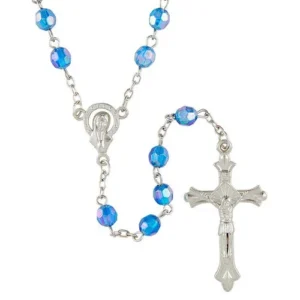
Acrylic Bead Rosary Blue – Rosaries & Chaplets
$48.00 -
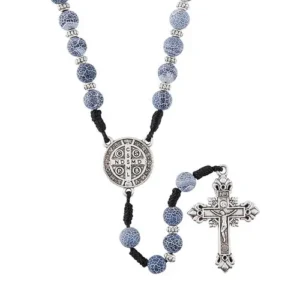
SB Stone Rosary – Rosaries & Chaplets
$24.00 -
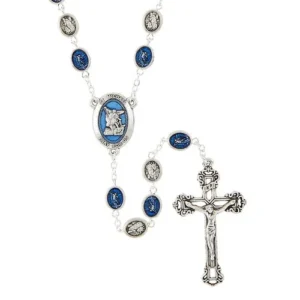
Enamel Michael Rosary – Rosaries & Chaplets
$27.00 -

Saint Benedict Bracelet Multi 5x2mm – Rosaries & Chaplets
$48.00 -
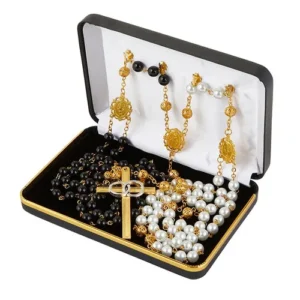
Lasso Wedding Rosary – Rosaries & Chaplets
$34.00 -
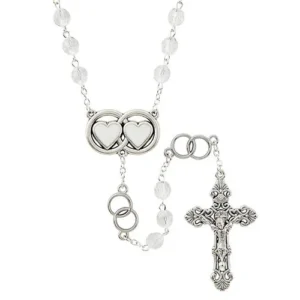
Wedding Rosary; Clear 8mm – Rosaries & Chaplets
$44.00 -
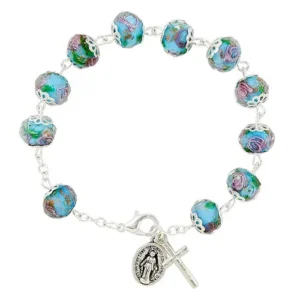
Murano Aqua Bracelet – Rosaries & Chaplets
$34.00 -
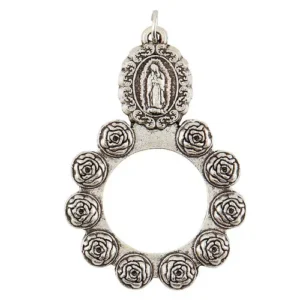
Our Lady of Guadalupe Rosary Ring – Rosaries & Chaplets
$24.00 -

Murano Black Bracelet – Rosaries & Chaplets
$34.00 -
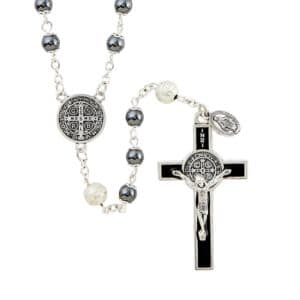
Paola Carola Saint Benedict Rosary
$29.00 -
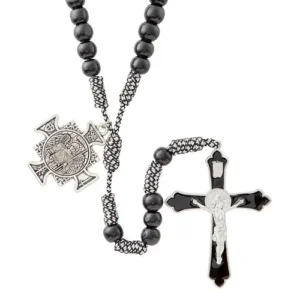
SaintMichael Rosary – Rosaries & Chaplets
$60.00 -

Murano Amethyst Bracelet
$34.00
Frequently Asked Questions
What was the first ecumenical council?
The First Council of Nicaea, held in AD 325, is recognized as the first ecumenical council of the Catholic Church. The earlier Council of Jerusalem, described in the Acts of the Apostles, served as an apostolic model for later councils.
How many early ecumenical councils were there?
The Catholic Church recognizes the first seven ecumenical councils, from Nicaea in AD 325 through the Second Council of Nicaea in AD 787, as the foundational councils of the early Church.
Why were the early councils important?
They preserved the unity of Christian belief, defended orthodox doctrine against heresy, clarified essential teachings about Christ and the Trinity, and established many of the theological foundations still professed by Catholics today.
Did the councils create new doctrines?
No. The councils clarified and formally defined the apostolic faith already entrusted to the Church. Their purpose was to defend revealed truth against misunderstanding and error.