Shop Catholic Gifts
Shop by Sacrament
Shop by Devotion
Shop by Season
Shop Church Supplies
Church Fathers
Guardians of Doctrine, Architects of Tradition, Witnesses of the Early Church
The Voice of the Early Church
 he Church Fathers stand as the foundational theologians, bishops, apologists, and spiritual writers of early Christianity. Writing from the first through the eighth centuries, they preserved apostolic teaching, defended the faith against heresy, and shaped the intellectual and spiritual architecture of the Catholic Church. Their works are not merely historical artifacts—they are living witnesses to how the earliest Christians understood Scripture, the sacraments, the authority of the Church, and the nature of Christ. Through sermons, letters, treatises, and biblical commentaries, the Fathers forged a unified vision of Christianity that continues to guide doctrine and devotion today.
Who Are the Church Fathers?
|
The term “Church Fathers” refers to early Christian writers recognized for:
They are traditionally divided into major groupings: |
|
Apostolic Fathers (1st–2nd Century)
- Direct successors to the Apostles
- Preserved earliest Christian practices and teachings
Examples:
- Clement of Rome
- Ignatius of Antioch
- Polycarp of Smyrna
Greek Fathers (Eastern Tradition)
- Wrote primarily in Greek
- Emphasized theology, mysticism, and Christology
Examples:
- Athanasius of Alexandria
- Basil the Great
- Gregory of Nazianzus
- John Chrysostom
Latin Fathers (Western Tradition)
- Wrote primarily in Latin
- Focused on doctrine, Church structure, and pastoral care
Examples:
- Ambrose of Milan
- Jerome
- Augustine of Hippo
- Gregory the Great
Why the Church Fathers Matter Today
In a modern world seeking clarity and authenticity, the Church Fathers offer:
- A direct link to the earliest Christian communities
- A unified vision of truth grounded in apostolic teaching
- Timeless wisdom on faith, morality, and the human condition
Their voices remind us that Christianity is not a later invention, but a continuous tradition rooted in history, reason, and divine revelation.
The Four Great Latin Fathers
St. Augustine of Hippo (354–430)
A towering intellectual figure, Augustine shaped Western theology through works like Confessions and City of God, exploring grace, sin, and divine providence.
St. Jerome (347–420)
Translator of the Latin Vulgate, Jerome’s scholarship made Scripture accessible to the Western Church and established a textual foundation for centuries.
St. Ambrose of Milan (c. 340–397)
A bishop and statesman, Ambrose defended the authority of the Church and played a pivotal role in the conversion of Augustine.
St. Gregory the Great (c. 540–604)
A reforming pope, Gregory strengthened liturgy, missionary outreach, and pastoral governance, leaving a lasting mark on Western Christianity.
Core Contributions of the Church Fathers
1. Development of Doctrine
The Fathers clarified essential teachings, especially in response to heresies. Their work laid the groundwork for formal definitions at ecumenical councils.
2. Biblical Interpretation
They produced the earliest comprehensive commentaries on Scripture, blending literal, moral, and allegorical readings.
3. Formation of the Canon
Their widespread use of certain texts helped establish the recognized books of the Bible.
4. Liturgy and Sacraments
They documented and shaped early Christian worship, providing insight into the Mass, baptism, and Eucharistic theology.
5. Spiritual Theology
Through homilies and ascetical writings, they guided believers in prayer, virtue, and holiness.
Related products
-
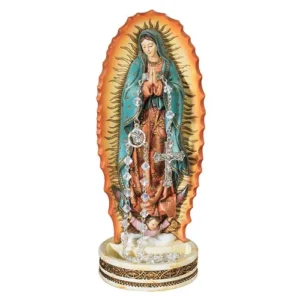
Our Lady of Guadalupe Rosary Holder – Statues & Figurines
$57.00 -
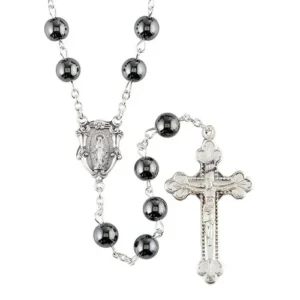
Men’s Rosary – Grey Hematite Set of 3
$89.00BULK -
Saint Benedict Door Rosary – Rosaries & Chaplets
$34.00 -
Acrylic Bead Rosary L Blue – Rosaries & Chaplets
$48.00 -
The Rosary 12pk – Stationary
$49.00BULK -
Men’s Rosary – Black Wood set of 3
$69.00BULK -
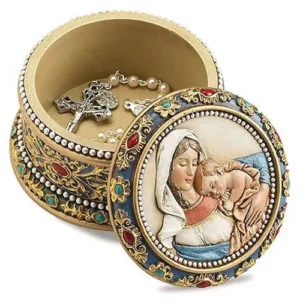
2″ Maria Rosary Box – Rosaries & Chaplets
$45.00 -
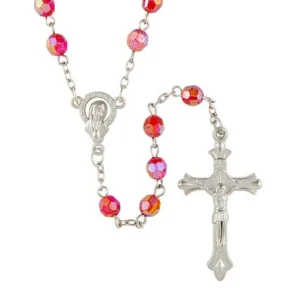
Acrylic Bead Rosary Red – Rosaries & Chaplets
$48.00 -
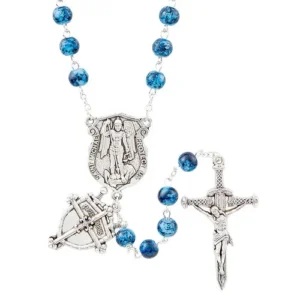
Saint Michael Spirtual Rosary Blue – Rosaries & Chaplets
$72.00 -
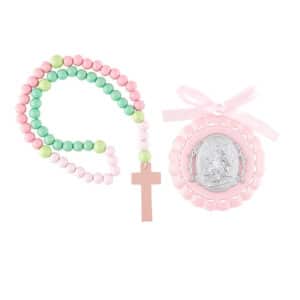
Crib Medal With Kiddie Rosary
$22.00 -
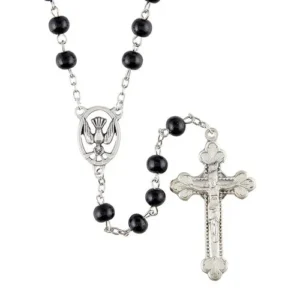
Confirmation Rosary; Wood Black Bead 6MM – Rosaries & Chaplets
$29.00 -
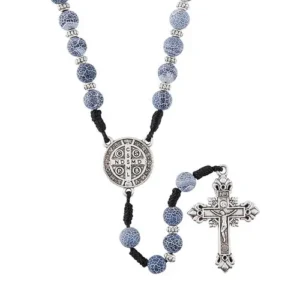
SB Stone Rosary – Rosaries & Chaplets
$24.00
The Church Fathers and Sacred Tradition
The writings of the Church Fathers are a primary witness to Sacred Tradition—the living transmission of the faith alongside Scripture.
They demonstrate that early Christianity was:
- Sacramental
- Hierarchical
- Liturgical
- Doctrinally unified
Their testimony confirms continuity between the apostolic Church and the Catholic Church today.
The Cappadocian Fathers
The Cappadocian Fathers—Basil the Great, Gregory of Nazianzus, and Gregory of Nyssa—were instrumental in defining the doctrine of the Trinity.
Their theological precision helped articulate:
- One God in three Persons
- The divinity of the Holy Spirit
- The relationship between essence and personhood
Their work was crucial to the outcomes of early ecumenical councils, especially Constantinople (381).
Defenders of the Faith: Apologists and Theologians
The Church Fathers were not only teachers—they were defenders of the faith during times of intense controversy.
Key Figures:
- Irenaeus of Lyons – Opposed Gnosticism; emphasized apostolic succession
- Athanasius of Alexandria – Defender of Christ’s divinity against Arianism
- Tertullian – Early Latin theologian who coined key theological terms
- Origen – Biblical scholar and pioneer of allegorical interpretation
Their writings safeguarded core doctrines such as:
- The Incarnation
- The Trinity
- The authority of Scripture and Tradition
Legacy and Influence
The influence of the Church Fathers extends across centuries:
- Doctrinal Foundations – Their writings underpin official Church teaching
- Liturgical Life – Their insights shaped worship practices still in use
- Theological Method – Their approach to Scripture and philosophy guides modern theology
- Ecumenical Dialogue – Shared reverence for the Fathers unites many Christian traditions
Featured Catholic Blog Post
 The Invitation: God’s Call to the Wedding Feast - The Invitation: God's Call to the Wedding Feast A Catholic Reflection on Matthew 22:1–14 Imagine receiving an invitation to a…
 Conclusion
The Church Fathers are not distant figures confined to history—they are enduring teachers whose words continue to illuminate the path of faith. Their writings bridge the apostolic age and the present, offering a treasury of wisdom that remains as vital today as it was in the earliest centuries of the Church.
To study the Fathers is to encounter the Church in its formative years—alive, faithful, and guided by the same Spirit that sustains it still.