Shop Catholic Gifts
Shop by Sacrament
Shop by Devotion
Shop by Season
Shop Church Supplies
Doctrinal Development
How Catholic Teaching Grows in Clarity Without Changing Its Truth
The Living Tradition of Truth
 he Doctrinal development is the organic, Spirit-guided unfolding of truth within the Catholic Church—where what was always believed becomes more clearly understood, more precisely articulated, and more universally taught over time. The Church does not invent new doctrines. Rather, she deepens her understanding of divine revelation, entrusted once for all to the Apostles. Across centuries, through councils, saints, theologians, and crises, the Church clarifies what was implicit from the beginning.
This process reflects a living reality:
Truth does not change—but our understanding of it grows.
What Is Doctrinal Development?
|
Doctrinal Development refers to the gradual clarification and articulation of truths contained in:
It is guided by the Magisterium—the teaching authority of the Church—and safeguarded by the Holy Spirit. |
|
Key Characteristics
- Organic Growth — Like a seed becoming a tree
- Continuity — No contradiction with prior belief
- Clarification — Greater precision over time
- Response to Error — Often sharpened through heresies or disputes
- Universal Reception — Eventually embraced by the whole Church
Historical Examples of Doctrinal Development
The Trinity: From Implicit Belief to Precise Definition
Early Christians believed in the Father, Son, and Holy Spirit—but lacked precise philosophical language.
Through theological reflection and controversy, the Church clarified:
- Council of Nicaea (325) — Christ is consubstantial with the Father
- Council of Constantinople (381) — Divinity of the Holy Spirit
The doctrine did not change—it became clearer.
The Nature of Christ
Debates over Christ’s identity led to precise teaching:
- Fully God
- Fully Man
- Two natures in one Person
Defined at the Council of Chalcedon (451), this clarified what Christians already believed in worship and Scripture.
Marian Doctrines
Marian teachings developed gradually:
- Theotokos (Mother of God) — affirmed at Ephesus (431)
- Immaculate Conception — defined in 1854
- Assumption — defined in 1950
These doctrines emerged from centuries of devotion, theology, and liturgical practice.
The Foundation: Revelation and Deposit of Faith
Catholic doctrine begins with the Deposit of Faith, completed with the death of the last Apostle.
This includes:
- The teachings of Christ
- Apostolic preaching
- Sacred Scripture
- Apostolic Tradition
Nothing can be added to this deposit. However, its depth is inexhaustible.
The Role of the Holy Spirit
Christ promised that the Holy Spirit would guide the Church into all truth (John 16:13). This promise undergirds doctrinal development.
The Spirit works through:
- Ecumenical Councils
- Papal definitions
- Theologians and Church Fathers
- The sensus fidelium (sense of the faithful)
This ensures that development is not human invention—but divine guidance unfolding through history.
Why Doctrine Develops
Doctrinal development is not optional—it is necessary.
1. Defense Against Heresy
Errors force clarity. Heresies like Arianism and Nestorianism required precise definitions.
2. Deeper Reflection
The Church continually reflects on Scripture and Tradition.
3. Cultural Engagement
As the Gospel encounters new cultures and philosophies, language evolves.
4. Liturgical and Devotional Life
Belief is expressed in prayer before it is defined in doctrine.
The Principles of Authentic Development
In his seminal work, Essay on the Development of Christian Doctrine, Newman outlined how true development can be recognized.
Key Criteria
- Preservation of type
- Continuity of principles
- Power of assimilation
- Logical sequence
- Anticipation of future developments
- Conservative action upon the past
- Chronic vigor
These principles distinguish authentic development from corruption.
Development vs. Change
A critical distinction:
| Development | Change |
|---|---|
| Deepens understanding | Alters truth |
| Maintains continuity | Breaks with past |
| Organic growth | Artificial innovation |
| Guided by Holy Spirit | Driven by human ideology |
The Catholic Church affirms development—not change.
The Role of Ecumenical Councils
Councils are pivotal moments in doctrinal development.
Major councils include:
- Nicaea (325)
- Constantinople (381)
- Ephesus (431)
- Chalcedon (451)
- Trent (1545–1563)
- Vatican I (1869–1870)
- Vatican II (1962–1965)
Each clarified doctrine in response to historical needs.
Scripture and Doctrinal Development
Doctrinal development is rooted in Scripture, even when not explicitly stated.
Examples:
- Trinity → implied in baptismal formula (Matthew 28:19)
- Eucharist → John 6 and Last Supper narratives
- Papal authority → Matthew 16:18
Development reveals what was always present, though not always fully articulated.
The Living Church: Tradition in Motion
The Church is not a museum of static ideas—but a living body.
Doctrinal development reflects:
- Continuity with the Apostles
- Fidelity to Christ
- Growth in understanding
- Unity across time
It is the unfolding of truth within history.
Related products
-
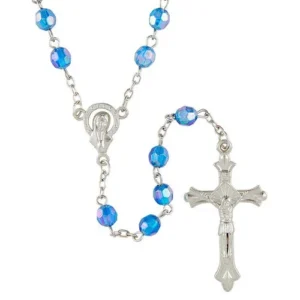
Acrylic Bead Rosary Blue – Rosaries & Chaplets
$48.00 -
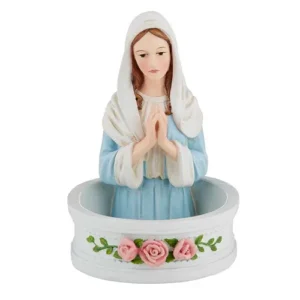
Madonna Rosary Holder – Rosaries & Chaplets
$29.00 -
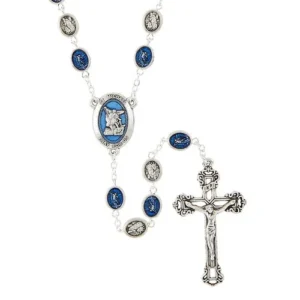
Enamel Michael Rosary – Rosaries & Chaplets
$27.00 -
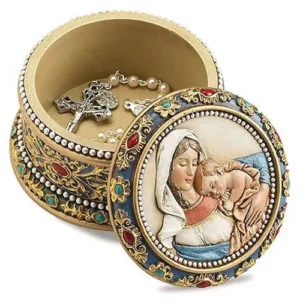
2″ Maria Rosary Box – Rosaries & Chaplets
$45.00 -
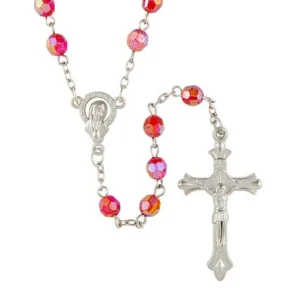
Acrylic Bead Rosary Red – Rosaries & Chaplets
$48.00 -
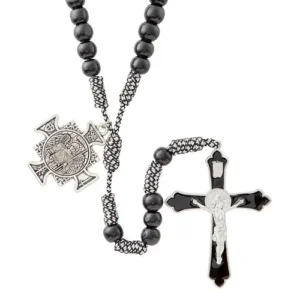
SaintMichael Rosary – Rosaries & Chaplets
$60.00 -
Our Lady of Guadalupe Rosary Holder – Statues & Figurines
$57.00 -

Confirmation Rosary; Wood Black Bead 6MM – Rosaries & Chaplets
$29.00 -

Wedding Rosary; Clear 8mm – Rosaries & Chaplets
$44.00 -

Men’s Rosary – Grey Hematite Set of 3
$89.00BULK -

Men’s Rosary – Black Wood set of 3
$69.00BULK -
Wood Bead Cord Rosary – Rosaries & Chaplets
$36.00
Common Misconceptions
“Doctrine Changes Over Time”
False. Doctrine develops—it does not contradict itself.
“New Doctrines Are Invented”
False. All doctrine is rooted in the Deposit of Faith.
“Development Means Progress Toward Modern Ideas”
False. Development is measured by fidelity, not novelty.
Doctrinal Development in the Modern Era
Recent developments include:
- Clarifications on religious liberty
- Social teaching (dignity of the human person)
- Bioethics and modern moral questions
These are applications of timeless principles to new realities.
Integration with Catholic Life
Doctrinal development shapes:
- Catechesis
- Liturgy
- Devotions
- Moral theology
- Spiritual formation
It ensures that the faith remains both ancient and ever new.
Featured Catholic Blog Post
 The Invitation: God’s Call to the Wedding Feast - The Invitation: God's Call to the Wedding Feast A Catholic Reflection on Matthew 22:1–14 Imagine receiving an invitation to a…
 Truth Unfolding Across Time
Doctrinal development is one of the most profound signs of the Church’s divine origin. Across centuries, amid challenges and change, the same truth endures—clearer, richer, and more radiant.
It is not evolution away from truth, but deeper entry into it.
The Church stands as a witness that truth is not static—but living, enduring, and inexhaustible.