Shop Catholic Gifts
Shop by Sacrament
Shop by Devotion
Shop by Season
Shop Church Supplies
Modern Church Councils (A.D. 1700–Present)
Catholic Councils, Synods, and the Church in the Modern World
 he Modern Church Councils mark the Catholic Church’s encounter with an age of extraordinary intellectual, political, scientific, and cultural change. From the Enlightenment and the revolutions of the eighteenth and nineteenth centuries to industrialization, global warfare, secularism, technological transformation, and the emergence of an increasingly interconnected world, the Church faced new questions while continuing to proclaim the faith entrusted to her from the Apostles. At the center of this period stand the First Vatican Council (1869–1870) and the Second Vatican Council (1962–1965), the twentieth and twenty-first ecumenical councils recognized by the Catholic Church.
The Catholic Church and the Modern World
|
The centuries following the Reformation brought profound changes to Europe and eventually to the entire world. Enlightenment philosophy challenged traditional understandings of revelation and religious authority. The French Revolution disrupted centuries-old relationships between Church and state. Industrialization transformed cities, labor, family life, and economic structures, while nationalism and new political ideologies reshaped nations and empires. |
|
The Church confronted rationalism, materialism, secularism, socialism, communism, and other intellectual and political movements while simultaneously experiencing remarkable global expansion. Catholic missionaries carried the Gospel throughout Africa, Asia, Oceania, and the Americas. New religious communities arose, Catholic education expanded, social teaching developed, and renewed study of Scripture, the liturgy, and the Church Fathers prepared the way for significant theological renewal.
Within this changing world, ecumenical councils remained one of the Church’s most solemn means of addressing questions of Catholic doctrine, ecclesiastical authority, worship, pastoral mission, and the relationship between the Church and society.
First Vatican Council (1869–1870)
Convened by Pope Pius IX, the First Vatican Council, commonly known as Vatican I, opened in Rome on December 8, 1869. It was the first ecumenical council since the Council of Trent had concluded more than three centuries earlier.
Vatican I addressed some of the most pressing theological and philosophical questions of the nineteenth century. Its Dogmatic Constitution Dei Filius examined God, divine revelation, faith, and human reason, affirming that authentic faith and authentic reason cannot ultimately contradict one another because God is the source of all truth.
The council is perhaps best known for the Dogmatic Constitution Pastor Aeternus, which addressed the primacy and teaching authority of the pope. The document defined the doctrine of papal infallibility under carefully specified conditions when the Roman Pontiff speaks ex cathedra on a matter of faith or morals to be held by the universal Church.
Political events prevented Vatican I from completing its intended work. The Franco-Prussian War and the capture of Rome by forces of the Kingdom of Italy brought the council’s sessions to an abrupt end in 1870. The council was suspended, leaving portions of its planned consideration of the Church and the episcopate unfinished.
Catholicism Between Vatican I and Vatican II
The decades separating the two Vatican councils transformed both the Church and the world. Popes confronted the social consequences of industrialization, particularly through the developing tradition of Catholic social teaching. Biblical and patristic scholarship expanded. The Liturgical Movement encouraged renewed study of Christian worship, while missionary activity made Catholicism increasingly global. The same period witnessed two world wars, totalitarian regimes, the Holocaust, communism, decolonization, nuclear weapons, mass communications, and unprecedented technological development. By the middle of the twentieth century, the Church was ministering within circumstances dramatically different from those of the Council of Trent or Vatican I. It was into this world that Pope John XXIII summoned the Second Vatican Council.
Second Vatican Council (1962–1965)
The Second Vatican Council, or Vatican II, opened on October 11, 1962. More than two thousand bishops from throughout the world participated in its sessions. Pope John XXIII initiated the council, and after his death in 1963, Pope Paul VI continued its work until its conclusion on December 8, 1965.
Vatican II was the twenty-first ecumenical council of the Catholic Church and remains the Church’s most recent ecumenical council. The council produced sixteen documents—four constitutions, nine decrees, and three declarations—addressing nearly every major dimension of Catholic life. Among the most important are the four conciliar constitutions:
- Sacrosanctum Concilium addressed the sacred liturgy and encouraged the full, conscious, and active participation of the faithful in the Church’s liturgical life.
- Lumen Gentium, the Dogmatic Constitution on the Church, examined the mystery and nature of the Church, the episcopate, the priesthood, religious life, the vocation of the laity, the universal call to holiness, and the Blessed Virgin Mary within the mystery of Christ and the Church.
- Dei Verbum, the Dogmatic Constitution on Divine Revelation, explored the relationship between Sacred Scripture, Sacred Tradition, revelation, inspiration, and the teaching authority of the Church.
- Gaudium et Spes, the Pastoral Constitution on the Church in the Modern World, addressed human dignity, marriage and family, culture, economics, politics, peace, war, technological development, and the Christian vocation within contemporary society.
Religious Liberty, Ecumenism, and the Mission of the Church
Several additional Vatican II documents profoundly influenced Catholic life.
Dignitatis Humanae addressed religious liberty and freedom from coercion in religious matters. Unitatis Redintegratio encouraged the Catholic Church’s participation in the search for Christian unity. Nostra Aetate examined relations with non-Christian religions and became particularly important in Catholic-Jewish relations.
Apostolicam Actuositatem emphasized the apostolate and vocation of lay Catholics, while Ad Gentes addressed the Church’s missionary activity. Orientalium Ecclesiarum affirmed the dignity and traditions of the Eastern Catholic Churches.
Together, these documents articulated a renewed vision of Catholic evangelization and the Church’s mission in a rapidly changing world.
Featured Catholic Blog Post
 Building a Prayer Corner in a Small Apartment - Building a Prayer Corner in a Small Apartment In a small apartment, every square foot seems to have a responsibility. The dining table becomes a desk, the living room doubles as a place to work, and a quiet moment can be difficult to find between the demands of family, employment, and daily life. For Catholics who desire a more prayerful home, the thought of creating a dedicated place for prayer may seem impractical. There may be no spare bedroom, no…
 Related products
-
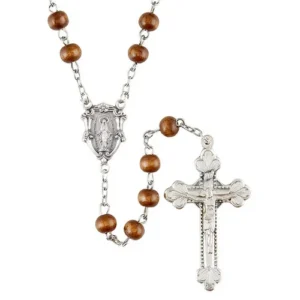
Men’s Wood Rosary – Brown – Set of 3
$69.00BULK -
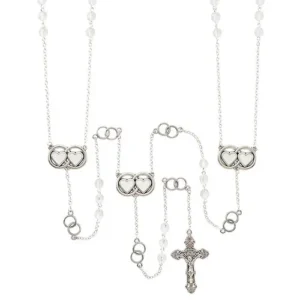
Wedding Lasso; Clear 8mm 45L – Rosaries & Chaplets
$40.00 -

Saint Benedict Bracelet Multi 5x2mm – Rosaries & Chaplets
$48.00 -
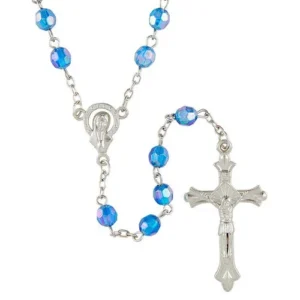
Acrylic Bead Rosary Blue – Rosaries & Chaplets
$48.00 -
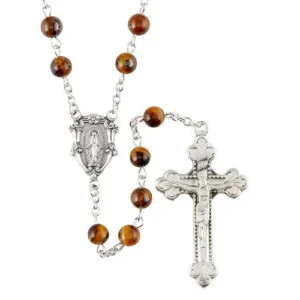
Gemstone Rosary; Tiger Eye 6MM – Rosaries & Chaplets
$42.00 -
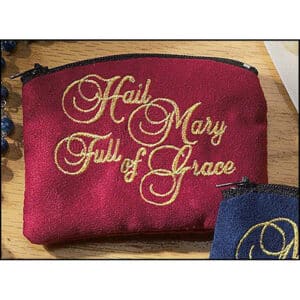
Hail Mary Rosary Case 3 Pack
$59.00BULK -
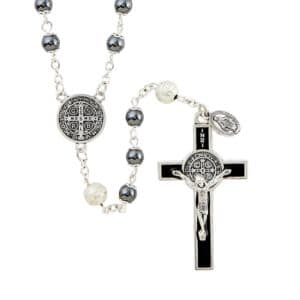
Paola Carola Saint Benedict Rosary
$29.00 -
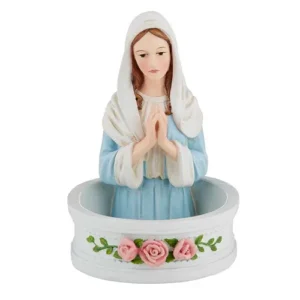
Madonna Rosary Holder – Rosaries & Chaplets
$29.00 -
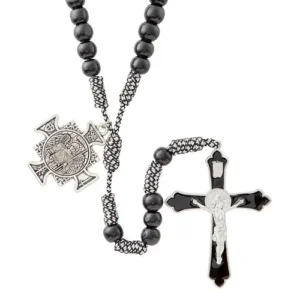
SaintMichael Rosary – Rosaries & Chaplets
$60.00 -
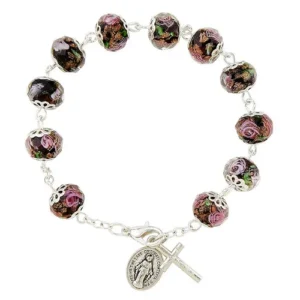
Murano Black Bracelet – Rosaries & Chaplets
$34.00 -
Pray Rosary Trifold Card 24pk – Books & Multimedia
$49.00 -
Men’s Rosary – Black Wood set of 3
$69.00BULK
Vatican I and Vatican II in Catholic Tradition
Vatican I and Vatican II are best understood within the broader continuity of Catholic conciliar history.
Earlier councils confronted questions concerning the Trinity, the divinity and humanity of Christ, ecclesiastical discipline, sacramental theology, reform, and challenges created by the Protestant Reformation. The modern councils addressed many of the questions raised by modern philosophy, political change, scientific development, globalization, and contemporary society.
Vatican I emphasized subjects including faith and reason, revelation, papal primacy, and papal infallibility. Vatican II developed an extensive theology of the Church while addressing Scripture and Tradition, the episcopate, liturgy, the laity, religious liberty, ecumenism, evangelization, and the Church’s relationship with the modern world.
They therefore form successive chapters in the Church’s continuing effort to preserve, explain, defend, and proclaim the apostolic faith within changing historical circumstances.
The Church After Vatican II
The conclusion of Vatican II did not end the Catholic tradition of bishops gathering to address important questions facing the Church.
In 1965, Pope Paul VI established the Synod of Bishops, providing an ongoing institution through which bishops from around the world could assist the pope in considering matters affecting the universal Church.
Later synodal assemblies have addressed evangelization, catechesis, priestly formation, the Eucharist, Sacred Scripture, family life, young people, regional concerns, and synodality.
These gatherings are significant within contemporary Catholic life, but they are not themselves ecumenical councils. No ecumenical council has been held since Vatican II.
Why the Modern Church Councils Matter
The modern councils remain essential for understanding Catholicism today. Questions concerning the authority of the pope and bishops, the relationship between faith and reason, interpretation of Scripture, participation in the liturgy, the vocation of lay Catholics, Christian unity, religious liberty, missionary activity, and the Church’s engagement with society all bear the influence of Vatican I and Vatican II.
Their importance becomes clearer when they are studied within the entire history of the Church’s councils—from Nicaea, Constantinople, Ephesus, and Chalcedon, through the great medieval councils and the Council of Trent, to the two Vatican councils of the modern era.
Across nearly seventeen centuries, ecumenical councils have served the Church at moments when theological controversy, pastoral necessity, ecclesiastical reform, or historical change required bishops to gather in communion with the pope to deliberate upon matters affecting the universal Church.
The Modern Church Councils represent the latest chapter in that long history: an ancient Church carrying the apostolic faith into a world transformed by revolution, industry, science, global conflict, mass communication, and cultural change.
Modern Church Councils Timeline
First Vatican Council — 1869–1870
Convened by Pope Pius IX in Rome. Vatican I addressed divine revelation, faith and reason, papal primacy, and papal infallibility before political events interrupted the council.
Second Vatican Council — 1962–1965
Convened by Pope John XXIII and completed under Pope Paul VI. Vatican II addressed the nature and mission of the Church, sacred liturgy, divine revelation, ecumenism, religious liberty, missionary activity, the laity, and the Church in the modern world.