
Building a Prayer Corner in a Small Apartment
In a small apartment, every square foot seems to have a responsibility. The dining table becomes a desk, the living room doubles as a place to work, and a quiet moment can be difficult to find between the demands of family, employment, and daily life. For Catholics who desire a more prayerful home, the thought of creating a dedicated place for prayer may seem impractical. There may be no spare bedroom, no unused alcove, and certainly no room for an elaborate home chapel.
Yet a place of prayer does not require an abundance of space. A small crucifix beside a Bible, an image of the Blessed Virgin Mary on a shelf, or a rosary kept within reach can establish a quiet reminder of God’s presence amid ordinary responsibilities. What matters is not the size of the arrangement but the purpose it serves: helping the heart turn toward the Lord with greater attention and fidelity.
The Catholic tradition has long recognized the value of setting aside places for prayer. The Church’s teaching on the Christian home encourages families to cultivate a life of faith within their everyday surroundings, while the Catechism explicitly recommends a prayer corner as a place for personal and family devotion. This means that even the smallest apartment can become a setting for a meaningful encounter with God.
Why Every Catholic Home Needs a Place for Prayer
When Jesus taught His disciples about prayer, He warned them against performing religious acts merely to attract attention. In Matthew 6:6, He directed them toward the privacy of an inner room, where they could pray to the Father without seeking human recognition. His teaching concerned the sincerity of prayer rather than a particular arrangement of furniture, but it also reveals the value of withdrawing from distraction to stand before God.
For many people, especially those living in apartments or shared households, finding that privacy requires intention. A quiet corner can help establish a habit of recollection even when the rest of the home remains busy. Returning to the same place each morning or evening creates a gentle rhythm, reminding us that prayer deserves a place within our ordinary schedule rather than whatever attention remains after everything else is finished.
The Catechism of the Catholic Church addresses this practice directly in paragraph 2691. It identifies a prayer corner furnished with Sacred Scripture and holy images as a suitable place for personal prayer and explains that such a space can encourage prayer within a Christian family. The Church does not prescribe a particular size, architectural design, or collection of devotional objects. Instead, she recognizes that our physical surroundings can help us cultivate an interior disposition of reverence.
Creating a prayer corner is therefore not simply an exercise in Catholic decorating. It is a practical expression of the desire to make room for God. The objects we place there should draw our attention beyond themselves, inviting us into conversation with Christ and helping us persevere when prayer feels difficult.
The Domestic Church Begins with the People Who Live There
The Second Vatican Council and the Catechism describe the Christian family as the domestic church, a community in which faith is received, practiced, and passed from one generation to the next. In paragraphs 1655–1657, the Catechism emphasizes the family’s responsibility to foster prayer, charity, forgiveness, and Christian witness. These responsibilities do not depend upon owning a large house or possessing beautiful religious furnishings. They arise from the vocation of those who share a home and seek to follow Christ.
A married couple living in a studio apartment can pray together beside a small icon. Parents can teach their children the Sign of the Cross before bedtime, even when the entire family shares a limited living space. A Catholic living alone can develop a rich life of personal prayer with little more than a chair, a Bible, and a crucifix. The outward arrangements differ, but the essential purpose remains the same: allowing faith to shape daily life.
This understanding also protects us from a common misunderstanding. A prayer corner does not transform a home into a church building, nor does it replace participation in the Mass, the sacraments, or parish life. The parish church remains the privileged setting for the Church’s liturgical worship and Eucharistic adoration. Our homes, however, can become places where the grace received through the Church’s sacramental life bears fruit in prayer, patience, and love.
For a broader exploration of this vocation, read our guide to creating a beautiful Catholic domestic church. Its central lesson is especially important for small households: holiness grows through faithful relationships and daily practices, not through the amount of space we possess.
Choosing the Right Location in a Small Apartment
The best location for a Catholic prayer corner is usually a place that is both accessible and reasonably peaceful. A narrow wall beside a bedroom dresser, an unused section of a bookshelf, or a small table near a window may provide everything needed. The space does not have to be completely secluded, but it should allow a person to pause without constantly rearranging household objects.
Consider how your household actually functions. A prayer corner beside a television may become difficult to use if family members frequently watch programs there. A location near the kitchen might work well for morning prayer but prove distracting during meal preparation. A bedside shelf may be ideal for someone living alone, while a small space in the living room could better serve a family that prays together.
Natural light can make a modest prayer space especially welcoming, although it is not necessary. A simple lamp may provide a quiet atmosphere for evening prayer. If your apartment receives little daylight, choose a location where you can read Scripture comfortably without straining your eyes. Practical considerations matter because a prayer corner should encourage regular use rather than become an arrangement admired from a distance.
In a rented apartment, there is also no need to drill holes or make permanent alterations. A freestanding picture frame, a small tabletop crucifix, or a religious image placed on an existing shelf can establish a recognizable devotional space. Those who share an apartment should choose a location respectfully, considering the needs and comfort of everyone who lives there.
What to Include in a Catholic Prayer Corner
A meaningful prayer corner can begin with only a few carefully chosen objects. The purpose is not to assemble an impressive collection but to create a setting that supports prayer. Each item should have a recognizable place within Catholic devotion and should serve the spiritual habits of the person or family using it.
A Crucifix: The Center of Christian Hope
A crucifix is a natural starting point because it directs our attention toward the saving Passion of Jesus Christ. The image of the crucified Lord reminds us that Christian prayer is rooted in His love, sacrifice, and victory over sin and death. When daily concerns become overwhelming, looking toward the crucifix can help us remember that suffering does not have the final word.
In a small apartment, a modest wall crucifix or tabletop crucifix is often sufficient. Choose one that can be seen clearly from the place where you intend to pray. Its significance comes from the mystery it represents, not from its size or ornamentation.
A Catholic Bible: Listening to the Word of God
Sacred Scripture gives our prayer a foundation in God’s revealed Word. Keeping a Catholic Bible within reach makes it easier to begin with a Gospel passage, reflect on a psalm, or read the day’s Scripture before entering into personal prayer. A Bible does not need an elaborate stand; it may rest on a shelf or small table, provided it is treated with respect and used regularly.
Those beginning a habit of Scripture reading might start with the Gospel of Luke or the Gospel of John, reading a short passage each day. Afterward, allow a moment of silence to consider what the passage reveals about Christ and how it calls you to respond. Even five attentive minutes can become the beginning of a lasting spiritual practice.
An Image of Our Lady or a Patron Saint
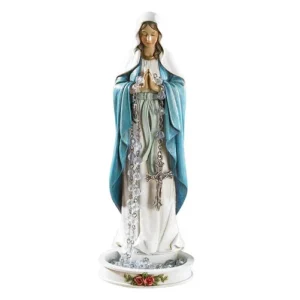
Catholic devotional images remind us that we belong to the communion of saints. An image of the Blessed Virgin Mary can encourage meditation upon her faith, humility, and obedience to God’s will. An image of a patron saint may inspire us to imitate that person’s virtues and seek his or her intercession.
The Church distinguishes the honor given to sacred images and the saints from the worship due to God alone. We do not worship a painting or statue. Rather, such representations help direct our minds toward the holy persons depicted and the mysteries of faith associated with them.
One image is often enough for a small prayer corner. A carefully chosen depiction of Our Lady, Saint Joseph, or another beloved saint may have greater devotional value than an overcrowded arrangement that competes for attention.
A Rosary and a Simple Prayer Book
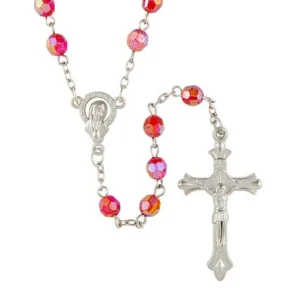
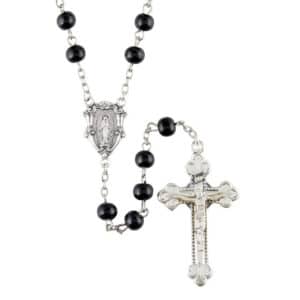
Keeping a rosary nearby makes it easier to pray a decade during a brief pause or the full Rosary when time permits. The Rosary is a profoundly Christ-centered devotion, inviting us to contemplate the mysteries of His life through the prayerful companionship of the Blessed Virgin Mary. Its familiar rhythm can be especially helpful at the end of a demanding day.
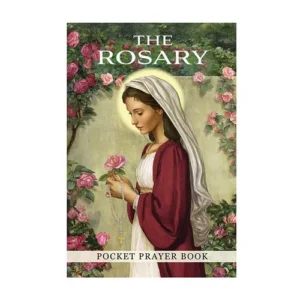
A small prayer book can also provide guidance when personal prayer feels difficult. Traditional prayers, the examination of conscience, and selections from the Liturgy of the Hours can help establish a consistent pattern. Those who prefer simplicity may begin with the Our Father, Hail Mary, Glory Be, and a few moments of silent thanksgiving.
Holy Water and Other Devotional Objects
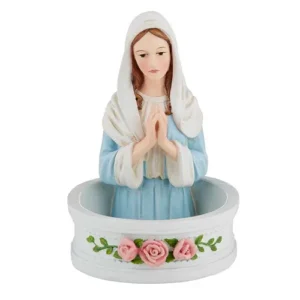
A small holy water font may be a meaningful addition where space and household circumstances permit. Holy water is a sacramental that recalls Baptism and encourages the faithful to turn toward God with a spirit of repentance and trust. Its use does not operate mechanically or replace the sacraments; rather, it accompanies prayer and disposes us to receive grace.
Candles can also create an atmosphere of recollection, but they require particular care in small living spaces. Apartment rules may prohibit open flames, and candles should never be left unattended or placed near curtains, books, or other combustible materials. An electric candle or a simple lamp is a sensible alternative when fire safety is a concern.
There is no need to purchase every devotional item at once. Begin with what you already own, and add only those objects that genuinely support your prayer. A prayer corner should grow from your spiritual life rather than become a reason to accumulate possessions.
Creating a Prayer Corner Without Buying New Furniture
One of the most encouraging aspects of this practice is how easily it can fit within an existing apartment. A bookshelf may already contain a space large enough for a small crucifix and Bible. A bedside table may hold a framed holy image and rosary. A narrow windowsill, provided it is safe and stable, can offer a place for a devotional image without requiring additional furniture.
Consider using a shallow tray or a small piece of cloth to distinguish the prayer area from surrounding household objects. This simple boundary can give the arrangement visual coherence while making it easy to clean or move. If the apartment is particularly small, a portable prayer basket containing a Bible, rosary, and prayer book may be more practical than a permanent display.
Such arrangements are not spiritually inferior to a dedicated home chapel. The Church’s teaching concerns the value of prayer and the suitability of a place that encourages it. A portable prayer basket used faithfully may accomplish far more than an elaborate devotional display that rarely draws anyone into prayer.
Establishing a Daily Prayer Routine
Once the space is prepared, the more important work begins: returning to it consistently. A prayer corner becomes meaningful through use. Without a habit of prayer, even the most beautiful arrangement remains little more than decoration.
Begin with a realistic commitment. Five minutes in the morning may be more sustainable than an ambitious schedule that quickly becomes discouraging. Make the Sign of the Cross, thank God for the new day, read a short passage from Scripture, and ask for the grace to fulfill your responsibilities with charity. Over time, the practice may naturally deepen into longer periods of meditation or spiritual reading.
Evening prayer offers another opportunity. Before retiring, return to the prayer corner and review the day in God’s presence. Give thanks for moments of grace, acknowledge failures without despair, and ask forgiveness for the ways you have fallen short. Then entrust your household and the coming night to the Lord.
Families may adapt this rhythm to include children. A brief prayer before school, a decade of the Rosary after dinner, or a blessing before bedtime can establish memories that endure long after children leave home. The goal is not to impose a complicated devotional program but to make prayer a natural part of family life.
Our guide to Catholic living and practicing your faith every day explores how these small acts of fidelity can shape a more intentional Christian life.
Making Room for Prayer During the Liturgical Year
A prayer corner can also help a household participate more consciously in the rhythm of the Church’s liturgical year. Advent invites watchfulness and preparation for the coming of Christ, while Christmas celebrates the mystery of the Incarnation. Lent calls us toward repentance and conversion, and Easter renews our joy in the Resurrection.
Small changes can help reflect these seasons without turning the prayer corner into an elaborate display. During Advent, a simple image of the Annunciation may encourage reflection upon Mary’s response to God. In Lent, the crucifix may become the central visual focus, accompanied by a more deliberate commitment to Scripture and prayer. During Easter, an image of the risen Christ can remind the household of the hope at the center of Christian faith.
These seasonal practices are optional domestic devotions, not replacements for the Church’s liturgical celebrations. Their purpose is to carry the spirit of the liturgical year into daily life and encourage deeper participation in the Mass and the sacraments.
For a fuller explanation of the Church’s seasons, see our guide to the Catholic liturgical year.
When Your Prayer Corner Is Not Always Quiet
Those who live in small apartments know that silence cannot always be arranged. Neighbors may be noisy, children may need attention, and household responsibilities can interrupt even the most carefully planned moments. These difficulties do not mean that the prayer corner has failed. They simply remind us that prayer takes place within the circumstances of real life.
Sometimes the best response is to adjust the time of prayer. Early morning or late evening may provide greater quiet, while headphones used for an audio Scripture reading may help when surrounding noise cannot be avoided. On other days, prayer may need to be brief and offered amid interruptions. The Lord is not absent because our surroundings are imperfect.
It is also important to distinguish between creating a peaceful atmosphere and expecting prayer always to feel peaceful. Christian prayer involves perseverance, including times of dryness, distraction, and fatigue. The Catechism recognizes these difficulties as part of the spiritual life. A dedicated space can support recollection, but it cannot remove every obstacle or guarantee a particular emotional experience.
When distractions arise, gently return your attention to Christ. If an urgent responsibility interrupts prayer, attend to it with charity and resume when possible. The same Lord who receives our prayers also calls us to love the people placed in our care.
A Prayer Corner Is an Invitation, Not a Display
In an age when home interiors are frequently photographed, shared, and evaluated according to appearance, it is easy to approach a prayer corner as another decorating project. Sacred art can certainly be beautiful, and beauty has a genuine place in Catholic life. Yet the spiritual value of a prayer space cannot be measured by how impressive it looks.
Jesus’ teaching about prayer in secret offers an important corrective. Our devotional practices should direct the heart toward God rather than toward the admiration of others. A modest arrangement that helps someone pray with sincerity is more valuable than an elaborate collection assembled primarily for appearance.
This principle also encourages generosity toward those whose living circumstances are limited. Students, young adults, families facing financial strain, and elderly Catholics in smaller residences may not have the resources or freedom to create a permanent devotional area. Their prayer is no less precious. A single crucifix, a worn Bible, or a rosary carried in a pocket can accompany a profound life of faith.
When choosing devotional objects for your home, consider their spiritual purpose before their decorative qualities. All Catholic Gifts offers Catholic gifts and devotional resources that may help support personal and family prayer, but the first and most important step is simply to begin praying with what you have.
Begin with One Small Place
A small apartment may never contain a separate chapel, yet it can still become a home where prayer is welcomed and practiced. The Church does not ask us to wait for ideal circumstances before turning toward God. She encourages us to pray within the homes, families, and responsibilities we have been given.
Choose a place that can accommodate a Bible and a crucifix. Set aside a few minutes when you can return there regularly. Allow the space to remain simple, and let its meaning grow through faithful use. In time, that ordinary corner may become associated with moments of gratitude, difficult petitions, renewed hope, and the quiet recognition of God’s mercy.
The purpose of a Catholic prayer corner is not to escape the responsibilities of daily life but to bring those responsibilities before the Lord. We enter prayer carrying our concerns, and we return to our work with a renewed desire to love God and neighbor. In this way, a small place set aside for prayer can influence the life of an entire household.
A dedicated place need not require a dedicated room. It requires only the willingness to make room for God and the perseverance to return to Him each day.
A Prayer for a Catholic Home
Heavenly Father, You have given us the places in which we live and the people with whom we share our days. Teach us to welcome Your presence into our homes, whether they are large or small, quiet or busy.
Help us establish habits of prayer that draw us closer to Your Son. May the crucifix remind us of His love, Sacred Scripture nourish our hearts, and the example of the Blessed Virgin Mary teach us to respond faithfully to Your will.
Bless all who enter our home. Give us patience in difficulty, gratitude in times of joy, and charity in our relationships. May our daily lives become an offering of love and service to You. Through Christ our Lord. Amen.
Sources and Further Reading
Catechism of the Catholic Church, paragraph 2691 — Places Favorable for Prayer. The Church’s explicit guidance concerning personal prayer corners, Scripture, sacred images, and prayer within the Christian family.
Catechism of the Catholic Church, paragraphs 1655–1658 — The Domestic Church. Catholic teaching on the Christian household as a community of faith, prayer, charity, and spiritual formation.
United States Conference of Catholic Bishops, Matthew 6:5–15. Christ’s teaching on sincere prayer, prayer in secret, and the Our Father.
Catechism of the Catholic Church, paragraphs 2692–2696 — In Brief. A summary of the Church’s teaching on guides for prayer and places conducive to prayer.
Compendium of the Catechism of the Catholic Church, questions 565–567. Guidance on family prayer, appropriate places for prayer, and the daily rhythms of Christian devotion.
“`