Shop Catholic Gifts
Shop by Sacrament
Shop by Devotion
Shop by Season
Shop Church Supplies
Patristic Era Church Councils (A.D. 100–750)
The Age of Doctrine, Definition, and Defense of the Faith
 he Patristic Era Church Councils (A.D. 100–750) represent one of the most decisive periods in Christian history. During these centuries, the Church confronted internal theological disputes, external persecutions, and the challenge of defining the true faith handed down from the Apostles. This era—shaped by the Church Fathers—witnessed the formation of essential Christian doctrines through a series of ecumenical councils, gatherings of bishops convened to resolve disputes and preserve unity.
Here, the Church clarified:
- The nature of Christ (fully God and fully man)
- The doctrine of the Trinity
- The role of grace, salvation, and the sacraments
- The rejection of major heresies such as Arianism, Nestorianism, and Monophysitism
These councils form the theological backbone of Christianity and remain authoritative in Catholic teaching to this day.
What Is the Patristic Era?
|
The Patristic Era refers to the period dominated by the teachings and writings of the Early Church Fathers, spanning roughly from A.D. 100 to 750. It is divided into key phases:
|
|
|
|
This era marks the transition from a persecuted Church to an established and doctrinally unified global body. |
||
Related products
-
Our Lady of Guadalupe Rosary Holder – Statues & Figurines
$57.00 -
Madonna Rosary Holder – Rosaries & Chaplets
$29.00 -
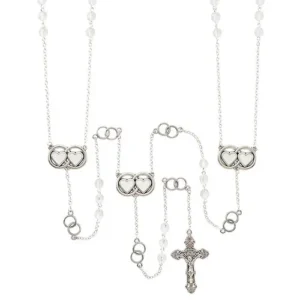
Wedding Lasso; Clear 8mm 45L – Rosaries & Chaplets
$40.00 -
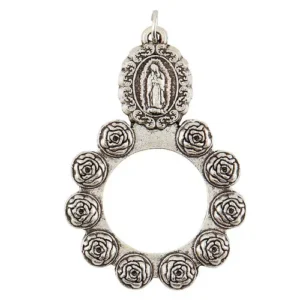
Our Lady of Guadalupe Rosary Ring – Rosaries & Chaplets
$24.00 -
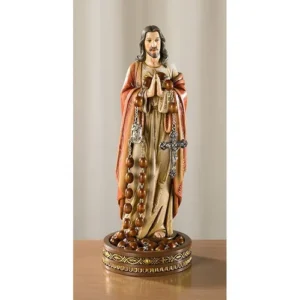
Sacred Heart Rosary Holder – Rosaries & Chaplets
$57.00 -
Saint Benedict Door Rosary – Rosaries & Chaplets
$34.00 -
Acrylic Bead Rosary Red – Rosaries & Chaplets
$48.00 -
2″ Maria Rosary Box – Rosaries & Chaplets
$45.00 -
The Rosary 12pk – Stationary
$49.00BULK -
Confirmation Rosary; Wood Black Bead 6MM – Rosaries & Chaplets
$29.00 -
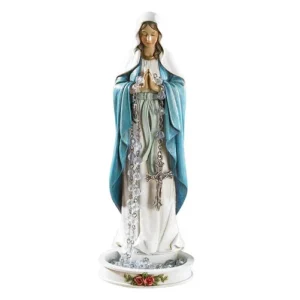
Madonna Rosary Holder – Rosaries & Chaplets
$45.00 -
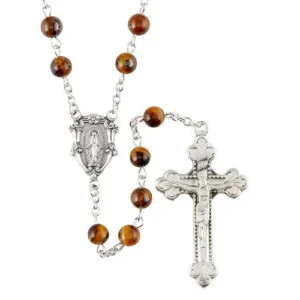
Gemstone Rosary; Tiger Eye 6MM – Rosaries & Chaplets
$42.00
Why Church Councils Were Necessary
As Christianity spread across the Roman Empire and beyond, differing interpretations of Christ’s nature and divine truth emerged. Without a centralized New Testament canon initially or unified theological language, disputes became widespread.
Church councils were convened to:
- Define orthodox belief
- Condemn heresies
- Establish creeds and doctrinal formulas
- Promote unity across the universal Church
These councils were often called by emperors but guided by bishops and theologians inspired by apostolic tradition.
The Role of the Church Fathers
These councils were guided by towering theological figures such as:
- St. Athanasius
- St. Basil the Great
- St. Gregory of Nazianzus
- St. Cyril of Alexandria
- St. Leo the Great
Their writings and arguments shaped the doctrinal decisions that continue to define Christianity.
Lasting Impact on the Catholic Church
The Patristic councils established:
- The Creeds still recited at Mass
- The doctrinal framework of Catholic theology
- The authority of ecumenical councils
- The unity of belief across the universal Church
Without these councils, Christianity would lack doctrinal clarity and unity.
Explore the Catholic Library
Major Patristic Era Church Councils
1. First Council of Nicaea (A.D. 325)
2. First Council of Constantinople (A.D. 381)
This council expanded and reaffirmed the teachings of Nicaea.
Key Outcomes:
- Confirmed the divinity of the Holy Spirit
- Completed the Nicene-Constantinopolitan Creed
- Further condemned Arian and semi-Arian positions
It solidified the doctrine of the Holy Trinity.
3. Council of Ephesus (A.D. 431)
4. Council of Chalcedon (A.D. 451)
One of the most important councils in Christian history.
Key Outcomes:
- Defined Christ as one person in two natures (divine and human)
- Rejected Monophysitism
- Issued the Chalcedonian Definition
This became the definitive statement of Christology in orthodox Christianity.
5. Second Council of Constantinople (A.D. 553)
6. Third Council of Constantinople (A.D. 680–681)
7. Second Council of Nicaea (A.D. 787) (Transitional Beyond Patristic Period)
Key Heresies Addressed
The councils of this era responded to major theological errors:
- Arianism – Denied Christ’s divinity
- Nestorianism – Divided Christ into two persons
- Monophysitism – Claimed Christ had only one nature
- Monothelitism – Claimed Christ had only one will
- Iconoclasm – Rejected sacred images
Each council clarified truth by defining what Christianity is not, as well as what it is.
FAQs
What are the Patristic Era Church Councils?
They are early Church councils (A.D. 100–750) that defined essential Christian doctrines, especially regarding the Trinity and the nature of Christ.
Why was the Council of Nicaea important?
It affirmed the divinity of Christ and produced the Nicene Creed, a foundational statement of Christian belief.
What did the Council of Chalcedon define?
It declared that Christ is one person with two natures—fully divine and fully human.
What heresies were addressed during this era?
Major heresies included Arianism, Nestorianism, Monophysitism, and Monothelitism.
Conclusion: The Foundation of Christian Orthodoxy
The Patristic Era Church Councils were not merely historical gatherings—they were moments of profound theological clarity, where truth was defended, error was corrected, and the faith was preserved for future generations.
They remain a testament to the Church’s mission:
to guard, define, and proclaim the truth entrusted to it since the time of the Apostles.
Featured Catholic Blog Post
 Building a Prayer Corner in a Small Apartment - Building a Prayer Corner in a Small Apartment In a small apartment, every square foot seems to have a responsibility. The dining table becomes a desk, the living room doubles as a place to work, and a quiet moment can be difficult to find between the demands of family, employment, and daily life. For Catholics who desire a more prayerful home, the thought of creating a dedicated place for prayer may seem impractical. There may be no spare bedroom, no…