Our Lady of the Pillar: When Mary Strengthens a Weary Faith
Along the banks of the Ebro River in Zaragoza, Spain, a magnificent basilica rises above the old city, its towers and domes bearing witness to centuries of Catholic devotion. Pilgrims enter its doors to pray before a small image of the Blessed Virgin Mary standing upon a stone column. Some arrive with gratitude for prayers answered; others carry burdens they can scarcely put into words. All come to a place associated with an ancient tradition of encouragement, perseverance, and trust in God.
Each year on October 12, the Church in Spain celebrates Our Lady of the Pillar, one of the most beloved Marian titles in the Spanish-speaking Catholic world. Behind the feast stands a remarkable account involving Saint James the Greater, an apostle who, according to tradition, struggled with discouragement while proclaiming the Gospel in Roman Hispania. Mary came to strengthen him, leaving a pillar as a sign of steadfast faith. Whether we encounter this story as pilgrims, students of Catholic history, or believers searching for renewed courage, its central lesson remains deeply relevant: faith does not require us to feel strong at every moment. It calls us to remain faithful to Christ, especially when the road becomes difficult.
The Apostle Who Needed Encouragement
Saint James the Greater belonged to the small circle of apostles who accompanied Jesus during some of the most important moments of His earthly ministry. Alongside Peter and John, James witnessed the Transfiguration, when Christ revealed His glory upon the mountain. He also accompanied Jesus into the Garden of Gethsemane, where the Lord prayed before His Passion. James knew the wonder of Christ’s miracles and the sorrow of His suffering. After the Resurrection, he joined the other apostles in proclaiming that Jesus had conquered death.
The Acts of the Apostles records that King Herod Agrippa I eventually put James to death by the sword (Acts 12:1–2), making him the first of the Twelve whose martyrdom Scripture explicitly recounts. Between the Resurrection and his death, Christian tradition associates James with missionary preaching in the Iberian Peninsula. The New Testament does not describe this journey, and historians cannot establish every detail of the account. Nevertheless, the tradition became deeply woven into the religious identity of Spain and the devotion surrounding the Apostle.
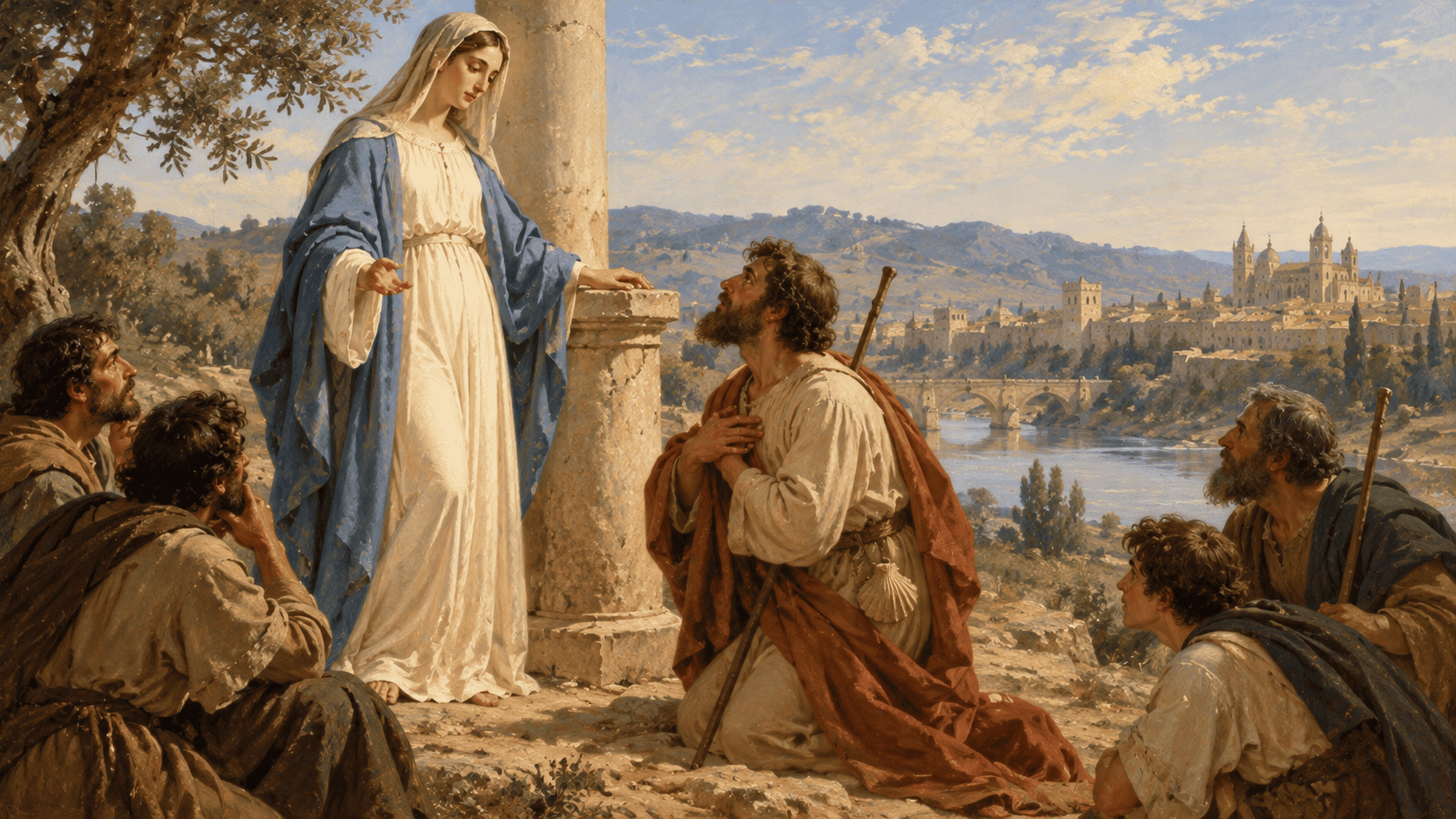
According to the ancient tradition preserved in Zaragoza, James encountered considerable resistance while preaching near the Ebro River. The people he hoped to reach showed little interest in his message, and the Apostle began to lose heart. He had left behind familiar surroundings to announce the Gospel, yet his efforts seemed to produce little fruit. His experience resembles the spiritual weariness that can overtake any Christian who tries to do what is right without seeing the results he hoped for.
At this moment of discouragement, the tradition tells us, the Blessed Virgin Mary appeared to James and his companions. She encouraged him to continue his mission and entrusted him with a pillar as a sign of enduring faith. The account places this event around the year AD 40, while Mary was still living on earth. For that reason, the tradition describes her coming in a distinctive way, unlike later Marian apparitions associated with Lourdes or Fátima.
The Church venerates Our Lady of the Pillar through a longstanding devotional tradition, but Catholics are not required to accept the details of the apparition as historically proven or as part of the deposit of faith. The account belongs to the Church’s inherited devotional memory, which invites reflection while remaining distinct from the public revelation entrusted to the apostles. Its spiritual message, however, harmonizes with the Gospel: Christ strengthens those who persevere in His service, and Mary continues to direct the faithful toward her Son.
Why a Pillar Became a Sign of Faith
The pillar at the center of this devotion offers a striking image of Christian perseverance. A column supports what rests upon it. It stands firm beneath the weight it carries, even when the surrounding world changes. For generations of Catholics, the pillar associated with Mary has expressed the steadfastness of faith and the confidence that God remains faithful to His promises.
Scripture frequently uses the imagery of foundations and strong structures to describe the spiritual life. Jesus compares those who hear and act upon His words to a wise builder who establishes his house upon rock (Matthew 7:24–25). When rain falls and winds strike, the house remains standing because its foundation holds. Saint Paul likewise teaches that no foundation can replace Jesus Christ (1 Corinthians 3:11).
These passages help us understand the devotion without confusing the symbol with its source. Mary does not replace Christ as the foundation of Christian faith. She leads us toward Him, encouraging us to build our lives upon His teaching and trust His promises. Her own life reveals what such trust looks like. At the Annunciation, she accepted God’s invitation without knowing every difficulty that lay ahead. At Calvary, she remained near her suffering Son when others had fled. Her steadfastness grew from faith in God rather than confidence in her own strength.
That distinction matters when we feel overwhelmed. Christian courage does not mean that we never experience fear, uncertainty, or exhaustion. It means that we continue to place our trust in God while acknowledging those struggles honestly. Like the Apostle in the Zaragoza tradition, we may need encouragement precisely because we have been trying to remain faithful for a long time.
From a Small Shrine to a Great Basilica
The devotion to Our Lady of the Pillar gradually became inseparable from Zaragoza’s Catholic identity. According to local tradition, Saint James established a place of prayer near the site associated with Mary’s appearance. Over the centuries, successive churches rose around the venerated column, reflecting the growth of the devotion and the generations of pilgrims who came to pray there.
Today, the Basilica of Our Lady of the Pillar stands among Spain’s most recognizable religious landmarks. Its imposing architecture contrasts with the comparatively small Marian image at the heart of the sanctuary. The building’s grandeur expresses the gratitude and devotion of countless believers, yet the spiritual focus remains simple: a mother who points her children toward Christ and encourages them to persevere in faith.
For the people of Zaragoza, visiting the Virgin of the Pillar has long formed part of ordinary religious life. Families come to pray, pilgrims entrust their intentions to Mary’s intercession, and the faithful gather for Mass and the sacraments. The shrine reminds visitors that Catholic devotion does not belong only to distant history. It continues wherever believers bring their hopes, fears, and thanksgiving before God.
The October 12 celebration also carries profound cultural importance throughout the Spanish-speaking world. In Zaragoza, the feast includes religious observances and a remarkable offering of flowers to the Virgin. Families and communities participate in an expression of devotion that connects generations through a shared religious heritage. Yet the beauty of these customs reaches its fullest meaning when it leads participants toward prayer, gratitude, and renewed commitment to the Gospel.
Mary’s Encouragement and the Mission of the Church
The story of Our Lady of the Pillar becomes especially meaningful when we consider the missionary task entrusted to every Christian. Not everyone receives a call to preach in distant lands, but every baptized Catholic shares in the Church’s mission to bear witness to Christ. Parents teach children to pray, parish volunteers serve neighbors in need, teachers explain the faith, and ordinary believers try to live with honesty and charity in circumstances that often challenge their convictions.
Such efforts do not always bring immediate encouragement. A parent may pray for years for a child who has drifted away from the Church. A catechist may wonder whether students understand the lessons they receive. Someone caring for an elderly relative may feel that the work goes unnoticed. Even a person who faithfully attends Mass and tries to pray each day can experience periods when God seems distant.
The Zaragoza tradition speaks to these moments because it places discouragement within the experience of an apostle. If James could struggle while carrying out the mission Christ entrusted to him, our own weariness need not surprise us. The important question is not whether we ever feel discouraged, but what we do when discouragement arrives.
Mary’s example directs us toward faithful perseverance. At the wedding feast of Cana, she recognized a family’s need and brought it to Jesus. Her instruction to the servants, recorded in John 2:5, directs attention entirely toward her Son. That remains the heart of authentic Marian devotion. We seek her intercession not because Christ is reluctant to hear us, but because the communion of saints unites believers in prayer and because Mary’s maternal example helps us respond more generously to His grace.
When we pray through the intercession of Our Lady of the Pillar, we ask for the courage to continue following Christ without demanding that every effort produce visible success. We ask for patience when relationships remain difficult, hope when circumstances resist change, and fidelity when our spiritual lives feel ordinary. These requests may appear modest, but they touch the foundations of Christian discipleship.
What Our Lady of the Pillar Teaches Catholic Families
The October 12 feast offers families an opportunity to speak about perseverance in a way that children and adults can understand. Many young people encounter disappointment when hard work does not lead immediately to success. Adults face similar frustrations in employment, marriage, parenting, and parish life. The tradition of Saint James and Our Lady of the Pillar reminds us that a worthwhile calling may require patience long before its fruits become visible.
Families might begin by reading Matthew 7:24–27 together and discussing what it means to build a life upon a strong foundation. Parents can explain that Christ is the foundation of Christian faith and that Mary shows us how to trust Him. A short family Rosary, particularly a decade offered for someone experiencing discouragement, can turn that conversation into a shared act of prayer.
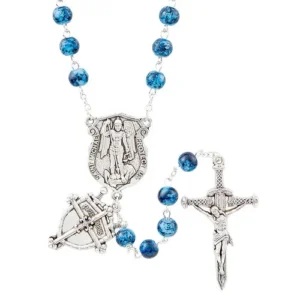
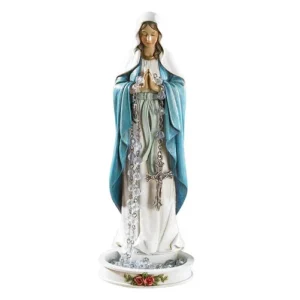
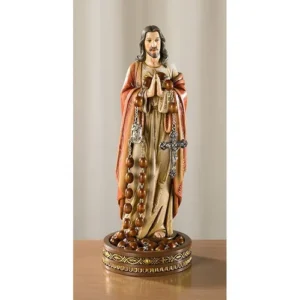
A Marian image or a small prayer space at home can also provide a gentle reminder of this devotion. Such objects do not possess power apart from God, nor do they replace the sacraments or personal prayer. Their value lies in helping us remember the people and truths toward which they point. A crucifix recalls Christ’s saving love, while an image of the Blessed Virgin invites us to imitate her humility and confidence in God.
Those who wish to develop a more prayerful home may find additional encouragement in our Marian Journal reflection on Creating a Beautiful Domestic Church. The article explores how simple devotional practices and thoughtful surroundings can help families bring Catholic faith into everyday life. Our guide to Catholic Traditions, Customs, and Devotions also offers ways to preserve meaningful practices without allowing them to become empty routines.
Above all, the feast encourages families to practice the virtue it celebrates. When someone feels defeated, another family member can offer patient encouragement. When a responsibility becomes difficult, we can resist the temptation to abandon it merely because the results seem small. When prayer feels dry, we can continue to place ourselves before God, trusting that He works in ways we cannot always measure.
A Faith That Remains Standing
The great basilica in Zaragoza has welcomed generations of pilgrims, but its deepest lesson does not depend upon the size of its towers or the beauty of its sanctuary. At the center of the devotion stands a simple image: Mary associated with a pillar, offering encouragement to an apostle who needed strength to continue his mission. The story has endured because the need it addresses remains familiar to every generation of Christians.
We all encounter seasons when our efforts appear fruitless, when prayer demands perseverance, or when the path ahead seems uncertain. At such times, we may be tempted to measure God’s faithfulness by the results we can see. Our Lady of the Pillar invites us to adopt a different measure. She reminds us to remain close to Christ, to continue the work entrusted to us, and to trust that grace can bear fruit even through weakness.
On October 12, Catholics can honor this ancient devotion by asking for the strength to take one more faithful step. We may not know how a difficult situation will unfold or when a long-awaited prayer will receive its answer. Yet we can continue to pray, serve, forgive, and hope. The pillar becomes a fitting reminder of the steadfast faith that rests upon Christ, the foundation that never fails.
A Prayer to Our Lady of the Pillar
Blessed Virgin Mary, Our Lady of the Pillar, you trusted the Lord through every trial and remained faithful beside your Son. Through your maternal intercession, ask Jesus to strengthen us when discouragement weakens our hearts. Help us remain steadfast in prayer, generous in service, and patient when our efforts seem to bear little fruit.
Teach us to build our lives upon Christ, the sure foundation of our faith. Encourage those who struggle, comfort those who suffer, and guide our families toward a deeper love for your Son. May we persevere in the work God has entrusted to us and trust His grace through every season of life. Amen.
Sources and Further Reading
Cathedrals of Zaragoza, The Tradition of the Coming of the Virgin. The cathedral’s account of the pious tradition concerning Mary and Saint James.
Cathedrals of Zaragoza, The Basilica of Our Lady of the Pillar. Background on the shrine and its importance in Catholic devotion.
Catechism of the Catholic Church, paragraphs 963–975. The Blessed Virgin Mary’s relationship to Christ and the Church.
Zaragoza Tourism, Marian Route. Background on the Marian pilgrimage tradition associated with the Basilica of Our Lady of the Pillar.
Catechism of the Catholic Church, paragraphs 66–67. The distinction between public revelation and private revelations.