A Catholic home does not announce itself through decoration alone. You notice its character gradually. A crucifix hangs above a doorway where family members pass beneath it every morning. A Rosary rests beside the bed because someone actually reaches for it at night. A Bible sits within easy reach instead of disappearing onto a forgotten shelf. A small image or statue of the Blessed Virgin Mary stands near a window, while holy water waits near the entrance. Somewhere, a candle has burned lower than expected because someone kept returning to light it during prayer. None of these things makes a family holy by itself, but each can help a family remember the holiness toward which God calls them.
That distinction separates thoughtful Catholic home ideas from ordinary decorating advice. A family does not create a domestic church by filling every available wall and shelf with religious objects. Instead, a Catholic home allows the Faith to become naturally visible within the rooms where everyday life unfolds. Family members pray there, share meals, welcome guests, forgive one another, make sacrifices, care for children, endure illness, celebrate good news, and comfort one another when life becomes difficult. Parents bless children before bed, apologies follow arguments, and doors open for people who need companionship or help. Sacred objects support this life, but the people who live among them give the home its deepest Catholic character.
What Makes a Home a Domestic Church?
The Church has long described the Christian family as the domestic church because the home provides the first place where many people encounter a life of faith. Children may first learn to pray beside a bed rather than inside a classroom. They may first hear Scripture from a parent or grandparent, first learn the Sign of the Cross at the dinner table, and first discover forgiveness after a disagreement with a sibling. Long before children understand theological language, they begin forming an understanding of Catholic life by watching the people closest to them live it.
For this reason, creating a Catholic home begins with habits rather than objects. A beautiful crucifix cannot replace family prayer, just as a shelf of Catholic books cannot replace the act of reading them. Sacred art cannot create peace between people who refuse to forgive each other, and a carefully arranged prayer corner cannot substitute for the sacraments. Yet when a family already strives to pray, forgive, serve, and grow in faith, the physical environment of the home can strengthen those habits by keeping reminders of God within sight.
Catholicism understands the importance of such reminders because human beings learn through what they repeatedly see, hear, and touch. A crucifix silently recalls the cost of love, while an image of Mary recalls trust and surrender to God. Images of the saints remind a family that ordinary men and women have pursued holiness through every kind of difficulty. A Bible left where someone actually reads it quietly communicates that Scripture belongs to the present life of the family rather than merely to the past.
Begin With a Crucifix
For a family wondering how to make a home more visibly Catholic, a crucifix offers one of the simplest places to begin. The crucifix places Christ’s sacrificial love before the household without requiring words. Family members may pass it dozens of times during an ordinary day, sometimes without consciously noticing it, yet its presence continues to identify the home as a place where the Cross stands at the center of Christian life.
Catholic families have traditionally placed crucifixes in bedrooms, kitchens, living rooms, entryways, and other gathering spaces. A crucifix does not need to dominate a room to carry meaning. In fact, a carefully chosen piece often becomes more powerful when it belongs naturally within the surroundings, as though the room would somehow feel incomplete without it. The goal does not require turning the home into a chapel. Instead, the family allows a sacred image to occupy an honored place within the rooms where ordinary life already happens.
Placement can also give a crucifix particular meaning. A crucifix near the front door can greet a family as they leave for work and school and welcome them when they return. One in a bedroom can become the last sacred image someone sees before sleep and the first one noticed in the morning. A crucifix near the family table can quietly connect shared meals with gratitude, sacrifice, and the love that holds a household together. Over time, the family may stop thinking consciously about why it hangs there, yet its presence becomes woven into the visual memory of home.
Create a Catholic Prayer Corner That People Actually Use
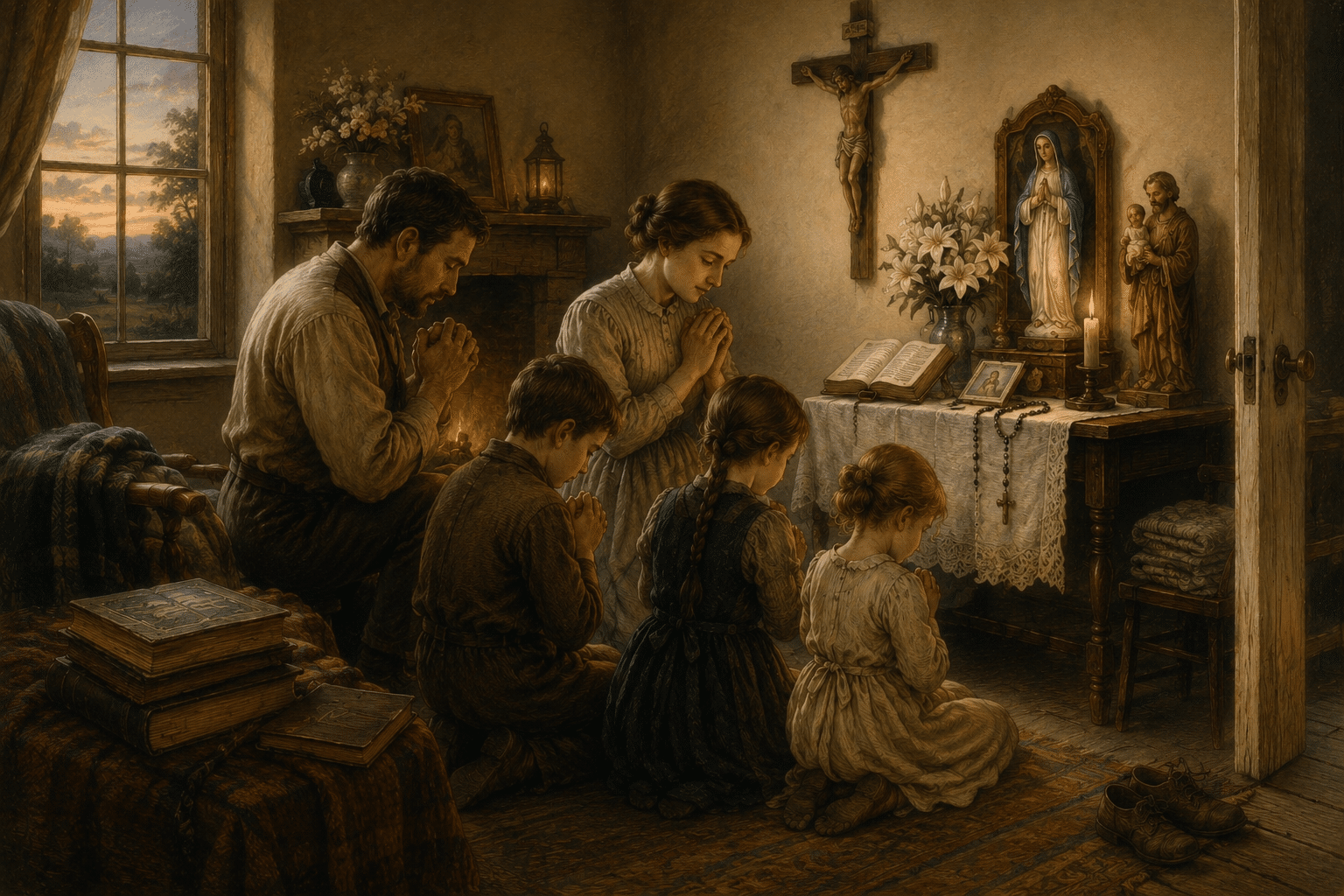
Once a family establishes those basic signs of faith, a dedicated prayer space can provide a quiet center for devotional life. A Catholic prayer corner does not require a separate room or elaborate furniture. A small table, shelf, alcove, or unused corner can become a place where the family gathers its devotional objects and, more importantly, actually stops to pray.
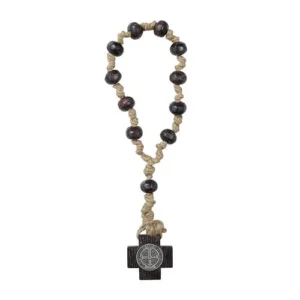
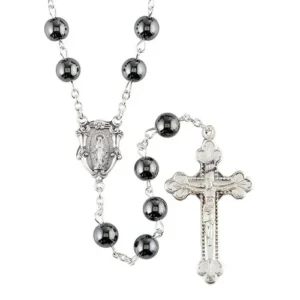
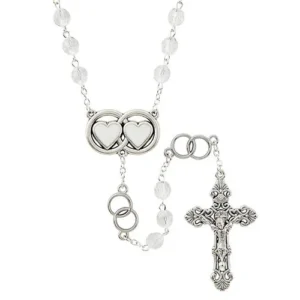
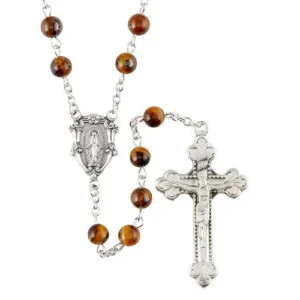
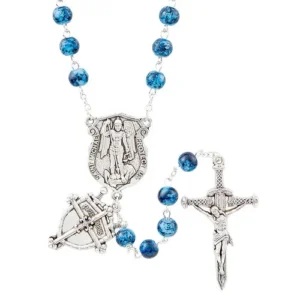
A crucifix might provide the visual center, while a Catholic Bible, Rosary, Marian image, patron saint image, candle, prayer book, holy water, or a small arrangement of flowers can surround it. Families can begin with only a few meaningful pieces and allow the space to develop naturally instead of trying to complete it all at once.
The most successful prayer spaces reveal their purpose through use. A child should feel comfortable picking up the Rosary. Someone who receives difficult news should know where to light a candle and sit quietly for a few minutes. A parent might kneel there before anyone else wakes, while the family may gather there in the evening to pray for a sick relative. A prayer corner becomes beautiful in a specifically Catholic sense when prayer leaves traces of family life upon it: a Bible opens and closes, Rosary beads move through fingers, candles burn down, flowers wilt and get replaced, and prayer cards accumulate because particular people needed particular prayers.
Some families create what they call a Catholic home altar. Such a devotional space can serve family prayer beautifully, but families should distinguish it from the consecrated altar used in the sacred liturgy and at Mass. Within the home, the space provides a focal point for prayer, novenas, saint feast days, Scripture reading, and the changing liturgical seasons rather than serving a sacramental function.
Let the Liturgical Year Enter the Home
A prayer space becomes even more meaningful when the Catholic liturgical year changes it gradually throughout the seasons. Advent brings the wreath and its candles, while Christmas brings the Nativity and the celebration of Christ’s birth. Lent can simplify the space and turn attention toward the Cross, while Easter can restore flowers and other signs of the Resurrection.
As the year continues, May can bring flowers near an image of the Blessed Virgin Mary, and October can draw the family’s attention toward the Rosary. November invites Catholics to remember and pray for the faithful departed, perhaps by placing photographs or names of deceased family members near the prayer space. Patronal feast days can bring an image of a particular saint into greater prominence for a few days, while family anniversaries of Baptisms, First Communions, Confirmations, and marriages can provide occasions for gratitude and prayer.
Through these small changes, the home begins to keep Catholic time. Children learn that the year contains seasons beyond the ones marked by weather, school calendars, vacations, and commercial holidays. They see the purple candles return in Advent, notice the quieter character of Lent, and watch Easter bring signs of life back into the home. Eventually, those patterns can become part of childhood memory, and the Church’s calendar begins to feel less like something printed in a parish bulletin and more like a rhythm the family actually lives.
Choose Sacred Art That Belongs in Your Home
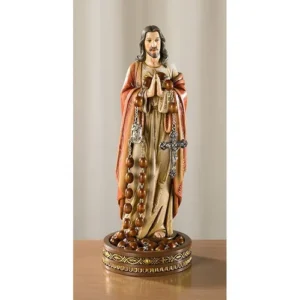
The Church has cultivated sacred beauty for nearly two thousand years, and Catholic families inherit an enormous visual tradition. Images of Christ, the Sacred Heart, Divine Mercy, the Holy Family, the Immaculate Heart, Marian apparitions, angels, martyrs, saints, the Crucifixion, and the Nativity have helped generations of Christians turn their attention toward the mysteries of the Faith.
A Catholic home does not need to display every devotion that the Church has ever known. A few carefully chosen pieces usually create a stronger devotional atmosphere than a room crowded with objects competing for attention. Families can choose sacred art that reflects devotions they actually practice, saints they genuinely love, or mysteries of the Faith that hold particular importance for them. An image gains greater meaning when a family knows why it hangs there.
Sacred art also works best when it belongs naturally within the beauty of the home. Catholicism has never required a choice between faith and beauty. Cathedrals, stained glass, illuminated manuscripts, vestments, mosaics, carved crucifixes, icons, statues, bells, incense, and sacred music all testify to the Church’s conviction that beauty can lift the heart toward God. Families can apply the same principle on a smaller scale by choosing sacred objects carefully, giving them enough visual space, and allowing them to harmonize with the home rather than treating them as religious clutter.
Let Your Family Develop Its Own Communion of Saints
As the years pass, many Catholic households naturally develop particular relationships with certain saints. One child may choose Saint Michael at Confirmation, while another develops an affection for Saint Francis of Assisi. A grandmother may have prayed regularly to Saint Anthony, while a parent may discover Saint Thérèse during a season of suffering. A father may turn often to Saint Joseph as he tries to live his vocation faithfully. Without anyone formally planning it, the family begins to gather its own small communion of saints.
Families can make those relationships part of home life by keeping meaningful images or medals, learning the stories of their patron saints, asking their intercession, and celebrating their feast days. A special meal, dessert, prayer, or short story at dinner can make a feast day memorable without requiring an elaborate celebration. What matters most is repetition, because children often learn saints in much the same way they learn about relatives they never personally met: they hear the same names and stories until those people become familiar.
Over time, those saints can become part of a family’s spiritual history. A child may remember that Saint Joseph always held a special place in his father’s devotion, while another may inherit the Saint Anthony medal that a grandmother carried for decades. The saints then become more than subjects in a religion lesson. Their stories become connected with the stories of the family members who loved them, creating another bond between Catholic memory and everyday life.
Mark the Threshold of the Home
The entrance to a Catholic home offers another natural place for a small expression of faith because every day carries the family repeatedly across that threshold. People leave for work, school, errands, appointments, and countless responsibilities, and eventually they return. A holy water font near the door can encourage family members to make the Sign of the Cross as they come and go, while a crucifix, Saint Benedict medal, or Marian image can provide another quiet reminder of God’s presence.
This practice gives spiritual meaning to an action so ordinary that people usually perform it without thought. A parent leaving for work can ask God for protection and grace. A child heading to school can make the Sign of the Cross before stepping outside. Someone returning after a difficult day can enter the home beneath the same crucifix that was there in the morning. The gesture takes only a few seconds, but repeated over years, it can become part of the family’s rhythm.
A threshold also carries a deeper Christian meaning because a Catholic home should remain open to others. Hospitality does not require an immaculate house or elaborate entertaining. It asks families to make room for relatives, neighbors, friends, parishioners, and sometimes people who simply need a meal, conversation, or temporary refuge from loneliness. The Catholic identity of the entrance therefore involves more than what hangs beside the door; it also appears in the welcome extended when someone knocks.
Give Sacred Objects Time to Acquire a History
When families choose religious objects for the home, they can easily focus on how those objects look when they are new. Yet some of the most meaningful Catholic objects become beautiful in another way after years of use. Rosary beads grow smooth beneath the fingers. A Bible gathers notes, bookmarks, and worn pages. A candle burns down beside a Marian image. A crucifix moves from one house to another. A statue receives flowers every May until children begin to associate those flowers with Mary almost without thinking.
These changes give sacred objects a family history that nobody can purchase in advance. A new Rosary may simply be beautiful, but a Rosary that belonged to a grandmother carries memories of the hands that held it in prayer. A crucifix given at a wedding can remain on the wall through anniversaries, births, illnesses, arguments, reconciliations, graduations, and eventually grandchildren. Its monetary value may remain modest while its meaning becomes impossible to measure.
For this reason, families do not need to accumulate religious objects quickly. They can choose well, use what they choose, and allow time to give those objects a story. A devotional object should invite prayer before it invites another purchase. When sacred things become companions to actual Catholic life, they begin to carry memories of the people and prayers that surrounded them.
Create Beauty Without Creating Clutter
Because Catholic tradition offers such a rich treasury of sacred art and devotional objects, enthusiasm can sometimes overwhelm a room. A family may love crucifixes, statues, icons, Marian images, saint medals, candles, prayer cards, and seasonal decorations, yet displaying everything at once can weaken the visual impact of the pieces that matter most. Sacred beauty benefits from the same restraint that serves other forms of beauty.
A family can therefore give devotional objects room to breathe. One substantial crucifix may provide a stronger focal point than several smaller pieces crowded together. A single Marian image with fresh flowers can create a more prayerful atmosphere than a shelf filled without intention. A carefully arranged prayer corner can gather smaller devotional objects in one meaningful place while allowing the rest of the home to remain calm and ordered.
Restraint also helps keep the purpose of sacred objects clear. The goal does not involve making the home look Catholic enough for someone else. Instead, families choose objects that support the way they actually pray and live. Beauty serves the domestic church when it directs attention toward God, encourages prayer, preserves meaningful memories, and creates an atmosphere in which sacred things feel neither hidden nor staged.
Let the Domestic Church Begin With the People Who Live There
In the end, the deepest Catholic identity of a home will never come from its walls. The domestic church takes shape through the people who live inside them. Children discover whether adults truly pray by watching them pray. They learn whether forgiveness matters by seeing parents apologize and reconcile. They discover generosity when the family shares what it has, and they learn hospitality when the door opens for someone who needs welcome. They learn the importance of Sunday Mass when the family builds Sunday around it rather than fitting it into whatever time remains.
The sacred objects within the home can strengthen those lessons because children attach memory to places and things. Years later, they may forget the furniture that filled the living room or the color painted on the kitchen walls, but they may remember the crucifix in the hallway. They may remember their mother lighting the Advent candles, their father making the Sign of the Cross before dinner, or a grandmother sitting quietly with a Rosary. They may remember kneeling beside a bed for prayers or watching someone light a candle after the family received difficult news.
Eventually, those children may establish homes of their own. One day, a grown son may hang a crucifix above a doorway without immediately realizing that he has chosen almost the same place where one hung during his childhood. A daughter may set an Advent wreath on the table because December somehow feels incomplete without it. Someone may place a Rosary beside the bed, fill a small holy water font near the door, or teach a child the same evening prayer once taught by a grandparent.
In this way, a Catholic home reaches beyond the years any one family spends inside it. The rooms change, children grow, families move, and possessions come and go, but habits of faith can continue from one household into the next. When prayer, beauty, hospitality, forgiveness, sacred memory, and love for Christ shape the life within a home, the domestic church becomes more than a Catholic decorating idea. It becomes a place where faith takes visible form in ordinary life and where one generation quietly teaches the next how to make room for God.