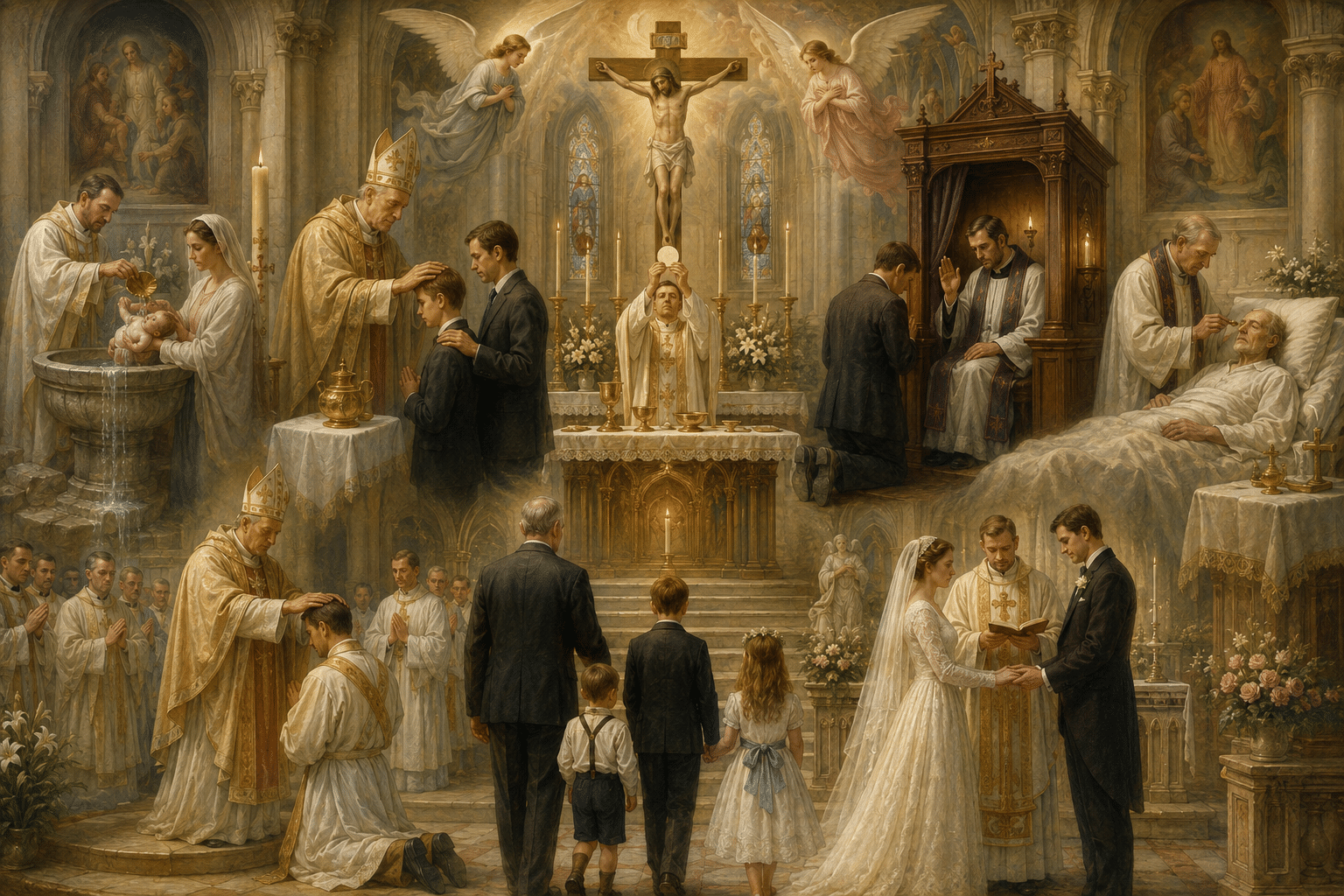
A Catholic life may begin beside a baptismal font and end many years later with a family gathered quietly beside a bed in prayer. Between those moments stretch all the ordinary years of human life: childhood and school, friendships and work, marriage for some and priesthood for others, children and grandchildren, illness and recovery, failure and forgiveness, Sunday Mass, unexpected joy, and grief. Through these changing seasons, the seven Catholic sacraments accompany the Christian and bring the grace of Christ into the real circumstances of human life.
The sacraments accomplish this through remarkably ordinary things. Water runs across a forehead. Oil touches the skin. Bread and wine rest upon an altar. A priest speaks words of absolution. A bishop places his hands upon the head of a man who kneels before him. A bride and groom stand before God and exchange their vows. Catholicism does not ask human beings to escape the material world before they can encounter God. Instead, the Catholic Faith teaches that God entered the material world, took flesh within it, and continues to meet His people through visible signs that communicate invisible grace.
What Are the Seven Catholic Sacraments?
The Catholic Church recognizes seven sacraments: Baptism, Confirmation, Eucharist, Penance and Reconciliation, Anointing of the Sick, Holy Orders, and Matrimony. Each sacrament carries its own purpose and grace, yet together they form a pattern that follows the Christian through the most important movements of life.
The Church traditionally arranges the seven sacraments into three groups. Baptism, Confirmation, and Eucharist form the Sacraments of Christian Initiation because they establish and strengthen the Christian life. Penance and Reconciliation and Anointing of the Sick form the Sacraments of Healing because Christ brings forgiveness, strength, and healing through them. Holy Orders and Matrimony form the Sacraments at the Service of Communion because those who receive them accept particular vocations of service to others. These categories help explain the sacraments, but the sacraments themselves make the most sense when we see them within the human lives they touch.
Baptism: The Beginning of Christian Life
That sacramental journey begins with Baptism. A family carries a child toward the baptismal font while parents and godparents gather nearby. The child may sleep through much of the ceremony or cry when the water touches the forehead, yet something far greater than a family tradition takes place. The priest or deacon pours water and baptizes the child in the name of the Father, the Son, and the Holy Spirit. Through Baptism, Christ frees the person from sin, gives new life, and incorporates the newly baptized into His Church.
When parents bring an infant for Baptism, they also accept a responsibility that reaches far beyond the ceremony. Together with the godparents, they promise to help the child grow in the Catholic Faith, learn to pray, participate in the sacramental life of the Church, and eventually embrace the Faith personally. The child cannot yet understand those promises, but the family and parish surround that child with a community that can help those promises take root. In this way, the baptismal font marks not simply a beautiful beginning but the entrance into a lifelong relationship with Christ and His Church.
Confirmation: Strengthened by the Holy Spirit
As the baptized person grows, the sacramental journey continues through Confirmation. In the Latin Church, the bishop ordinarily lays his hands upon the candidate and anoints the forehead with sacred chrism, although an authorized priest may administer the sacrament in certain circumstances. The oil leaves its fragrance on the skin while the Church invokes the Holy Spirit, joining a visible sign to the invisible grace God gives.
Confirmation strengthens the grace of Baptism and equips the Christian for a deeper participation in the life and mission of the Church. For that reason, Catholics should not treat Confirmation as a graduation from religious education or as the end of formal involvement with the Faith. Confirmation calls the Christian toward greater maturity, greater responsibility, and a stronger willingness to bear Christian witness in daily life. The sacrament therefore looks forward rather than backward, because it strengthens the confirmed person for the Christian life that still lies ahead.
Many Confirmation candidates also choose the name of a saint, and that custom can give the sacrament a particularly personal dimension. A young Catholic may choose Saint Francis of Assisi because his simplicity speaks to the heart, Saint Joan of Arc because her courage inspires perseverance, Saint Thomas Aquinas because his pursuit of truth encourages study, or another saint whose life offers a compelling example of holiness. The chosen saint can then become more than a name written on a certificate. Through prayer and imitation, that saint can remain a patron and companion throughout a lifetime of discipleship.
The Eucharist: Christ at the Center of Catholic Life
The sacramental journey soon leads from the baptismal font and sacred chrism toward the altar, where Catholics encounter the Eucharist. During Mass, the priest speaks the words of consecration, and Catholics believe that the bread and wine become the Body and Blood of Jesus Christ while retaining the appearances of bread and wine. Catholics therefore receive Holy Communion not as merely symbolic bread but as Christ truly, really, and substantially present.
This belief shapes Catholic worship in ways that visitors often notice immediately. Catholics genuflect toward the tabernacle, approach Holy Communion with reverence, spend time before Christ in Eucharistic Adoration, carry the Blessed Sacrament in Corpus Christi processions, and guard the Eucharist with extraordinary care. These practices flow from the same conviction: Christ remains present among His people.
Because the Eucharist brings Catholics into communion with Christ in such an intimate way, the Church calls it the source and summit of Christian life. Everything in the Christian life leads toward Christ, and every Christian vocation draws its strength from Him. The Catholic who approaches the altar therefore does more than remember an event from the distant past. The communicant approaches the living Christ, receives Him, and carries that encounter back into the ordinary world of family, work, service, suffering, and prayer.
Reconciliation: Mercy and the Courage to Begin Again
The Christian life does not move forward without failure, however, and the Church never pretends that Baptism or Confirmation removes the human capacity to sin. People become selfish, impatient, dishonest, proud, or indifferent. They neglect prayer, wound people they love, ignore opportunities to do good, and sometimes choose actions they know will lead them away from God. The Sacrament of Penance and Reconciliation addresses this reality not by denying human weakness but by proclaiming the greater reality of God’s mercy.
In Confession, the penitent examines his or her conscience, expresses sorrow, confesses sins, accepts an appropriate penance, and receives sacramental absolution from the priest. Through this sacrament, Christ forgives sins and reconciles the penitent with God and the Church. The sacrament therefore asks a person to face sin honestly, but it never leaves that person trapped there.
For this reason, hope stands at the heart of Reconciliation. A Catholic may remain away from Confession for months or even years, yet the possibility of return remains. Pride may harden, habits may deepen, and regret may accumulate, but Christ continues to call the sinner toward repentance and forgiveness. The confessional door carries a quiet message that Christianity repeats across the centuries: through God’s mercy, a person can begin again.
Anointing of the Sick: Christ Draws Near in Suffering
Human weakness appears in another form when illness enters a life. A diagnosis can rearrange a family’s world within a few hours. Appointments replace plans, hospital rooms replace familiar surroundings, and conversations begin to revolve around test results, treatments, and questions that nobody can answer with certainty. Illness reminds human beings of their mortality, but the Church does not leave the sick to confront that reality alone.
Through the Anointing of the Sick, a priest anoints a seriously ill, weakened, or elderly person with blessed oil and asks Christ to grant strength, peace, courage, and grace. Catholics sometimes assume that the sacrament belongs only to the final minutes of life, but the Church offers it more broadly to those who face serious illness, significant weakness, or the burdens that accompany advanced age. When appropriate, the sacrament also brings forgiveness of sins, and God may grant restoration of physical health when that healing serves the person’s salvation.
The sacrament does not promise that every illness will disappear, nor does it remove the natural fear that suffering can bring. Instead, it draws the suffering Christian more deeply into union with Christ and reminds the sick person that illness cannot separate him or her from the life of the Church. At a time when sickness can narrow a person’s world to a bed, a room, or the next medical appointment, the sacrament widens that world again by placing suffering within the love of Christ and the prayers of His Church.
Holy Orders: A Vocation of Service
While Anointing brings the ministry of a priest into moments of illness and weakness, Holy Orders gives the Church the ordained ministers who carry out that sacramental service. Bishops, priests, and deacons receive Holy Orders for distinct forms of ministry, and the laying on of hands stands at the heart of ordination. The gesture appears simple, yet Christians have used it since the earliest centuries as a sign of consecration and the handing on of sacred ministry.
The importance of Holy Orders becomes especially clear when we look at the ordinary life of a parish. A priest baptizes a child, celebrates Mass, hears Confessions, witnesses marriages, anoints the sick, preaches the Gospel, and accompanies families through moments of joy and grief. He may celebrate First Communions one morning and visit a hospital that afternoon. Years later, he may preside at the wedding of someone he first knew as a child or stand beside the family of a parishioner whose funeral he now celebrates.
Those ordinary acts reveal the purpose of ordained ministry more clearly than titles or vestments ever could. Holy Orders calls men to serve Christ by serving His people. Through years of parish life that may attract little notice beyond the community itself, bishops, priests, and deacons help carry the sacramental life of the Church from one generation to the next.
Matrimony: A Covenant Lived Across a Lifetime
The Church also recognizes marriage as a vocation of service. In the Sacrament of Matrimony, a baptized man and woman enter a lifelong covenant ordered toward the good of the spouses and the generation and education of children. The wedding day gives this covenant a public beginning as the couple speaks vows before God and the Church, surrounded by family, friends, music, flowers, and the celebrations that naturally accompany such a moment.
Marriage itself, however, unfolds during the years that follow. Husband and wife live their vows in kitchens and cars, workplaces and nurseries, hospital rooms and quiet homes. They encounter financial worries, unexpected laughter, sleepless nights, celebrations, disappointments, arguments, forgiveness, and countless sacrifices that few people outside the family will ever see. Catholic marriage therefore asks spouses to do more than experience love as an emotion. It calls them to choose love faithfully and repeatedly within the covenant they have made.
As the years pass, those repeated choices give the wedding vows their lived meaning. A couple may speak the vows in a matter of minutes, but they spend a lifetime learning how to keep them. In that daily fidelity, Matrimony reveals why the Church places it beside Holy Orders among the Sacraments at the Service of Communion: both vocations ask Christians to give themselves for the good of others.
How the Seven Sacraments Shape a Catholic Life
When viewed together, the seven sacraments trace the great movements of Christian existence. Baptism gives new life in Christ, Confirmation strengthens the baptized through the Holy Spirit, and the Eucharist nourishes the Christian with Christ Himself. Reconciliation restores the sinner through mercy, while Anointing brings Christ’s strengthening grace into illness and weakness. Holy Orders consecrates men to ordained service, and Matrimony calls husband and wife to build a life of faithful, self-giving love.
Yet the unity of the sacraments becomes even clearer when we consider the physical signs through which Catholics receive them. Water touches the skin at Baptism, sacred chrism marks the forehead at Confirmation, and bread and wine become the Body and Blood of Christ in the Eucharist. The penitent speaks sins aloud and hears the words of absolution. The sick receive anointing with oil. A bishop places his hands upon a man at ordination, and a bride and groom speak their vows before God. Through these tangible signs, the sacramental life proclaims that God does not remain distant from human experience but enters it with grace.
Why Sacramental Gifts Become Family Keepsakes
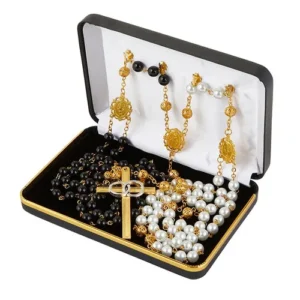
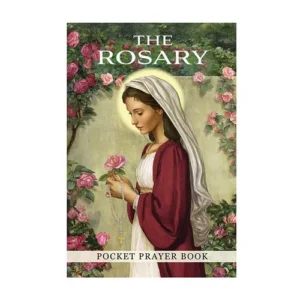
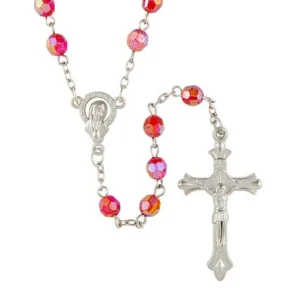
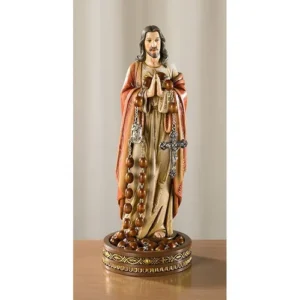
Because the sacraments mark important moments in Catholic life, families often preserve their memory through religious gifts and keepsakes. A Baptism may bring a small crucifix for the child’s room. A child receiving First Holy Communion may receive a Rosary or Bible. A Confirmation sponsor may choose a medal depicting the candidate’s patron saint, while families may mark weddings and ordinations with devotional objects that carry the memory of those days into the years ahead.
These gifts do not create the grace of the sacrament, nor does their material value determine the importance of the occasion. Instead, a well-chosen religious gift can connect memory with prayer. The child who receives a crucifix at Baptism may one day hang it in an adult home. A First Communion Rosary may grow smooth after years of use. A Confirmation medal may accompany its owner through school, work, marriage, parenthood, and old age. A wedding crucifix may remain on a wall while children grow beneath it and eventually leave home.
Time gives these objects a meaning that no shop or giver can manufacture in advance. Photographs fade, families move, and people who once gathered around a baptismal font or wedding altar eventually pass from this life. Yet an old Rosary, a worn Bible, a saint medal, or a crucifix can still call a person back to a particular church, a particular day, and the people who stood nearby. In that way, a sacramental keepsake can quietly encourage the deeper purpose of memory: gratitude for the grace God gave and a renewed desire to live faithfully within it.
The Sacramental Life Continues
Walk through an old Catholic church and the whole sacramental life begins to appear within the building itself. The baptismal font waits near the entrance. A confessional stands along a wall. The altar occupies the sanctuary, and the tabernacle holds the Blessed Sacrament nearby. Sacred oils remain ready for sacramental use, while the same church may have witnessed generations of First Communions, Confirmations, weddings, ordinations, Confessions, and funerals. Each place carries memories, but each also waits for the next person who will come seeking Christ.
Over the years, those individual moments form a larger pattern. Parents who once carried an infant to the baptismal font may later watch that child receive First Communion and Confirmation. The child may grow up, marry, bring another child for Baptism, or answer a call to religious or ordained life. Families celebrate together, suffer together, seek forgiveness, care for aging parents, and eventually gather in prayer when earthly life draws toward its end. The circumstances change with every generation, yet Christ continues to meet His people through the same sacramental life of the Church.
From the baptismal font to the final prayers spoken at the end of Christian life, the seven Catholic sacraments accompany that journey. They meet Christians at beginnings and endings, in celebration and repentance, before the altar and beside the sickbed. Through water and oil, bread and wine, spoken words, human hands, and sacred promises, the sacraments proclaim one of the enduring truths of the Catholic Faith: God does not watch the human journey from a distance. He enters it, walks with His people through it, and gives them His grace along the way.