Some days pass almost without leaving a mark. The alarm sounds, coffee fills a cup, children leave for school, and adults turn toward work. Afternoon becomes evening, supper comes and goes, and another square disappears from the calendar before anyone gives the date much thought. Then there are days the Church asks us to remember.
On those days, Catholics remember a carpenter who quietly cared for the Holy Family, a fisherman who left his nets and followed Christ, and a young woman who gave God her yes. They remember bishops who served the poor, missionaries who crossed unfamiliar lands, mothers and fathers who raised children in faith, religious who spent their lives in prayer and service, and martyrs who refused to abandon Christ even when fidelity cost them everything. Catholic feast days gather these people and the mysteries of faith they served into a great calendar of Christian memory that stretches across nations, languages, centuries, monasteries, battlefields, hospitals, family homes, cathedrals, and ordinary streets.
The Church remembers because human beings forget. Daily responsibilities crowd around us, urgent things push important things aside, and yesterday’s intentions disappear beneath today’s obligations. The Catholic calendar answers this human tendency by returning, year after year, to the mysteries of Christ and to the people whose lives bore witness to Him. Through solemnities, feasts, memorials, Marian celebrations, and the feast days of the saints, the Church interrupts ordinary time and asks the faithful to remember who God is, what He has done, and how other Christians have followed Him before us.
What Are Catholic Feast Days?
Catholic feast days commemorate important mysteries and people within the life of the Church. Some celebrations center directly upon events in the life of Jesus Christ, while others honor the Blessed Virgin Mary, the Apostles, angels, or particular saints. The Church gives these celebrations different liturgical ranks, including solemnities, feasts, and memorials, and each rank carries its own place within the Church’s liturgy.
Those classifications help order the liturgical calendar, but the deeper purpose of Catholic feast days reaches beyond classification. The Church places particular mysteries and lives before the faithful so that memory can help form faith. A saint who lived sixteen centuries ago can confront a modern Catholic with courage, generosity, repentance, or perseverance. A Marian feast can return the mind to a mystery of Christ that everyday concerns have pushed aside. A solemnity can interrupt an otherwise ordinary week and remind a person that Christian life belongs to a story far larger than today’s appointments.
This rhythm of remembrance gives Catholic time a distinctive character. The secular calendar tells us when taxes come due, when school begins, when vacations start, and when another year has passed. The Church’s calendar does something different. It places the life of Christ and the history of Christian holiness alongside the ordinary passage of days and invites Catholics to let those memories shape the way they live now.
Why the Church Remembers the Saints
The saints make this calendar deeply human because they show what grace can accomplish within real human lives. Catholics do not honor saints because they entered the world already perfect or because they somehow escaped the struggles that affect everyone else. Many struggled with weakness, ambition, fear, pride, uncertainty, temptation, suffering, and failure. Their holiness emerged as they responded to God’s grace through conversion, perseverance, prayer, sacrifice, and love.
Saint Peter gives a striking example. He followed Christ with tremendous love, yet his impulsiveness repeatedly appeared in the Gospels, and fear eventually led him to deny Jesus three times. Christ did not discard him. Peter repented, received mercy, and went on to shepherd the early Church before ultimately giving his life for the Faith. His story reminds Catholics that holiness does not require a flawless past; it requires the humility to return to Christ.
Saint Augustine traveled an equally complicated road. Years of searching and sin preceded the conversion that eventually made him one of Christianity’s great bishops and theologians. Saint Ignatius of Loyola once pursued dreams of worldly glory before injury and conversion redirected his ambition toward the service of God. Saint Francis of Assisi grew up amid comfort and wealth before embracing radical simplicity, while Saint Thérèse of Lisieux lived most of her short life within a Carmelite convent and pursued holiness through small acts of extraordinary love.
These lives differ dramatically, yet they teach the same essential truth. Saints do not belong to a separate species of humanity. They experienced the same human condition that Catholics experience now, and God worked through their particular personalities, weaknesses, circumstances, and vocations. Their feast days matter because they remind ordinary Christians that holiness does not begin when someone finally becomes extraordinary. It begins when a person responds faithfully to God within the life already given.
A Year Surrounded by Christian Witnesses
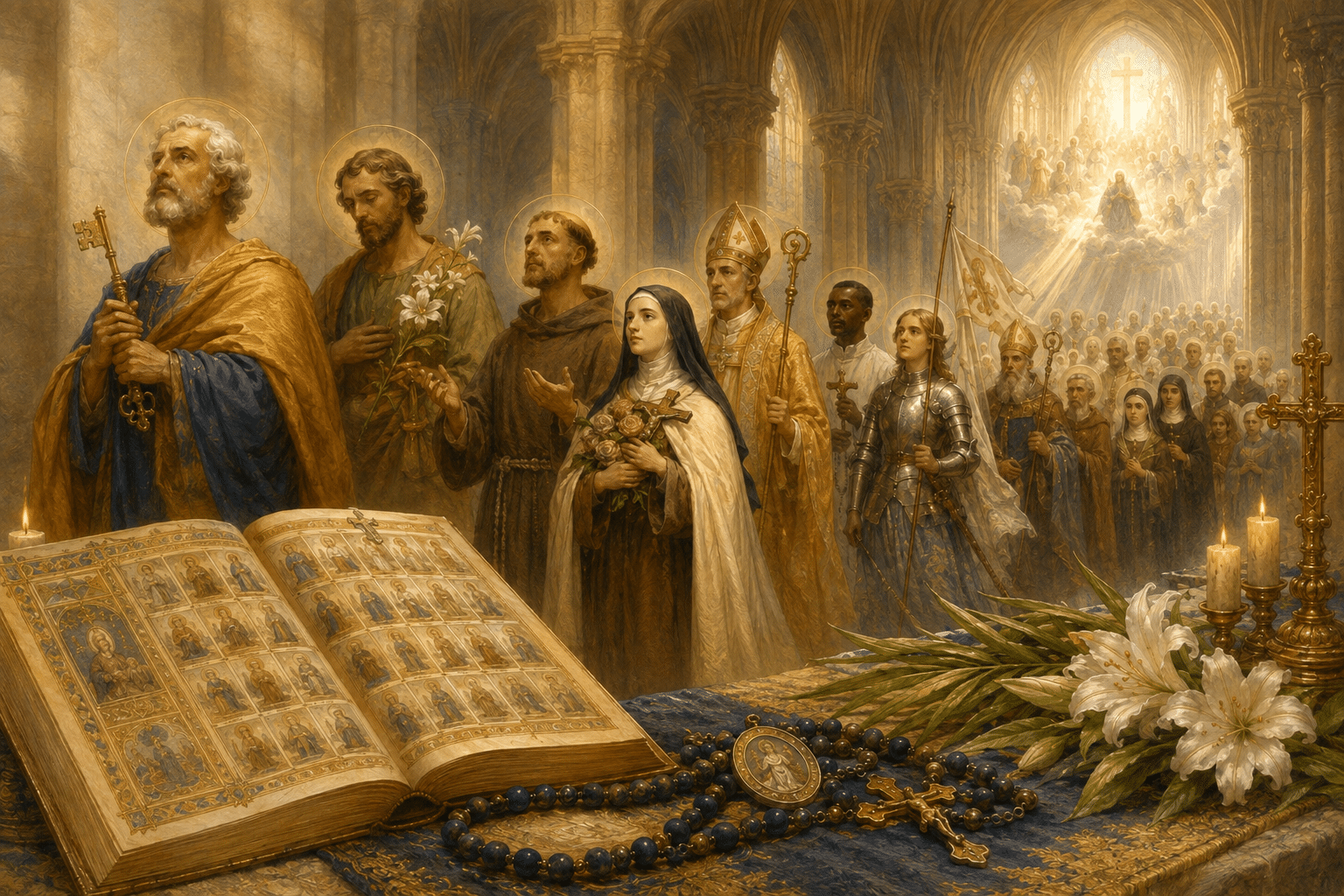
Follow the Catholic calendar through a full year and an astonishing procession begins to pass before you. Ancient martyrs emerge from the first centuries of Christianity, while desert fathers and mothers recall the radical prayer of the early monastic tradition. Missionaries cross seas and borders, monks preserve learning and prayer, scholars spend years pursuing truth, and founders establish religious communities that continue serving the Church centuries later.
The procession also includes lives that unfolded far from positions of prominence. Mothers and fathers raised children in faith. Priests entered neighborhoods where disease spread from house to house. Religious sisters taught children, cared for the sick, and served people society preferred to ignore. Young men and women refused to renounce Christ under persecution, while others spent decades performing work that attracted almost no public attention. Some saints lived long lives; others died young. Some advised rulers, while others possessed almost nothing.
The Church preserves these stories not because history itself saves anyone but because human lives can reveal what fidelity looks like under different circumstances. A Catholic facing intellectual doubt can encounter saints who wrestled with questions of faith and reason. Someone carrying grief can find companions among saints who suffered profound loss. Parents can look toward saints who raised families, workers toward saints who sanctified ordinary labor, and people facing persecution toward Christians who remained faithful when belief carried a terrible price. The calendar becomes a reminder that someone has walked a similar road before.
Patron Saint Feast Days Make the Calendar Personal
Within this great communion, particular saints often become especially important to individuals and families. A student may develop devotion to Saint Thomas Aquinas, while a father entrusts his family to Saint Joseph. Someone confronting an apparently impossible situation may ask Saint Jude for intercession, while a person who struggles with discouragement may find unexpected companionship in a saint whose life speaks directly to that burden. These relationships make the calendar personal because a date that once meant nothing can gradually become familiar.
Confirmation often begins such a relationship. A young Catholic who chooses Saint Michael may initially think about the saint mainly while preparing for the sacrament. Years later, September 29 can arrive and feel different because the Feast of the Archangels now carries a personal connection. The saint chosen during adolescence may remain a patron through college, work, marriage, parenthood, illness, and circumstances the young Confirmation candidate could never have imagined.
Families can nurture these relationships without creating complicated observances. When a patron saint’s feast arrives, a family might attend Mass when circumstances allow, read a short account of the saint’s life, pray a familiar prayer or novena, light a candle, or prepare food connected with the saint’s homeland or story. Parents can tell children why the saint matters to their family, while a saint medal, prayer card, or sacred image can give younger children something tangible to connect with the story.
The simplicity of these practices gives them much of their strength. Families rarely need elaborate programs to build Catholic memory. A meal prepared every year, a candle lit beside the same image, or a story repeated each time a feast returns can settle deeply into childhood. Years later, an adult may remember the saint’s feast partly because he remembers what his mother cooked or where his father placed the candle. Faith often takes root through such ordinary repetitions.
Marian Feast Days Lead Catholics Toward Christ
The Church’s calendar also contains many celebrations associated with the Blessed Virgin Mary, and these Marian feast days reveal another dimension of Catholic remembrance. Some commemorate events in Mary’s life, while others honor particular mysteries, devotions, or titles through which Catholics have approached her across different cultures and centuries. Celebrations connected with Our Lady of Guadalupe, Our Lady of Lourdes, Our Lady of Fatima, and other Marian titles show how deeply Marian devotion has entered Catholic life around the world.
Authentic Marian devotion always leads toward Jesus Christ. Mary receives honor because of God’s grace and because of her unique relationship with her Son. Her words at the Annunciation, her presence at Bethlehem, her intercession at Cana, her fidelity at the foot of the Cross, and her prayer with the early Church continually direct attention toward Christ. Marian feast days therefore give Catholics opportunities to contemplate the mysteries of Christ alongside the woman who knew and loved Him as His mother.
Families can mark Marian feast days with the same simplicity that serves other Catholic traditions. They may pray the Rosary, place flowers beside a Marian image, read the Gospel account connected with a particular feast, or learn about a Marian title associated with another country or culture. Such practices work best when they deepen prayer rather than simply add another activity to the family calendar.
Feast Days Within the Liturgical Year
Individual feast days gain their fullest meaning within the larger rhythm of the Catholic liturgical year. Advent teaches Christians to wait and prepare for Christ, while Christmas celebrates His birth and the mystery of the Incarnation. Lent calls the faithful toward repentance, fasting, prayer, and almsgiving, while Easter proclaims the Resurrection and Christ’s victory over death. Ordinary Time then forms Christians through the quieter work of steady discipleship.
The saints appear throughout these seasons like fellow travelers along the road. Their celebrations never replace the central mysteries of Christ because the saints themselves receive everything from Him. Instead, their lives show how men and women in different circumstances responded to the same Gospel. Saint Joseph points toward the mystery of the Incarnation through his faithful care of Jesus and Mary, while the Apostles lead us toward the Christ they followed and proclaimed. Martyrs point toward Christ through the lives they surrendered rather than deny Him.
This Christ-centered understanding protects Catholic devotion from a common misunderstanding. Catholics do not honor saints as alternatives to Jesus or place their feast days in competition with Him. The Church honors what God’s grace accomplished in their lives. When Catholics remember a saint with gratitude, they ultimately praise the God who created, redeemed, strengthened, and sanctified that person.
How Families Can Celebrate Catholic Feast Days
Once families understand this purpose, celebrating Catholic feast days can become a natural part of home life. The practice can begin with the saints who already have some connection to the family. Baptismal names, Confirmation saints, family patron saints, favorite Marian titles, and saints connected with occupations or particular devotions provide more than enough places to start.
A family might choose several meaningful feast days rather than trying to observe every celebration on the Church calendar. When those dates arrive, parents can tell the saint’s story at dinner, read a short biography with younger children, attend Mass when practical, prepare a traditional food, or add a prayer to the family’s usual routine. Older children might research the saint and explain something they discovered, while younger children may remember the celebration through an image, coloring page, special dessert, or simple family tradition.
Food often carries these traditions particularly well because meals naturally gather people together. Catholic cultures around the world have connected particular breads, pastries, soups, and other dishes with saints and feast days. Preparing such foods can introduce children to both Catholic history and the cultures in which particular devotions developed. The meal then becomes more than a themed activity when someone also tells the story of the person the family remembers.
The goal does not require perfection or complexity. A family that faithfully remembers three or four patronal feast days each year may establish stronger traditions than one that attempts dozens of elaborate celebrations and abandons them from exhaustion. Repetition gives family customs their depth. When children know that a certain meal, prayer, or candle returns every year on the same saint’s day, the calendar slowly becomes part of family memory.
Sacred Objects Can Help Preserve the Memory
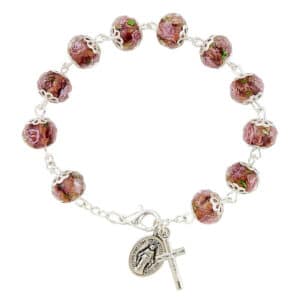
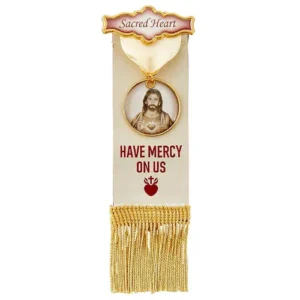
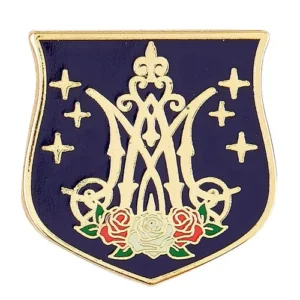
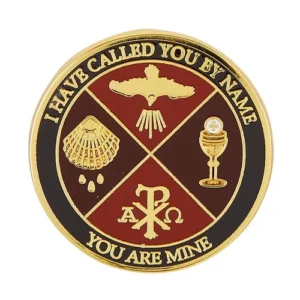
Catholic feast days also give families natural opportunities to connect faith with devotional objects. A Rosary might mark the Feast of Our Lady of the Rosary, while a patron saint medal can accompany Confirmation or the annual return of a saint’s feast. A Saint Joseph image may enter a new home, and a devotional candle may return to the same place each year when a beloved saint’s day arrives.
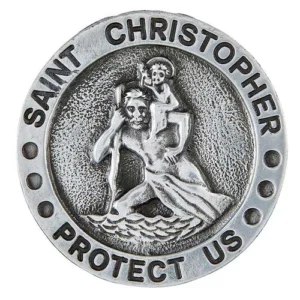
These objects serve the tradition best when they point beyond themselves. A medal matters because it recalls the saint and encourages the wearer to seek that saint’s intercession and imitate Christian virtue. A sacred image matters because it turns attention toward the person or mystery depicted. A Rosary matters because someone takes it into the hands and prays. Catholic devotional objects gain their deepest significance through the faith they support rather than through their material value alone.
Time can deepen that significance in ways nobody predicts when an object first enters a home. A saint medal worn for thirty years no longer carries quite the same human meaning as an identical medal that has never left its box. A prayer card kept in a wallet begins to gather the years around it. A crucifix passed from one generation to another carries family history alongside sacred meaning, while a devotional image that appears each year on the same feast can become inseparable from a family’s memory of that celebration.
For this reason, a religious gift connected with a feast day can become more meaningful when the giver explains why it matters. A grandparent can give a child a saint medal and tell the saint’s story. A parent can place an image in a family prayer corner and explain why the feast returns each year. The object then becomes more than decoration because someone has connected it to a person, a story, and a living practice of faith.
The Church Remembers Because We Forget
The need for these practices becomes clearer when we consider how much modern life asks us to remember already. Calendars remind us about meetings, appointments, school events, birthdays, deadlines, practices, bills, and travel. Phones send alerts so that nothing important slips past unnoticed. Yet even with all those reminders, the things that matter most can disappear beneath whatever demands attention today.
The Catholic calendar offers a different kind of reminder. It does not simply tell us where we need to be; it reminds us who we are and whose story we have entered. The feast days place our brief lives beside nearly two thousand years of Christian memory and remind us that other believers have already walked through fear, uncertainty, suffering, temptation, loss, and long seasons when God seemed quiet.
Those Christians worried about people they loved. They buried parents, spouses, friends, and children. They faced sickness, disappointment, political turmoil, poverty, persecution, and their own failures. They sometimes lost courage and needed to find it again. They sinned, repented, prayed, persevered, and began again. Through God’s grace, some of them became the saints whose names now return year after year on the Church’s calendar.
When those feast days arrive, the Church speaks their names again. She does not ask Catholics to remain trapped in the past or to romanticize lives that often contained tremendous suffering. Instead, she remembers so that the past can strengthen the present. The saints testify that fidelity has taken flesh before, in circumstances as real as our own, and their lives remind us that Christ remains faithful in every generation.
Tomorrow’s calendar will fill again with appointments, responsibilities, errands, and ordinary work. Another alarm will sound, another cup of coffee will be poured, and another evening will settle over the streets. Yet somewhere within those ordinary days, a name on the Catholic calendar will return. When it does, the Church will invite us to stop long enough to remember someone who walked the Christian road before us, to thank God for the grace revealed in that life, and then to continue walking the road ourselves.