Ordinary Time Is Not Ordinary Faith
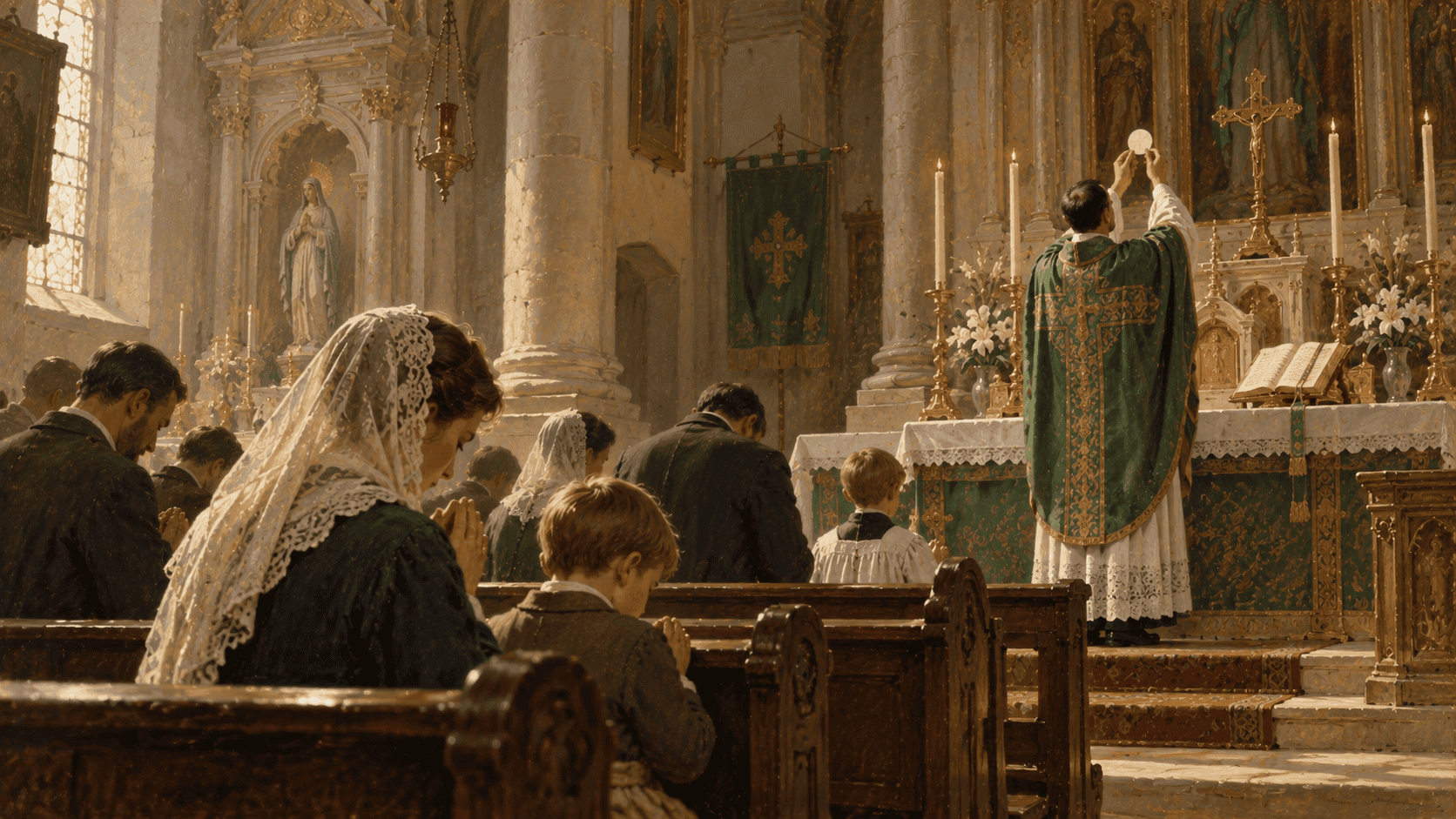
There is a particular beauty in entering a Catholic church on a quiet Sunday when no great feast is being celebrated. The sanctuary is familiar, the congregation gathers as it has gathered countless times before, and the priest approaches the altar wearing green vestments. There are no Christmas flowers announcing the birth of Christ, no ashes marking the beginning of Lent, and no Easter lilies proclaiming the joy of the Resurrection. Yet the same Lord is present, the same Gospel is proclaimed, and the same mystery of salvation unfolds before the faithful.
These are the Sundays of Ordinary Time, the longest portion of the Catholic liturgical year. To someone unfamiliar with the Church’s calendar, the name may suggest that these weeks possess less spiritual importance than Advent, Christmas, Lent, or Easter. Even lifelong Catholics can unconsciously approach them as intervals between the celebrations that seem to define the year.
But Ordinary Time is neither an interruption in the Church’s spiritual life nor a season without purpose. It is a period devoted to contemplating the life and teachings of Jesus Christ and allowing those teachings to take deeper root within us. Its recurring Sundays, Gospel readings, and quiet opportunities for discipleship reveal something essential about Christian holiness: faith matures not only through extraordinary moments of grace but also through ordinary acts of fidelity repeated over time.
The Church’s green season invites us to recognize that spiritual growth often happens gradually, through patient conversion, sustained prayer, and the daily decision to follow Christ.
What Does Ordinary Time Mean in the Catholic Church?
The word ordinary can be misleading because its everyday meaning differs from its liturgical use. In common speech, ordinary often describes something unremarkable, routine, or lacking distinction. Within the Church’s calendar, however, the term refers to the ordered or numbered weeks that fall outside the principal seasons of Advent, Christmas, Lent, and Easter.
This explains why Catholics hear references to the Second Sunday in Ordinary Time, the Fifteenth Sunday in Ordinary Time, or the Thirtieth Sunday in Ordinary Time. The weeks follow a numerical sequence, giving structure to the Church’s annual celebration of Christ’s life and saving work.
According to the Church’s Universal Norms on the Liturgical Year and the Calendar, Ordinary Time comprises thirty-three or thirty-four weeks. These weeks do not celebrate one particular aspect of Christ’s mystery in isolation. Instead, they contemplate the mystery of Christ in its fullness, especially through the proclamation of His teachings and the events of His public ministry.
The United States Conference of Catholic Bishops describes Ordinary Time as a period of conversion and spiritual maturation. During these weeks, the faithful encounter Christ as He teaches, heals, forgives, calls disciples, confronts hypocrisy, and reveals the Kingdom of God. The emphasis is not upon waiting for the next great feast but upon allowing the Gospel to transform our lives in the present.
For this reason, Ordinary Time should never be understood as spiritually ordinary. It is a season in which the Church teaches us how to live what we celebrate throughout the rest of the year.
Why Ordinary Time Appears Twice in the Liturgical Year
Unlike Advent or Lent, Ordinary Time does not occupy one uninterrupted portion of the calendar. It appears in two distinct periods, each situated between the Church’s major liturgical seasons.
The first period begins after the Christmas season concludes with the Feast of the Baptism of the Lord. Having celebrated the Incarnation and the manifestation of Christ to the world, the Church turns toward His public ministry. The Gospel readings introduce the faithful to the calling of the disciples, the proclamation of the Kingdom, and the beginning of Jesus’ works among His people.
This first period continues until the beginning of Lent, when the Church enters a more concentrated season of repentance and preparation for Easter.
The second period begins after Pentecost and continues until the Saturday before the First Sunday of Advent. It is considerably longer, extending through much of the summer and autumn in the Northern Hemisphere. During these months, the Church continues her sustained contemplation of Christ’s teachings while also celebrating numerous solemnities, feasts, and memorials of the saints.
These two periods provide continuity within the liturgical year. Christmas reveals the mystery of the Word made flesh, while Lent and Easter lead us through the Passion, Death, and Resurrection of the Lord. Ordinary Time allows us to remain with Christ as disciples, listening to His words and learning how His saving work should shape our lives.
To understand how these seasons fit together, explore our complete guide to the Catholic liturgical year.
Why the Church Wears Green During Ordinary Time
Among the most recognizable signs of Ordinary Time is the green vestment worn by the priest at Mass. The General Instruction of the Roman Missal identifies green as the liturgical color ordinarily used during these weeks, although particular solemnities, feasts, and memorials may call for other colors.
Green has long been associated with living things, renewal, and hope. In the natural world, it recalls growing fields, unfolding leaves, and the quiet development of plants whose roots strengthen beneath the soil. Catholic explanations of liturgical color often draw upon these associations to illuminate the spiritual character of Ordinary Time.
The symbolism is especially fitting because Christian discipleship resembles cultivation more than sudden achievement. A farmer cannot command a seed to mature overnight. Growth requires time, nourishment, favorable conditions, and patient care. In a similar way, the spiritual life develops through grace received and faithfully answered over many days.
The green vestments remind us that holiness is not confined to the dramatic moments of conversion that sometimes mark a person’s life. It also develops through ordinary fidelity: returning to prayer when distracted, forgiving someone who has caused pain, resisting temptation, serving a neighbor, and remaining faithful to the duties of our vocation.
These actions may seem small when considered individually. Yet repeated acts of charity, strengthened by God’s grace, can gradually transform the heart. The color green therefore offers a visible reminder that the Christian life is meant to grow.
Ordinary Time Reveals the Life and Teachings of Jesus
One of the greatest gifts of Ordinary Time is the sustained opportunity to accompany Jesus through the Gospel accounts. During Advent and Christmas, the Church directs particular attention toward the coming and birth of the Savior. During Lent and Easter, the Passion and Resurrection stand at the center of her worship. Ordinary Time gives broader attention to the Lord’s ministry, allowing the faithful to contemplate His words and actions across many consecutive Sundays.
We encounter Christ calling fishermen to leave their nets, teaching the crowds beside the Sea of Galilee, healing those who suffer, and welcoming sinners who seek mercy. We hear His parables about the Kingdom of God and His warnings against pride, greed, and indifference. We also witness His tenderness toward the poor and His patient instruction of disciples who frequently misunderstand Him.
These Gospel encounters reveal that discipleship involves more than accepting a collection of religious ideas. Jesus calls people into a relationship that transforms their priorities, habits, and understanding of the world.
Consider the parable of the sower in Matthew 13. Christ describes seed falling upon different kinds of ground, each representing a different response to the word of God. Some seed fails to take root, while other seed becomes choked by worldly concerns. Still other seed falls upon rich soil and produces a fruitful harvest.
The parable speaks directly to the purpose of Ordinary Time. The Church continually places the word of God before us, but we must consider the condition of the soil in which that word is received. Are we listening attentively? Are distractions and anxieties preventing spiritual growth? Are we allowing the Gospel to influence our decisions, relationships, and responsibilities?
Ordinary Time gives us repeated opportunities to answer these questions, not through abstract speculation but through the concrete circumstances of daily life.
The Hidden Work of Spiritual Growth
Much of the Christian life unfolds without outward drama. A parent rises early to care for a child. A worker chooses honesty when dishonesty might bring an advantage. A family member offers forgiveness rather than allowing resentment to deepen. A Catholic returns to prayer after weeks of distraction and begins again with humility.
These moments rarely attract public attention, yet they can become occasions of genuine holiness. The Church’s teaching on the universal call to holiness reminds us that sanctity is not reserved for clergy, religious communities, or individuals whose lives appear extraordinary. Every baptized Christian is called to grow in charity and to seek perfection in love according to his or her state of life.
The Second Vatican Council emphasized this teaching in Lumen Gentium, particularly in its fifth chapter. The Council described holiness as the vocation of all the faithful, lived through the diverse responsibilities and circumstances of Christian life.
This perspective changes how we understand Ordinary Time. Rather than imagining spiritual progress as a series of exceptional experiences, we begin to recognize the value of perseverance. A person who prays faithfully each morning, attends Sunday Mass, and strives to practice charity may experience little visible excitement, yet the grace of God can work profoundly through these habits.
Saint Thérèse of Lisieux offers a particularly compelling example. Her spirituality emphasized trust in God’s mercy and the offering of small acts performed with great love. Although she lived within a Carmelite monastery, the underlying lesson extends far beyond religious life. Ordinary duties become opportunities for holiness when they are united to Christ and performed with charity.
The green season invites us to appreciate this hidden work. Spiritual growth may be gradual, but gradual does not mean insignificant.
Why Sunday Mass Matters Throughout Ordinary Time
Some Catholics naturally associate their strongest religious memories with Christmas and Easter. These celebrations are central to the Church’s life and deserve their special prominence. Yet every Sunday possesses profound importance because the Church gathers to commemorate the Resurrection of Jesus Christ.
The Second Vatican Council taught in Sacrosanctum Concilium, paragraph 106, that Sunday is the foundation and center of the entire liturgical year. The weekly celebration of the Lord’s Day is therefore not a lesser substitute for the great annual feasts. It is the recurring celebration through which the faithful encounter the risen Christ in the worship of the Church.
During Ordinary Time, Sunday Mass draws us into the same Eucharistic mystery celebrated throughout the year. We hear the Scriptures, offer prayer and thanksgiving, and participate in the sacrifice of Christ made sacramentally present upon the altar. Properly disposed Catholics receive Holy Communion, while the entire assembly is called to carry the fruits of worship into the coming week.
This rhythm matters because Christian life requires continual nourishment. Just as a living plant cannot flourish indefinitely without water and light, our spiritual lives require the grace and guidance Christ provides through His Church.
Sunday worship also prevents us from reducing faith to a private collection of personal habits. We belong to the Body of Christ, and our participation in the Church’s liturgy unites us with a community of believers across generations and throughout the world.
For a deeper explanation of the Church’s sacramental life, read our guide to the seven Catholic sacraments.
The Saints Remind Us That Ordinary Time Is Filled with Holiness
Although Ordinary Time is distinguished from the Church’s principal liturgical seasons, it is far from empty of celebrations. Throughout these weeks, Catholics commemorate the Blessed Virgin Mary, apostles, martyrs, pastors, religious founders, and countless other witnesses to the Gospel.
The calendar includes major celebrations such as the Solemnity of the Most Holy Trinity, the Solemnity of the Most Holy Body and Blood of Christ, the Assumption of the Blessed Virgin Mary, and the Solemnity of All Saints. These observances possess their own liturgical character and may interrupt the ordinary use of green vestments.
The saints also reveal the many forms that Christian holiness can take. Some preached before enormous crowds, while others served the poor in relative obscurity. Some defended the faith amid persecution, while others practiced heroic charity through ordinary family responsibilities. Their lives differ dramatically, but each bears witness to the transforming power of grace.
As the Church approaches the Solemnity of All Saints on November 1, the meaning of Ordinary Time becomes especially clear. Holiness is not confined to a particular historical period, social position, or way of life. The communion of saints includes men and women who responded to God’s invitation through the circumstances entrusted to them.
Reading about a saint whose memorial falls during the week can enrich family prayer and offer a practical example of Christian virtue. Such reading is most fruitful when it leads beyond admiration toward imitation.
Living Ordinary Time in the Catholic Home
The Church’s liturgical calendar is celebrated principally through her public worship, but Catholic households can allow its rhythm to influence their daily lives. Ordinary Time provides a particularly suitable opportunity to establish sustainable habits that may be difficult to maintain during the more demanding preparations surrounding Christmas and Easter.
A family might begin by reading the coming Sunday’s Gospel together and discussing one lesson it offers. Parents can help children identify a virtue demonstrated by Christ, such as compassion, honesty, humility, or forgiveness. Rather than assigning an elaborate spiritual project, the family can choose one practical way to exercise that virtue during the week.
A simple prayer corner may also encourage daily recollection. A crucifix, Bible, rosary, and carefully chosen devotional image can create a welcoming place for prayer without requiring a separate room. A green cloth or another modest seasonal reminder may be used at home if desired, although such decorations are optional customs rather than liturgical requirements.
Our article Building a Prayer Corner in a Small Apartment offers practical guidance for creating a devotional space even when living arrangements are limited.
Families may also use Ordinary Time to cultivate works of mercy. Visiting someone who is lonely, assisting a neighbor, contributing to a parish ministry, or offering practical help to a struggling family can make the Gospel visible in everyday life.
These practices should remain proportionate to the circumstances of the household. The goal is not to fill every available hour with additional religious activities but to allow faith to shape the responsibilities already present.
Ordinary Time and the Patience of Christian Discipleship
Modern culture often prizes immediate results. We expect improvement to arrive quickly and may become discouraged when change requires sustained effort. The spiritual life, however, frequently unfolds according to a different rhythm.
Jesus’ parables repeatedly draw upon images of growth, cultivation, and harvest. In Mark 4:26–29, He compares the Kingdom of God to seed that grows while the farmer goes about his daily life. The growth takes place through a process that the farmer cannot fully explain or control.
This image does not suggest that human effort is irrelevant. The farmer still scatters the seed and eventually gathers the harvest. Yet the parable reminds us that the growth of God’s Kingdom exceeds our ability to manufacture results through determination alone.
Similarly, Christian discipleship requires our cooperation with grace while teaching us to trust the Lord’s work within us. We pray, receive the sacraments, resist temptation, practice charity, and begin again when we fail. Over time, these habits can deepen our capacity to love God and neighbor.
Ordinary Time encourages this patient approach. It reminds us that the absence of dramatic spiritual experiences does not necessarily indicate an absence of grace. God may be cultivating virtues that become visible only after many seasons of faithful perseverance.
Preparing for Advent Without Rushing Past Ordinary Time
As October draws to a close, Catholics begin approaching the final weeks of the liturgical year. The Solemnity of Our Lord Jesus Christ, King of the Universe, brings Ordinary Time to its conclusion, directing our attention toward the ultimate fulfillment of Christ’s Kingdom.
Soon afterward, Advent begins a new liturgical year and renews the Church’s expectation of the coming Savior. It is natural to look forward to the beauty and traditions of that season, especially as households begin planning their celebrations.
Yet there is spiritual value in allowing Ordinary Time to finish its work before rushing toward Advent. The remaining weeks invite us to reflect upon the direction of our lives, the choices we have made, and the habits that have strengthened or weakened our relationship with Christ.
Rather than treating these days as an empty interval before Christmas preparations begin, we can use them to cultivate gratitude, seek reconciliation, and renew our commitment to Sunday worship. Such practices prepare the heart for Advent more effectively than any amount of hurried activity.
Those who wish to mark the approaching season at home may consider traditional devotional practices such as an Advent wreath or seasonal Scripture reading. Appropriate devotional resources can be found through All Catholic Gifts, but the most important preparation remains a heart attentive to the Lord.
The Extraordinary Grace of Ordinary Faithfulness
When we consider the great events of salvation history, it is easy to imagine that holiness belongs primarily to extraordinary moments. The Annunciation, the Nativity, the Crucifixion, and the Resurrection rightly command our deepest reverence. Yet the Lord who acted through these mysteries also calls us to follow Him through the ordinary passage of days.
Ordinary Time teaches us that Christian life is not sustained by occasional enthusiasm alone. It requires an enduring relationship with Christ, nourished by Scripture, strengthened through the sacraments, and expressed through daily charity.
The green vestments we see at Mass therefore communicate more than the passage of another week. They remind us that the Church remains alive and growing, that conversion continues, and that the Lord patiently forms His people through the ordinary circumstances of human life.
We may never know precisely how a quiet act of forgiveness, a faithful morning prayer, or a hidden sacrifice will bear fruit. Yet God sees these offerings and can use them to deepen our love and strengthen the lives of those around us.
Ordinary Time is not ordinary faith. It is the season in which the Church reminds us that holiness grows through the steady, grace-filled work of following Christ, one day at a time.
A Prayer for Growth in Ordinary Time
Heavenly Father, You have given us the seasons of the Church’s year to draw us more deeply into the mystery of Your Son. Teach us to recognize Your grace not only in great celebrations but also in the quiet responsibilities of daily life.
During Ordinary Time, strengthen our faith and deepen our love. Help us listen attentively to Your Word, remain faithful to the sacraments, and practice charity in our homes, workplaces, and communities.
When spiritual growth seems slow, grant us patience. When our responsibilities become difficult, renew our trust. When we fall short, give us the humility to begin again.
May the example of the Blessed Virgin Mary and all the saints encourage us to follow Christ with perseverance, until the ordinary days of our earthly lives lead us into the everlasting joy of Your Kingdom.
Through Jesus Christ our Lord. Amen.
Sources and Further Reading
United States Conference of Catholic Bishops — Ordinary Time. An explanation of the season’s emphasis on Christ’s life, conversion, and spiritual maturation.
United States Conference of Catholic Bishops — Liturgical Year and Calendar. The organization of the Church’s seasons, solemnities, feasts, and memorials.
United States Conference of Catholic Bishops — Understanding the Liturgical Colors. An explanation of the colors used throughout the liturgical year.
General Instruction of the Roman Missal, paragraph 346. The Church’s norms concerning liturgical vestment colors.
United States Conference of Catholic Bishops — Matthew 13. Christ’s parables concerning the Kingdom of God and the spiritual significance of fruitful soil.
United States Conference of Catholic Bishops — Mark 4. The parables of the growing seed and the mustard seed.
Second Vatican Council — Lumen Gentium, Chapter V. The universal call to holiness in the Church.
Second Vatican Council — Sacrosanctum Concilium, paragraph 106. The significance of Sunday within the Church’s liturgical year.
“`