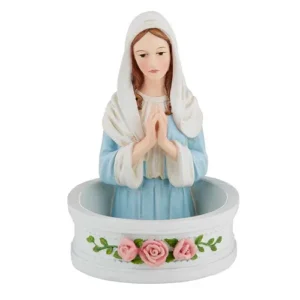

Praying When Life Feels Too Busy
The alarm sounds before sunrise. Before your feet reach the floor, the day’s responsibilities have already begun to gather: messages waiting for answers, children preparing for school, appointments that cannot be postponed, and work that seems to expand beyond the hours available. By evening, the household may finally grow quiet, but exhaustion has taken the place of the prayer you intended to offer that morning.
For many Catholics, this pattern becomes a familiar source of discouragement. We know that prayer belongs at the center of Christian life, yet our days often seem arranged around everything except God. We imagine that a more faithful life will begin when the children grow older, work becomes less demanding, or circumstances finally allow an uninterrupted hour of silence. Until then, we promise ourselves that we will pray more when we have time.
Yet the Christian life does not begin after our responsibilities disappear. God calls us to holiness within the circumstances in which we live, inviting us to seek Him amid the ordinary duties of work, family, and service. A crowded schedule presents real challenges to prayer, but it need not prevent us from developing a meaningful relationship with the Lord.
The answer is not to create an impossibly demanding devotional routine. It is to begin with a small, faithful habit and allow that habit to draw us into a deeper life of prayer.
Why Prayer Often Becomes the First Thing We Postpone
Modern life encourages us to measure each day by what we accomplish. We organize our calendars around deadlines, obligations, and tasks that demand immediate attention. Because prayer rarely arrives with an urgent notification or an approaching deadline, it can gradually move to the margins of our lives. We may sincerely believe that God matters most while giving Him only whatever time remains.
This tension does not necessarily arise from indifference. Many responsibilities are genuine expressions of our vocation. Parents must care for their children, workers must fulfill their obligations, and families must attend to the practical needs of daily life. Catholic faith does not ask us to neglect these duties in pursuit of an imagined spiritual perfection.
The difficulty arises when activity becomes so consuming that we lose the habit of turning toward the One for whom our lives are ultimately lived. We can become skilled at managing responsibilities while gradually forgetting to bring those responsibilities before God. Prayer then begins to feel like an additional burden rather than the relationship that gives our efforts their proper direction.
Recognizing this pattern requires honesty rather than self-condemnation. Some seasons genuinely leave little discretionary time, especially for caregivers, parents of young children, and people working demanding schedules. The Church’s wisdom does not require every Catholic to follow an identical routine. Instead, she encourages us to cultivate prayer according to our circumstances while remembering that our relationship with God deserves deliberate attention.
What Jesus Teaches Us Through Martha and Mary
One of Scripture’s most revealing encounters concerning work, distraction, and prayer takes place in the home of Martha and Mary. In Luke 10:38–42, Jesus visits their household, where Martha busies herself with the responsibilities of hospitality while Mary sits at His feet and listens to His teaching.
Martha’s frustration grows as she carries the burden of serving. She asks Jesus to tell her sister to help, but His response gently redirects her attention. He recognizes that she has become anxious and troubled by many things, while Mary has chosen to give her attention to what matters most.
Jesus does not declare hospitality worthless, nor does He condemn the work required to welcome a guest. Martha’s service is itself an expression of generosity. The problem lies in the anxiety that has overtaken her and the way her responsibilities have distracted her from the presence of the Lord standing before her.
This distinction matters for anyone who feels overwhelmed by daily obligations. We cannot simply abandon the work entrusted to us, but we can learn to carry it differently. The story invites us to examine whether our activities remain rooted in love or whether worry has begun to govern our hearts.
Mary’s example teaches us to receive before we act. Her attention to Jesus does not diminish the value of service; it reveals the source from which Christian service should flow. When prayer restores our awareness of Christ, our responsibilities can become expressions of charity rather than endless demands competing for our attention.
What the Catholic Church Teaches About Daily Prayer
The Catechism of the Catholic Church offers a particularly practical insight in paragraph 2697. It teaches that prayer should animate the Christian life continually, while also explaining that this ongoing relationship with God requires particular moments deliberately set aside for prayer.
This teaching resolves an important misunderstanding. Christians are called to pray throughout their lives, but the Church does not expect us to remain in uninterrupted formal prayer while neglecting ordinary responsibilities. Instead, specific periods of prayer nourish an enduring awareness of God’s presence.
Paragraph 2698 identifies familiar rhythms that support this relationship: morning and evening prayer, grace before and after meals, the Liturgy of the Hours, Sunday worship centered on the Eucharist, and the celebrations of the liturgical year. These practices connect prayer to the natural pattern of human life rather than treating it as an activity reserved for exceptional circumstances.
For someone struggling to pray consistently, this offers encouragement. A brief morning offering, a few moments with Scripture, or a sincere examination of conscience before bed can establish a foundation for spiritual growth. The purpose is not to reduce prayer to a minimum requirement but to cultivate a faithful beginning that can deepen over time.
Our broader guide to Catholic living and practicing your faith every day explores how prayer, charity, and ordinary responsibilities can form a unified Christian life.
Begin with Five Minutes of Faithful Prayer
When people resolve to develop a stronger prayer life, they sometimes begin by creating a schedule that their circumstances cannot sustain. They may plan lengthy spiritual reading, several devotions, and extended periods of meditation without first considering the demands already placed upon their time. When the routine becomes difficult, discouragement follows, and prayer may gradually disappear altogether.
A smaller beginning can prove more fruitful. Choose five minutes at a predictable time and dedicate them entirely to God. During those minutes, silence your phone when possible, set aside other tasks, and turn your attention toward the Lord. Begin with the Sign of the Cross, offer a simple prayer of thanksgiving, and speak honestly about the concerns you carry.
Those who prefer a structured practice might read a short Gospel passage and reflect upon a single phrase. Others may pray an Our Father, a Hail Mary, and a Glory Be before spending a moment in silence. The essential element is not the complexity of the devotion but the sincerity with which we enter it.
Five minutes will not exhaust the possibilities of Christian prayer, and it should not become an artificial ceiling upon spiritual growth. Yet a brief, consistent practice can help us establish the habit of returning to God. As our circumstances permit, that habit may gradually expand into longer periods of meditation, the Rosary, or the Liturgy of the Hours.
Make Prayer Part of the Day You Already Have
One practical way to cultivate prayer is to connect it with activities that already occur regularly. The Church’s traditional rhythms offer natural opportunities for this approach, allowing us to remember God without turning every moment into another scheduled obligation.
Begin the Morning with an Offering
Before reaching for your phone or beginning your daily responsibilities, take a moment to entrust the coming hours to God. Thank Him for the gift of another day and ask for the grace to carry out your duties faithfully. A morning offering can help establish the intention to live the day in union with Christ, even when circumstances leave little room for extended prayer.
This practice also changes the way we understand work. Instead of separating our spiritual life from our responsibilities, we consciously place those responsibilities before the Lord. The conversations, decisions, and acts of service awaiting us become opportunities to practice patience, honesty, humility, and love.
Pause Briefly at Midday
The middle of the day often brings its own pressures. A short pause can interrupt the momentum of anxiety and restore our attention to God. Some Catholics pray the Angelus, traditionally associated with morning, noon, and evening. Others offer a brief invocation, recite the Our Father, or silently thank the Lord for His assistance.
These moments need not attract attention or interrupt necessary work. A quiet prayer before lunch, a moment of recollection between appointments, or a brief act of thanksgiving can help us remember that God remains present throughout the day.
End the Evening with Gratitude and Reflection
Evening prayer offers an opportunity to review the day in God’s presence. Consider where you experienced grace, where you responded generously, and where impatience or selfishness shaped your actions. Give thanks for the good you received, acknowledge your failures honestly, and ask the Lord for forgiveness and renewed strength.
A brief examination of conscience should lead toward humility and trust rather than endless self-criticism. The purpose is to recognize our need for mercy and grow in love. When serious sin becomes apparent, we should respond through repentance and, where required, the Sacrament of Reconciliation.
Can Ordinary Work Become a Form of Prayer?
Saint Paul encourages Christians to pray without ceasing in 1 Thessalonians 5:17. At first, this instruction may appear impossible for someone who spends the day caring for children, completing assignments, or managing a household. Yet the Church understands continual prayer as a life increasingly shaped by remembrance of God, nourished by deliberate moments of worship and devotion.
Ordinary work can become an offering when we perform it with love and unite our intentions to Christ. Preparing a meal for a family member, assisting a colleague, caring patiently for someone who is ill, or completing an unpleasant responsibility with integrity can express the charity that prayer seeks to cultivate.
This does not mean that work automatically replaces prayer. A person can remain busy with worthwhile activities while neglecting the relationship with God that gives Christian service its deepest meaning. Formal prayer and daily work support one another: prayer purifies our intentions, while faithful action gives practical expression to the love we profess.
Before beginning a difficult task, we might silently ask Christ to guide our words and actions. During a frustrating encounter, we can seek the grace to respond with patience. After completing a responsibility, we can offer thanksgiving rather than measuring the day solely by our accomplishments.
Through such practices, the ordinary activities of life become occasions for spiritual growth without losing their practical character.
Praying Through Seasons of Exhaustion
Some periods of life demand more than careful scheduling can resolve. New parents may experience interrupted sleep for months. Caregivers may face unpredictable emergencies, while workers with multiple jobs may struggle to find even a few uninterrupted minutes. Illness, grief, and emotional strain can also make familiar devotional practices difficult.
During these seasons, prayer may become simpler and more dependent upon trust. A parent holding a restless child can offer a brief petition for patience. Someone caring for an elderly relative may quietly entrust that loved one to the Lord. A person who feels overwhelmed can speak to God without carefully composed words, acknowledging both fatigue and the desire to remain close to Him.
These moments should not be treated as evidence of spiritual failure. God knows the circumstances in which we live, and Christian prayer does not require an appearance of composure that we cannot honestly sustain. The Psalms themselves give voice to distress, uncertainty, longing, and exhaustion, teaching us to bring the whole truth of our lives before the Lord.
At the same time, genuine exhaustion deserves practical attention. Rest, assistance from others, and appropriate limits on our responsibilities can support a healthier spiritual life. Prayer should not become another source of pressure that prevents us from recognizing legitimate human needs.
Creating a Small Place for Prayer at Home
Although prayer does not depend upon a particular location, a consistent place can help us develop the habit of recollection. A crucifix beside a Bible, a rosary on a small table, or an image of the Blessed Virgin Mary can create a visible reminder to pause and pray.
The Catechism recognizes the value of places suitable for prayer, including a prayer corner within the Christian home. Such a space need not be elaborate. Its purpose is to encourage a sincere encounter with God rather than to display religious objects for their own sake.
For Catholics living in limited spaces, our article Building a Prayer Corner in a Small Apartment offers practical suggestions for establishing a devotional area without purchasing additional furniture or dedicating an entire room.
A prayer corner can be especially helpful when our days feel hurried. Seeing the crucifix as we prepare for work or passing a Bible on the way to bed may remind us of the relationship we are seeking to cultivate. Sacred objects serve their purpose best when they lead us toward prayer, repentance, gratitude, and charity.
When You Miss a Day of Prayer
Even a realistic routine will encounter interruptions. Travel, illness, unexpected responsibilities, or simple forgetfulness may disrupt a practice we hoped to maintain. When this happens, the temptation is to interpret one missed day as proof that we cannot sustain a faithful prayer life.
Such discouragement misunderstands the purpose of spiritual discipline. Prayer is not a performance through which we earn God’s love. It is our response to the love He has already shown us and the grace by which He draws us into communion with Himself.
When a day passes without the prayer we intended, we can begin again at the next opportunity. Acknowledge the interruption, consider whether a practical adjustment would help, and return to the Lord without unnecessary drama. Perseverance grows through repeated acts of fidelity, including the willingness to resume after failure.
We should also distinguish between a voluntary devotional routine and obligations that carry a different weight in Catholic life. Missing a self-chosen period of spiritual reading is not equivalent to deliberately neglecting the Sunday Mass obligation without a serious reason. A healthy prayer life respects these distinctions while encouraging us to grow steadily in love for God.
Let the Sacraments Remain at the Center
Personal prayer is essential to Catholic life, but it does not stand apart from the worship of the Church. The Eucharist remains the source and summit of Christian life, and participation in Sunday Mass provides a foundation that private devotions cannot replace.
For busy Catholics, protecting time for Sunday Mass is therefore more important than constructing an impressive schedule of optional prayers. The Mass gathers us into Christ’s sacrifice, nourishes us through His Word and the Eucharist, and strengthens us to live our vocation throughout the week.
The Sacrament of Reconciliation also restores and strengthens our relationship with God when sin has damaged it. Rather than relying solely upon personal determination, Catholics receive grace through the sacramental life of the Church and learn to approach spiritual growth with humility.
Our complete guide to the seven Catholic sacraments explains how Christ continues to sanctify His people through these gifts.
A Simple Seven-Day Beginning
Those who wish to establish a more consistent prayer life may benefit from beginning with one manageable practice over the course of a week. Choose a brief period each day, preferably connected to an existing routine, and use it to develop the habit of turning toward God.
On the first day, offer a simple morning prayer of thanksgiving. On the second, read a short passage from the Gospel and reflect upon its meaning. On the third, pray one decade of the Rosary. On the fourth, pause at midday and entrust your responsibilities to Christ. On the fifth, spend a few moments examining your conscience before bed. On the sixth, pray intentionally for someone who needs encouragement or assistance. On the seventh, give special attention to Sunday worship and consider which practice you can continue in the coming week.
This sequence is a suggested exercise, not a Church-prescribed devotion. Its purpose is to demonstrate that meaningful prayer can begin within an ordinary schedule. The practices may be adapted according to personal circumstances, and there is no need to complete them perfectly before beginning again.
A Catholic Bible, rosary, or prayer journal may help support these habits. Readers who find devotional objects useful can explore the resources available through All Catholic Gifts, while remembering that no purchase is necessary to begin praying today.
God Is Present in the Life You Are Living
Perhaps the most important lesson for a busy Catholic is that prayer does not require waiting for a different life. The responsibilities that fill our days are often connected to the very vocation through which God calls us to holiness. Our challenge is to keep those responsibilities rooted in love rather than allowing activity and anxiety to obscure the Lord’s presence.
Jesus welcomed Martha’s hospitality, but He also called her to recognize what her anxious busyness had begun to conceal. His words continue to invite us toward a life in which attentive love for God gives meaning to faithful service.
We may never find the perfectly quiet morning, the uninterrupted afternoon, or the effortless schedule we imagine. Yet we can begin with a few moments of sincere prayer and allow those moments to shape the way we approach the rest of the day. Through Scripture, the sacraments, and simple acts of recollection, the Lord draws us into a relationship that reaches beyond any single devotional routine.
Begin with the time you have. Offer it faithfully, return when you become distracted, and trust that God can deepen a small beginning into a lasting habit of prayer.
A Prayer for Busy Days
Heavenly Father, You know the responsibilities that fill our days and the concerns that occupy our hearts. When we become distracted by endless activity, remind us that our lives find their deepest meaning in Your love.
Teach us to seek You in moments of quiet and to remember Your presence amid our daily work. Give us patience when responsibilities become difficult, humility when we fall short, and perseverance when prayer feels dry or interrupted.
Help us make room for Your Word, remain faithful to the sacraments, and serve others with generous hearts. Through the intercession of the Blessed Virgin Mary, guide us toward a life of deeper trust and constant prayer.
Through Jesus Christ our Lord. Amen.
Sources and Further Reading
Catechism of the Catholic Church, paragraphs 2697–2699 — The Life of Prayer. The Church’s teaching on continual prayer, dedicated times for prayer, and the traditional rhythms of Christian devotion.
United States Conference of Catholic Bishops, Luke 10:38–42. The Gospel account of Martha and Mary and Christ’s teaching about anxious activity and attentive listening.
United States Conference of Catholic Bishops, 1 Thessalonians 5:16–18. Saint Paul’s exhortation to rejoice, pray continually, and give thanks in all circumstances.
Compendium of the Catechism of the Catholic Church, questions 567–568. A concise explanation of appropriate times for prayer and the principal forms of Christian prayer.
Catechism of the Catholic Church, paragraphs 1324–1327 and 2691. Catholic teaching on the centrality of the Eucharist and places favorable for prayer.
“`