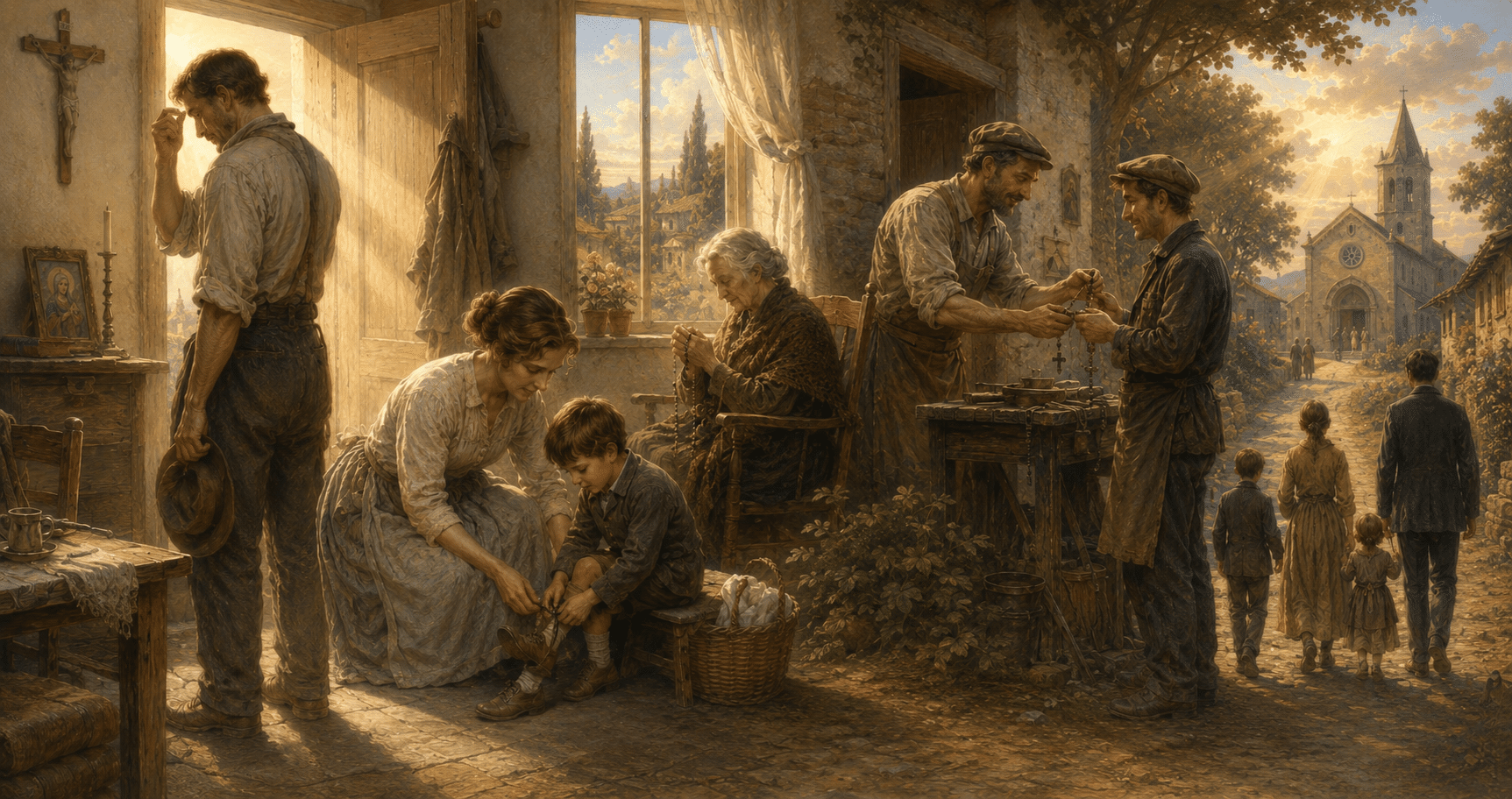
Most Christian lives unfold on ordinary Tuesdays. No cathedral bells announce the hour, no great pilgrimage road stretches toward the horizon, and no crowd gathers to witness some heroic act of faith. Instead, an alarm clock rings. Someone makes breakfast, searches for a missing shoe, sits in traffic, answers emails, pays bills, folds laundry, prepares dinner, and tries to remain patient when the day has already asked too much. Someone needs help, someone needs forgiveness, and someone needs a kindness that may never receive recognition. This ordinary territory forms the landscape in which most Catholics actually learn to follow Christ.
For that reason, holiness must eventually leave the stained-glass window and enter the kitchen. Catholic living means allowing the Faith to shape the decisions that fill an ordinary day. Sunday Mass, prayer, Scripture, and the sacraments stand at the heart of Catholic life, but they also prepare Catholics to carry Christ beyond the church doors. Faith takes visible form in the way a person works, spends money, speaks about other people, treats those who cannot return a favor, responds to annoyance, keeps promises, raises children, faces suffering, and uses time. The spiritual life does not compete with ordinary life; it enters ordinary life and gradually transforms it.
Begin the Day by Giving It to God
Because Catholic life grows through repeated habits, the first few minutes of the morning can shape everything that follows. A Catholic day can begin simply with the Sign of the Cross, a Morning Offering, a passage from the Gospel, or a brief request for the intercession of a patron saint. None of these practices requires an elaborate routine. A person can offer the day to God and then make breakfast, pack lunches, leave for work, or begin whatever responsibilities the morning brings.
Small practices often endure precisely because they can survive real life. A parent with young children, a student with an early class, and someone beginning a long commute may not share the same schedule, so each person needs a prayer life that fits actual responsibilities rather than an imaginary day. An ambitious routine that collapses after four mornings rarely helps as much as ten faithful minutes that continue for years. As that habit deepens, those minutes may grow naturally, but consistency gives prayer roots long before duration gives it size.
Let Sunday Mass Shape the Rest of the Week
Daily Catholic living finds its center in Sunday Mass because the Eucharist stands at the center of Catholic worship. The Christian week moves toward Sunday and begins again from it. Catholics gather as the Church, hear Scripture, participate in the Eucharistic sacrifice, and receive Christ in Holy Communion when properly disposed. Then Mass ends, the church doors open, and everyone returns to the responsibilities that were waiting outside.
What happens at the altar should gradually change what happens everywhere else. The altar and the kitchen table do not serve the same purpose, yet receiving Christ should influence the patience a person brings to family dinner. Listening to the Gospel should affect the words someone chooses during an argument. Receiving the peace of Christ should shape the way a Catholic responds to a difficult coworker on Monday morning. Sunday worship therefore does not interrupt ordinary Catholic life; it nourishes the life that Catholics carry into the rest of the week.
Return to Confession and Begin Again
Of course, Catholics do not carry that grace perfectly into every situation. People lose patience, become selfish, speak carelessly, neglect prayer, hold grudges, choose pride, and fail to love when love requires sacrifice. A person may know exactly what charity demands and still choose something easier. Catholicism acknowledges these failures without lowering the call to holiness, and the Church offers the Sacrament of Reconciliation because Christ does not abandon sinners to their failures.
In Confession, Catholics name their sins honestly, express sorrow, receive absolution, and encounter God’s mercy. This sacrament gives Catholic life one of its most hopeful patterns because it teaches Christians how to begin again. Failure does not need to become an identity, and sin does not deserve the final word. Christ calls the sinner back, restores what sin has wounded, and sends the forgiven person once more into daily life with another opportunity to choose what is good.
That pattern of repentance also changes relationships outside the confessional. Someone who regularly asks God for mercy should become more willing to extend mercy to others. A parent can apologize to a child. A husband or wife can admit a wrong without immediately defending it. A friend can forgive an offense rather than quietly preserve it for years. The grace received in Reconciliation reaches beyond the sacrament when Catholics allow God’s forgiveness to shape the way they forgive.
Practice the Works of Mercy in Ordinary Life
As prayer and the sacraments shape the interior life, the works of mercy give faith an outward direction. Catholics feed the hungry, help families who face financial hardship, visit people who feel lonely, comfort those who grieve, teach with patience, forgive injuries, and pray for the living and the dead. Some acts of mercy involve organized ministries, but many arrive without warning through people whom God places directly in front of us.
These opportunities rarely choose convenient moments. A grieving friend may call when the evening already feels too full, an aging parent may need more help than anyone expected, or a family may need practical assistance during a financially difficult month. A lonely neighbor may need conversation when someone would rather finish another task. Such moments reveal something important about Christian love because charity becomes costly when convenience disappears. Catholic living asks a person to notice those moments and recognize that serving Christ often begins by serving the person who needs something now.
Build Prayer Into the Openings of the Day
A busy life can make sustained periods of prayer difficult, but Catholic tradition also provides ways to return to God throughout the day. Someone may pray briefly before beginning work, pause for the Angelus at noon, pray a decade of the Rosary during a commute, say grace before meals, or offer a prayer whenever an ambulance passes. Even a difficult email can become an invitation to pause for a moment before answering.
These small acts do not replace deeper prayer, but they prevent the hours between morning and evening from becoming spiritually empty territory. Instead, they create regular points of attention in which a Catholic remembers the presence of God. Over time, a person can begin to respond to ordinary events almost instinctively with prayer: gratitude after receiving good news, intercession after hearing of suffering, patience before a difficult conversation, or praise when beauty unexpectedly interrupts the day.
This habit gradually changes the way a person experiences time. Work still requires concentration, errands still need completion, and children still need to arrive somewhere on schedule, but prayer begins to run quietly through those responsibilities rather than waiting for them to end. A Catholic does not need to withdraw from ordinary life before turning toward God because even the smallest opening can become an occasion to remember Him.
Live According to the Rhythm of the Liturgical Year
The liturgical year gives this daily Catholic life a larger rhythm. Advent teaches Christians how to wait and prepare, while Christmas invites them to wonder at the mystery of the Incarnation. Lent calls Catholics toward prayer, fasting, almsgiving, and repentance, while Easter celebrates Christ’s victory over sin and death. Ordinary Time then teaches the quieter work of steady growth as Christians continue following Christ through the weeks that do not carry the intensity of the great seasons.
The Church returns to these seasons because human beings need to hear their lessons more than once. Another Advent arrives because Christians still need to learn patience. Another Lent comes because conversion remains unfinished. Easter returns because suffering can make hope difficult to remember. The liturgical calendar does not merely commemorate events from Christian history; it brings the mysteries of Christ repeatedly before the faithful and invites each generation to enter them more deeply.
Families can bring that rhythm into the home through simple practices. An Advent wreath can mark the approach of Christmas, while a Nativity scene can keep the Incarnation before the family throughout the season. Friday abstinence, Stations of the Cross, or another deliberate sacrifice can give Lent a visible presence in family life. Celebrating patron saints and important feast days can also remind children that Catholic life follows a calendar shaped by something deeper than school schedules, sporting seasons, sales, and holidays.
Make Room for Silence
While the liturgical year gives shape to time, silence gives the soul enough room to notice what fills it. Modern life makes silence increasingly difficult to find because another screen, notification, podcast, song, message, or conversation can fill nearly every empty moment. None of those things must become harmful in itself, but constant stimulation can make interior stillness unfamiliar and leave little room for attentive prayer.
Catholics can recover silence deliberately. Someone may spend time in Eucharistic Adoration, walk without headphones, drive without turning on the radio, sit quietly before the household wakes, or pray the Rosary slowly enough to meditate on its mysteries rather than racing through familiar words. These choices may feel strangely uncomfortable at first because silence reveals how accustomed people have become to distraction.
With practice, however, silence can become less like an absence and more like attention. It creates room to examine the conscience, notice gratitude, confront worries honestly, and listen for the quiet movements that constant noise can obscure. Catholic prayer does not depend upon dramatic spiritual experiences, and silence does not guarantee them. It simply gives the heart enough space to remain present before God.
Bring Catholic Faith Into the Workplace
The same faith that shapes prayer must also enter the workplace because Catholic living cannot divide life into sacred and secular compartments. Integrity matters. Honest work matters. Fairness matters. Paying people justly matters. Keeping promises matters. Treating customers, employees, coworkers, and competitors with dignity matters. Completing a task carefully when nobody will notice the difference also matters because Christians ultimately measure their work by more than applause or advancement.
Catholic witness at work does not always require explicit preaching. In many workplaces, faith becomes more persuasive when colleagues encounter competence joined with humility, patience, honesty, and kindness. A Catholic manager can exercise authority without humiliating people. An employee can refuse dishonesty even when dishonesty would bring an advantage. A business owner can treat customers fairly when taking advantage of them would produce more profit. A coworker can refuse to participate in cruel gossip even when joining the conversation would make social life easier.
Work also gives Catholics an opportunity to offer ordinary labor to God. Not every job feels meaningful every day, and many occupations contain tedious or frustrating tasks. Yet Catholic spirituality has long recognized that people can offer honest labor as part of a faithful life. The task itself may remain ordinary, but the intention, integrity, and love with which someone performs it can give that work a deeper purpose.
Make the Home a School of Holiness
Family life may provide the most demanding school of holiness because family members see one another without the careful presentation that people often maintain elsewhere. Children notice how adults respond when tired, frustrated, worried, or inconvenienced. They notice whether prayer appears only during emergencies, whether parents forgive each other after disagreements, and whether Sunday Mass matters enough to shape the family’s schedule.
Children also learn Catholicism through repeated practices that may seem small at the time. They remember grace before meals, blessings before bed, trips to Confession, feast-day celebrations, family Rosaries, Scripture readings, crucifixes on the wall, and parents who stop to pray when someone they know begins to suffer. These practices teach children that Catholicism belongs within the home rather than only inside a parish church.
Perhaps even more importantly, children notice whether the Faith changes the adults who teach it. A parent who apologizes after losing patience teaches something important about repentance. Parents who forgive one another show what mercy looks like before children can explain its theology. A family that helps someone quietly demonstrates charity without turning generosity into performance. Through such ordinary acts, parents teach children that Catholicism does not simply give a family things to believe; it gives them a way to live together.
Use Catholic Devotional Objects as Invitations to Prayer
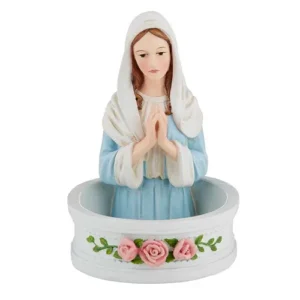
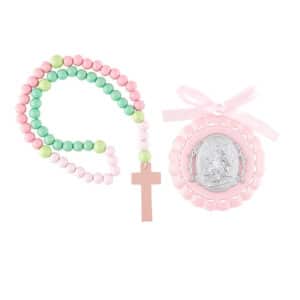
Catholic homes have long used physical reminders to support this way of life. A crucifix above a doorway, a Rosary beside a bed, a Bible on a table, a saint medal carried in a pocket, or a sacred image placed in a quiet corner can turn attention toward God throughout the day. These objects do not make a home Catholic simply because someone displays them, and Catholics should never treat them as substitutes for prayer or the sacraments. Their value comes from the faith and devotion they encourage.
Over time, devotional objects can also become part of a family’s spiritual memory. Children may remember the crucifix that hung in the home where they grew up or the Rosary their mother carried to Mass. A Bible may contain an inscription from a sacramental celebration, while a saint medal may recall a grandparent who first gave it to a child. When families actually use these objects within a life of prayer, they can help connect Catholic belief with memory and make the Faith visible within the ordinary surroundings of home.
That distinction matters because Catholic living does not require filling every room with religious objects. One crucifix that regularly turns a family’s thoughts toward Christ serves a greater purpose than many devotional items that nobody notices. As with other Catholic practices, the goal does not lie in accumulation but in attention. Sacred objects serve Catholic life best when they quietly lead the person who sees or holds them toward prayer.
Learn to See Ordinary Life Differently
The lives of the saints can sometimes appear impossibly dramatic when Catholics remember only martyrdoms, miracles, mystical experiences, missionary journeys, and heroic sacrifices. Yet most saints also spent countless hours performing ordinary tasks. They worked, cooked, cleaned, taught, studied, cared for children, tended the sick, dealt with difficult personalities, fulfilled responsibilities, and prayed through days that history never recorded. They experienced failures, sought forgiveness, and returned to their duties the next morning.
That ordinary side of sanctity offers one of the great consolations of Catholic living. A person does not need to escape ordinary responsibilities in order to find God because those responsibilities often provide the very place where God calls that person to grow. Patience may develop while caring for an aging parent. Humility may grow through unnoticed work. Charity may take shape through a meal prepared for a tired family. Forgiveness may begin during a conversation at the kitchen table, while perseverance may grow through years of quietly keeping promises.
Catholic living therefore changes less about where a person lives than about how that person learns to see. The alarm clock still rings, traffic still moves slowly, laundry still accumulates, children still lose their shoes, coworkers still test patience, and dinner still needs preparation. Yet within those ordinary circumstances lie countless opportunities to pray, sacrifice, forgive, serve, give thanks, and begin again. Holiness does not wait somewhere beyond ordinary life for the day when responsibilities finally disappear. Christ enters the ordinary day as it already exists, and Catholics learn to follow Him there.